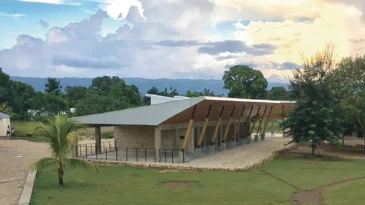
Presbyterians from across the country recently gathered at Union Presbyterian Seminary in Richmond, Virginia, to begin drafting a theology of mission for the Presbyterian Church (U.S.A.), a project prompted by the elimination of all mission co-worker positions and the closure of its World Mission ministry area one year ago, and by two overtures heading to the 227th General Assembly this summer.
Related reading: “PC(USA) announces major cuts to mission co-workers amid restructuring” by Eric Ledermann, Outlook Reporting
The 41 participants at the event, which took place March 16-18, included current and former denominational staff, recently dismissed mission co-workers, presbytery executives, congregation members, seminary faculty, theologians and ecumenical liaisons.
Overtures to General Assembly drive renewed mission debate
 To date, two overtures have received more concurrences than any other overture going before GA227.
OVT-006: “Calling for a New Missiological Statement for the Presbyterian Church (U.S.A.),” sponsored by the Presbytery of the Cascades, calls on the assembly to direct staff and an advisory group named by the co-moderators to develop a new missiological statement for the PC(USA).
At the time of reporting, 11 different presbyteries concurred with this overture, affirming the need for the assembly to address the issue.
OVT-005: “Call to Review the Restructuring of the PC(USA) World Mission,” also from the Presbytery of the Cascades, calls for a commission to review the decision-making process that led to the elimination of the mission co-worker positions and to recommend to the 228th General Assembly “appropriate actions of acknowledgment, confession, repentance, and reparation.”
At the time of reporting, 12 different presbyteries concurred with this overture.
Stan Skreslet, a retired professor of Christian missions at Union and a former mission co-worker in Cairo, Egypt, who participated in the planning of the symposium, said OVT-006 directly shaped the symposium’s timing.
Related reading: “Our fork in the road: On the end of the Presbyterian Mission Agency” by Stanley Skreslet
“In part, I think the symposium was meant to pull some people together to talk about the theology of mission going forward and possibly to generate a document that could feed into that process, if the General Assembly decides to adopt that overture,” Skreslet said.
Inside the Union Presbyterian Seminary mission symposium
The symposium was organized by Union’s Syngman Rhee Global Mission Center. Asked where the gathering had left things by its final session, James Taneti, the center’s director and assistant professor of World Christianity, resisted the framing of the question.
“We did not end, we’ve just begun,” he said. “But what has been accomplished is: we could spend 42 hours together, where we could look at each other, look into each other, and look together for the future of the denomination’s world missions, because there is passion on all sides.”
The symposium was designed to produce what Taneti called “the seeds, the data upon which we can draw” for a formal theological statement on mission, a starting point that the planning team hopes to have before GA227 convenes and to make available upon request should the assembly approve OVT-006.
“We want to tell the General Assembly that we have an idea,” Taneti said. “We would not submit it until they ask for it.”
“We want to tell the General Assembly that we have an idea … We would not submit it until they ask for it.” — James Taneti
That the center mounted the effort carries its own significance. Syngman Rhee served in the denomination’s Worldwide Ministries Division at different levels for 25 years before joining the faculty at Union, and Taneti framed the gathering as a natural extension of both the center’s mission and Rhee’s legacy.
“If Syngman were alive, he would be the one who would do this,” Taneti said. “So, in his honor, the center did it.”
“The planning team, which included Taneti, Skreslet, Donna Cammarata, Ruben Arjona, Chris Burton and Ruth Brown, selected participants by invitation to ensure broad representation across the denomination’s mission community.
Denominational leaders and dismissed staff share the same room
Four recently dismissed mission co-workers sat in the same space as current denominational staff who had signed the co-workers’ termination notices. Three IUA staff members attended all three days; Stated Clerk Jihyun Oh, who also serves as executive of the Interim Unified Agency (IUA) – since renamed Presbyterian Life and Witness – attended the first two days of the gathering.
Related reading: “PC(USA) names new unified agency: Presbyterian Life & Witness” by Presbyterian News Service
“There was grace,” Taneti said. “There was grief. And there was passion. … You are having someone who signed your firing letter sitting right in front of you, and you are talking here.”
“There was grace. There was grief. And there was passion. … You are having someone who signed your firing letter sitting right in front of you, and you are talking here.” — James Taneti
Taneti said Oh took notes throughout the proceedings. “She demonstrated what they call karishma, ‘the gift as a leader,’” he said.
The charged atmosphere was rooted in a dispute that has created division since the closures were announced. In justifying its decision, the IUA cited a desire to address what it described as an inherent colonial nature in the traditional mission co-worker model moving, in Oh’s words, “from sending missionaries to being more equal ministry partners in the world.”
Former mission co-workers and global partners have rejected that framing, arguing that the partnership model they operated under for decades addressed those concerns and that eliminating co-workers without consulting partners was itself a colonial act.
Related reading: “PC(USA) faces backlash over mission co-worker layoffs” by Eric Ledermann, Outlook Reporting
Hunter Farrell, former director of PC(USA) World Mission and now senior research fellow at Pittsburgh Theological Seminary’s World Mission Initiative, presented on Presbyterian mission history at the symposium. In his presentation, he argued that the IUA’s colonial rationale “grossly underestimates the scope of our problem” — that it “focused exclusively on World Mission’s colonial assumptions” while leaving colonial structures throughout the rest of the denomination unaddressed. Cross-cultural mission service, he said, had long served as “a critically needed seed bed of decolonization” within the PC(USA).
“Few things the Presbyterian Church has done have more effectively fought racism, White supremacy and the vestiges of colonialism…” — Hunter Farrell
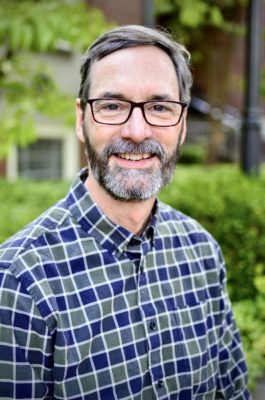
“Few things the Presbyterian Church has done have more effectively fought racism, White supremacy and the vestiges of colonialism,” Farrell said in his presentation, “than sending the tens of thousands of missionaries into global and domestic mission, because these experiences radicalized these mission workers.”
Calls for repentance, reconciliation and repair in global mission
The closing worship service held both sides of that dispute in a single Prayer of Confession. General Assembly Co-Moderators CeCe Armstrong and Tony Larson wrote the liturgy, though only Larson was able to attend on the final day.
The prayer named “harm done in mission’s name: the cultural arrogance, the paternalism, the silencing of voices” alongside “harm done in mission’s end: the unilateral decisions, the broken relationships, the unanswered questions, the partners left without warning.” These words were shared in a room that included dismissed co-workers, IUA staff and denominational leaders.
Is the denomination still catching up to its own decision?
Skreslet said one of the most illuminating moments came when Larson described reactions he had encountered across approximately 60 presbyteries and 16 synods. Two responses predominated: anger at the lack of consultation with global partners and the church at large, and a shrug of indifference from parts of the church barely aware that the changes had taken place.
That second response pointed to a communication problem Taneti illustrated with a concrete example: one congregation he knew was planning to receive the One Great Hour of Sharing offering on Easter to benefit PC(USA)’s World Mission, an entity that has not existed for over a year.
“Many of the local congregations are not informed,” he said. “You can always say you are informed, but communication is more than that.”
He also raised specific concerns about how global partners were consulted before the closure. A survey was sent during Advent 2024 – in English only, with a February 2025 deadline, after the decision to eliminate co-worker positions had already been communicated in January. “For me, that is colonial,” he said.
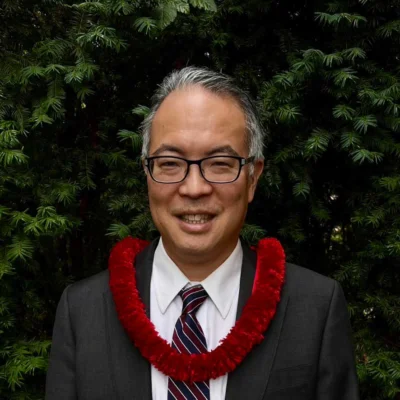
J.P. Kang, pastor of the Japanese Presbyterian Church of Seattle and affiliate theology faculty at The Seattle School of Theology & Psychology, said conversations with Global Ecumenical Liaisons at the symposium left him uncertain about the new model. “I’m not confident they [denominational leaders] have a clear purpose,” said Kang, who attended the symposium as a missionary kid who grew up in Zaire and Japan.
“I believe there is significant work – both repentance and reconciliation – to be done, and I hope we will choose to engage that work with authentic commitment to relationships.”
What comes next for PC(USA)’s theology of mission
The planning team’s next step is to select a smaller drafting group, produce a preliminary statement and circulate it to all symposium attendees for feedback.
Whether the General Assembly will take up the offering of that statement – and whether a denomination still reckoning with the costs of its restructuring is ready to write a new theology of mission – remains to be seen.