This article appears on Presbyterian Outlook with the permission of the Presbyterian News Service. The Outlook has a paywall to help fund our independent journalism. If our paywall prevents you from reading the full story, you can read it freely at pcusa.org/news.
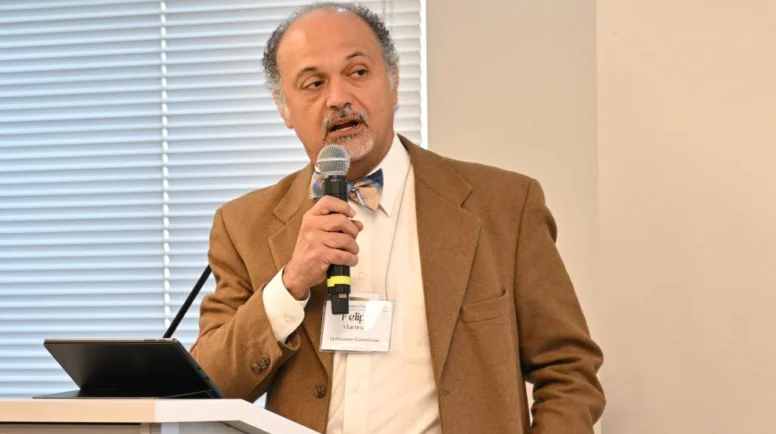
Tuesday’s online meeting of the Unification Commission resulted in commissioners approving comments on some of the items of business coming before the 227th General Assembly, which will be held online and in Milwaukee, Wisconsin, June 22-July 2. Learn more about the business that will come before commissioners here.
Among their comments that commissioners voted to amend Tuesday was COM-22, the Ordination Task Force Report. The UC, which for now is also the governing board of Presbyterian Life & Witness, says that among the recommendations of the task force, financial implications “may not be obvious.” If passed, the report “would have financial, logistical and staffing implications for Presbyterian Life & Witness,” according to the UC’s comment. The UC also notes that the Presbyteries’ Cooperative Committee on Examinations for Candidates does not currently evaluate ordination exams but rather oversees evaluation of the standard exams. One task force recommendation “substantially changes the text of G-2.0607d, adding evaluation to the responsibilities of the PCC for both the current standard exams and the proposed portfolio.”
Other comments to receive UC approval on Tuesday were:
- On COM-32, “Agency Pay Equity Recommendations and Rationale,” which would set caps on executive salaries, the UC notes that the Stated Clerk of the General Assembly and Executive Director of PL&W “now has a significantly expanded job description and portfolio responsibility.” Future recruitment for this position could be hindered by the proposed salary cap, according to the UC.
- Regarding COM-34, “The Algorithm and the Almighty: Navigating AI through a Reformed Lens,” the UC suggests that GA commissioners refer some of the recommendations, including creation of a “Center for the Future,” to PL&W “for assessment on what can be accomplished with existing staff, resources and networks.” The aims of this recommendation “are laudable and in many ways align with priorities of PL&W’s Office of Innovation in addressing AI and emerging realities facing our world.”
- On OVT-004, “On Prohibiting Non-Disclosure Covenants in Employee Relations,” which the UC previously approved, the UC said that the document former World Mission employees were asked to sign, “Employee Covenant: Together in Transition,” were intended “to set expectations that employees lean into grace and professionalism during a time of major denominational and organizational change. The request was what any employer may ask of its employees at any time but particularly during a major organizational shift: professionalism, discretion, and discernment.” That document, the comments says, “reflected the desires of the [then Interim Unified Agency, now PL&W], and the A Corporation which supports it, to do the difficult work of closing World Mission and transitioning to a new way of being present with mission partners in a fashion that would be as positive, productive, and orderly as possible so that the General Assembly’s mission and ministry could continue as PL&W felt called.” It was not a legal contract, the UC noted, and “did not, nor would it have, included a non-disparagement or non-disclosure provision, which are two distinct legal concepts.”
- On OVT-005, “Call to Review the Restructuring of the PC(USA) World Mission,” which the UC also previously approved, the commission says that as a General Assembly agency, PL&W “is but one partner among many alongside mid councils, congregations, new worshiping communities, colleges and universities, camp and conference centers, and others.” PL&W is also one among many global and ecumenical partners, interfaith partners, secular partners and conciliar bodies. “PL&W exists in a vast constellation of partnerships that extend and deepen the ministry of Jesus Christ in the PC(USA) and beyond and witness to the unity of Christ’s body.” The work of the new model of global and local ministry engagement, Global Ecumenical Partnerships, is clear, the UC said: “bring the right people together, tend the relationships, and let local discernment set the next faithful step.” The call to partner in God’s mission remains, the UC said. “What is shifting is how we show up to engage in mission work with deeper listening, broader collaboration, and a renewed emphasis on justice and local context. This is a living process, and it will take time to fully develop a mission structure that wholly reflects who we are and who God is calling us to become.”
- OVT-034, “On Changing Course for a Green Future,” “is largely duplicative of other efforts, recommendations and reports already in process,” the UC said.
- On OVT-038, “Overture to Reinstate the Office of Theology and Worship,” the UC notes that “we have trusted, diverse Reformed theological voices across PL&W that are foundational to the ministry we do in partnership with others, bearing witness to the gospel and working for justice in the world. … We desire to partner with the whole church to amplify the rich Reformed theology that undergirds all that we believe, say, and do.” The UC asks the General Assembly to “prioritize the theological support functions that it expects PL&W to provide on its behalf, regardless of whether it is through and office or a shared responsibility.”