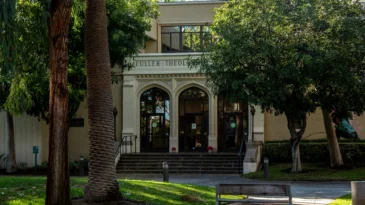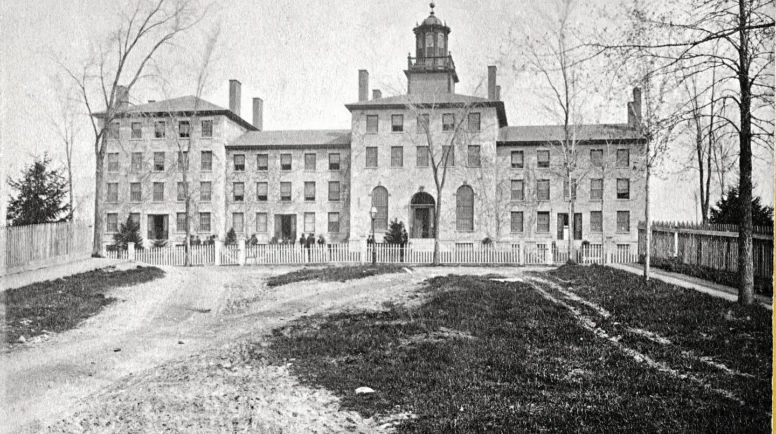
Auburn Theological Seminary has occupied an unusual place in American theological education for almost a century. Because Auburn has not granted degrees since 1939, our work has not been organized around enrollment, accreditation or placement. Instead, our vocation has been to help the theological field look around the corner. We have done so by paying attention to leaders whose vocations were already stretching beyond traditional categories.
Today that vocation continues through theological formation, leadership development, storytelling and research that serves the broader theological ecosystem. Looking around the corner has us noticing what leaders are already teaching us about the questions theological education soon needs to answer.
Five years ago, shortly after I became president of Auburn, that vocation led me to lunch with a community organizer. I was beginning a season of listening to how faith leaders were interpreting the times; because the COVID-19 pandemic was ongoing, I had planned a mask-ready and outdoor location for us to meet. Over lunch, this organizer shared something that surprised me. He had once dreamed of attending seminary.
Love does the slow work of building community instead of merely gathering crowds. This is the kind of character that theological education should cultivate.
But life had taken him in another direction. Instead of becoming a minister in any conventional sense, he became an organizer, working alongside communities across the country struggling against systemic injustice.
As he described the familiar justice issue fights that consumed his days and his spirit, I saw a change in his expression. I recognized the exhaustion, the wearying cynicism and the sense of futility. I had seen it before in pastors, and I had felt it in myself.
Interrupting him, I said, “You know, you’re not just fighting issues. You’re shadowboxing with theologies.”
He stopped, and we sat with that for a minute. Then I added, “I also hear you naming a battlefield you don’t feel equipped to engage — the unnamed theological narratives and stories that uphold these issues. These narratives weigh on you and the communities you care about and send you into the streets to fight. But you’re fighting the outcomes, the resulting policies. The unnamed theology sits ringside, above the fight and unchallenged.”
That conversation has stayed with me through five years of leading Auburn. It suggested that the future of theological education belongs to those who become better at noticing rather than predicting.
At Auburn, we keep noticing emerging vocations, emerging questions and unexpected places where theological hunger already exists — and where God is already at work. As theologian Ted A. Smith has argued, we notice these questions even amid great societal and global changes. The multilayered eruptions in the theological field offer continuing evidence of “God’s longing to be known.” That discovery fills me with hope because hunger is a sign of life.
The urgent question for the future of theological education will not be how to bring more people into seminaries. It will be how to recognize and serve the people already wrestling with theological questions wherever God has called them.
What Auburn can see
Most conversations about the future of theological education begin with institutions: enrollment, accreditation and the fate of the Master of Divinity degree. If our questions began instead with vocation and with people whose lives and futures are shaped by our stories of God, we would notice the movement of theology. It doesn’t stay inside seminaries. It shapes neighborhoods, public policies and our deepest assumptions about who counts as worthy and fully human. It shapes which children are granted a childhood and when we treat poverty as a moral failure. Most people don’t call any of that theology, but all of it is.
People are already doing theology. The church is not facing a shortage of theological questions; it is being invited into new conversations where people are already engaging with questions of meaning and ultimate concern.
Auburn has increasingly organized its work around what we are seeing. We built accessible theological formation opportunities in part because, again and again, Auburn encountered pastors, artists, organizers, teachers, philanthropists and others seeking not credentials but formation. They wanted to learn how to discern, how to resist despair and how to remain human in their work. Auburn noticed and helped others notice what they already suspected: that the deepest questions shaping their work were theological.
One of the most humbling lessons Auburn taught me was that theological institutions do not create the world’s hunger for God, meaning, justice or hope. That hunger already exists. Auburn’s vocation is to recognize it, honor it and accompany it.
A few years ago, the theologian John Thatamanil took to social media to describe something he was hearing from students at Union Theological Seminary, a school many of them had chosen precisely for its reputation for prophetic theology. They kept telling him some version of the same thing: that their activism could not be sustained by activism alone. They sought a depth of spiritual vision that their work demanded but that seemed unavailable. Their diagnoses of injustice were sharp. Their wells for sustaining the multilevel fights were running dry.
…the future of theological education belongs to those who become better at noticing rather than predicting.
Put my organizer friend in a room with Thatamanil’s students, and you’d find them reaching for the same thing from opposite directions. My friend had the language of the movement but no theological vocabulary for what he already knew in his body. Thatamanil’s students had the vocabulary but were still searching for practices sturdy enough to carry them through decades of hard, patient work.
One needed language. The other needed depth. Both were asking for formation.
Theological formation belongs wherever God’s people are discerning how to love their neighbors faithfully.
Once we began asking who was already wrestling with theological questions, another realization followed.
Theological formation is larger than professional preparation
For much of the last century, theological education organized itself around preparing people for ordained ministry. That work remains indispensable, but it has never exhausted the church’s broader vocation of forming God’s people for faithful participation in the world.
Professionalizing ministry was never meant to be the whole purpose of theological education — rather, only one strategy for one part of it. Rather than diminishing seminaries, this recognition enlarges their vocation. Somewhere along the way, many of us let that strategy stand in for the larger question of who needs theological formation and why. The first question begins with institutions. The second question begins with human beings.
Auburn helped us to realize that theological education has always been larger than professional preparation because it forms people for vocation. Vocation is larger than profession. Some are called to congregations; others, to classrooms, hospitals, public service or organizing. These are not secondary callings. They are places where people wrestle every day with questions of dignity, justice, forgiveness, hope, belonging and the common good. Those questions deserve theological companions every bit as much as they deserve technical expertise.
Seminaries can teach us how to interpret texts, analyze systems and recognize injustice. Seminary gave me indispensable tools. It taught me to interpret Scripture, think theologically and recognize injustice. Community taught me that people do not experience injustice as an abstract concept. They experience it as grief, fear, exhaustion, fractured relationships and questions about God’s presence. Those are theological questions, too. The unacknowledged theological questions that confronted me as I worked in community spaces were as profound as those I encountered in the classroom. But they were rarely given the time they deserved on the agenda, and my pastoral leadership has been about trying to give them that time.
The church is not facing a shortage of theological questions; it is being invited into new conversations where people are already engaging with questions of meaning and ultimate concern.
I still think about my organizer friend and what might have changed in his leadership had he encountered accessible, long-horizon resources for theological formation years earlier. He would likely have fought the very same battles. But he might have recognized sooner that every injustice he battled rested on a vision of what it means to be human, that changing laws is not the same as changing imaginations, and that his own endurance would depend on practices of hope, joy and love as much as on strategy.
He might have been equipped with the language to recognize the theological claims that dehumanize him and his opponents.
What do we have the opportunity to form?
Dr. Cornel West has long insisted that we cannot lead people we do not love. I have begun to wonder whether that is not simply good leadership advice but also a theological claim. What if love is also the curriculum? What if the entire task of theological education could be measured by one question: Did this person learn how to love the people God actually gave them?
Love is not sentimental. It stays past the first disagreement. Love listens long enough to be changed by what it hears. Love tells the truth even when the truth is costly. Love does the slow work of building community instead of merely gathering crowds. This is the kind of character that theological education should cultivate.
In other words, love puts theological education on the road to forming healers in a world that usually settles for education that produces information, creates issue experts and culture warriors and shapes winners.
Justice, then, is one practice of that kind of love. It is not a substitute for it. Justice remains urgent and lifesaving, and it is still only one practice among the many that a well-formed life makes possible. A theological education that teaches people to analyze injustice without teaching them to cultivate their own humanity and to love their way through decades of cynicisms, failed visions and disappointment has taught only half the curriculum.
What if the entire task of theological education could be measured by one question: Did this person learn how to love the people God actually gave them?
Looking around the corner has always required Auburn to pay attention to the questions emerging before institutions fully recognized them. The question I now see emerging across the theological landscape is bigger than “How will seminaries survive?” It asks how the church will cultivate theological imagination wherever God’s people are already exercising vocation.
What gives me hope is not that Auburn has discovered a solution to theological education’s challenges. It is that, wherever Auburn has gone, we have encountered people already hungry for theological formation. They are not asking whether God still matters. They are asking how to discern God’s presence in the work already entrusted to them. That hunger tells me that the future of theological education is not something we invent, but something we are being invited to notice.
I see the future of theological education in people who are also hungry to make faithful sense of their lives.
I remain profoundly grounded in a hope that is not shaped by church or seminary demographic trends or institutional forecasts. My hope is born from witnessing people discover that they belong in theological conversation. People find language for the stories they have resisted for years. I have witnessed pastors rediscovering joy when they realize formation is not something completed at graduation but renewed throughout a lifetime. The artists and community leaders recognize that their questions about vocation, justice, suffering and hope are not distractions from theology. Those questions are the invitations into theology.
The future of theological education is being cultivated now by people whose lives have been so deeply formed in the love of God that they can accompany others in the long work of healing communities and participating in God’s renewal of the world.
In that vision of theological education, love is not one course in the curriculum.
Love is the curriculum.