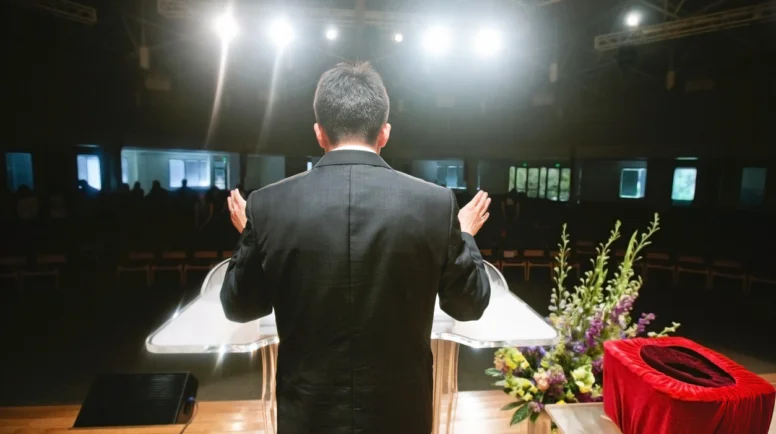
The question of congregational leadership is, for me, a question of ecclesiology. When we think about the purpose of a congregation, and here I prefer the Great Ends of the Church, our next question becomes how are congregations best supported and led to embrace their calling and purpose? For decades the answer to that question was, “with an installed Minister of Word and Sacrament.” We can say unequivocally that era is now ending. Per the denomination’s 2025 annual statistical report, only around 3100 congregations had an installed pastor. The median presbytery had installed pastors in just 38% of their churches.
What this data and the trends seen over the last five years makes clear is that most congregations will not have an installed Minister of Word and Sacrament again. My hope is that instead of wringing our collective hands the PC(USA) will embrace this change. I think wonderful opportunities for our congregations to respond to their calling remain, and I think if congregations are adequately supported and leadership is thoughtfully cultivated our churches can continue to do great things.
This brings me to the Commissioned Ruling Elder. I was ordained in 2003, and never would I have imagined the degree to which I would be advocating for CREs. I have been won over by their passion, dedication, thoughtfulness, creativity and faithfulness. Like many other Ministers of Word and Sacrament I once believed CREs were a fallback option; a leader if a “real pastor” was not available. I cannot tell you how wrong I was.
CREs can and are leading congregations throughout our denomination and they are doing it well. Here at the Town Square Collaborative at the University of the Ozarks in Clarksville, Arkansas, we operate two ongoing cohorts for CREs in the Presbytery of Arkansas. Those cohorts are composed collectively of 18 CREs who are actively serving congregations or nearing certification. At our Rural Ideas Conference last summer we had a panel conversation about church leadership with Robb Webb from the Duke Endowment, Dr. Ben Durheim of the St. John’s School of Theology and Michelle Hall, a CRE in Prairie Grove, Arkansas. Michelle is a teacher who leads First Presbyterian in her spare time. Michelle did an amazing job articulating the role lay leadership can play in vibrant congregations. As the panel concluded Michelle said, “this works, it just takes time.” Exactly! Michelle is one of many examples where we can see a church being well led by a CRE.
In my position, I have had the opportunity to talk to lots of folks around the PC(USA) and other mainline denominations. I have found some remarkable presbytery and middle judicatory leaders who are already doing strong, creative work to identify and equip CREs. Judicatory support is vital if we are to embrace this change in our primary leadership model. Given the steady decline in Minster of Word and Sacrament leadership over the past five years, one would expect our data to show a corresponding rise in CREs over the same period. It does not. This is not because there aren’t strong potential leaders in our pews. It is because we, as a denomination, have yet to broadly embrace CRE recruitment, education and support as a primary form of pastoral leadership.
Overall cultivation of CREs remains haphazard despite the piecemeal efforts mentioned above in some synods and presbyteries. To best support our churches this needs to change. I do not believe, nor do I expect, broad changes at the denominational level. Instead, I believe presbyteries and synods ought to pivot quickly, if they have not already, to focus their pastoral formation efforts on identifying, training and supporting potential CREs.
Presbyteries can begin by considering what vibrant ministry looks like in their context. Next, they can explore the question of what traits are needed in CREs. Following this, conversations about proactive recruitment can begin, followed by discussions about how best to educate potential CREs. Final consideration ought to be given to ongoing support and equipping of CREs. Further, what roles ought CREs serve in your presbytery? Should CREs be leading only their congregation of origin? Can they serve other churches in the presbytery? The Synod? Can they function as pulpit supply around the presbytery? Can they officiate at the table in churches around the presbytery? Can some CREs be trained and equipped to serve as interim or transitional pastors?
These are just some of the questions facing us and the sooner we proactively engage these questions and their attendant processes the sooner we can begin fielding more well trained, well supported and well equipped CREs in our churches. Again, some presbyteries and synods are already deep in conversation around these questions, but many are not.
Statistics which demonstrate the decline of the PC(USA) are often met with doom and gloom. I understand this. But the reality is that we still have thousands upon thousands of congregations around the country seeking to respond to God’s calling in their community. Those congregations can be supported through a variety of leadership models. They have strong, capable lay people in their pews waiting to be equipped and supported to play their part. It is my fervent hope that as a denomination we will meet this change with vigor, thoughtfulness and purpose.