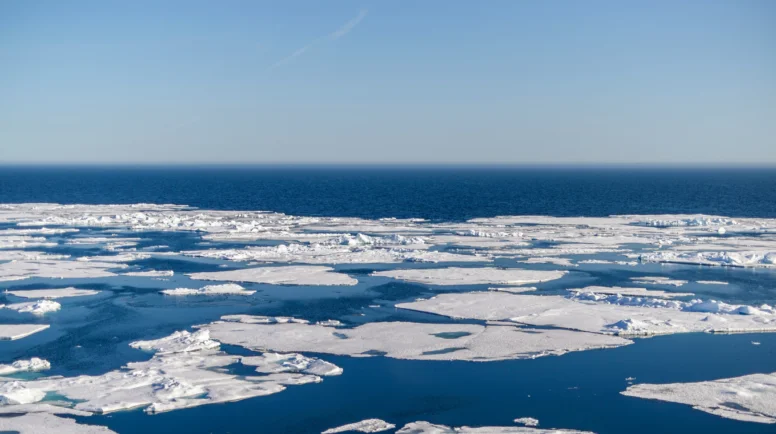
(Washington, DC) – This past month, a diverse delegation of faith leaders from across the U.S. traveled to the Arctic National Wildlife Refuge for a week-long trip. This pilgrimage followed the recent oil and gas lease sale targeting the Refuge’s Coastal Plain. The group made the trip to advocate for protecting the region from destructive oil and gas development and to meet with Indigenous community leaders to learn more about their sacred way of life and how their spiritual traditions are connected to the Refuge.
“This trip is fundamentally about reawakening the soul of America to the importance of the Arctic National Wildlife Refuge. As one of the few places left on earth that is untouched, the Arctic is a modern-day Eden where the wonder, beauty and splendor of God’s creation are on full display,” said Reverend Andrew Black, Presbyterian Minister and Founder of EarthKeepers 360. “The importance of the Arctic National Wildlife Refuge from a climate, biodiversity and spiritual perspective cannot be understated, which is why we are asking faith leaders from across America to join us in protecting and conserving the Arctic.”
Along these lines, the faith delegation will work to build a broader national coalition of religious and Tribal leaders to protect the Arctic. The Gwich’in Steering Committee noted, “As Gwich’in people, who have been engaged for decades in the work to protect the Arctic Refuge and whose work is grounded in prayer, we understand the significance of working alongside a broad coalition of groups, including faith leaders. We hope that seeing these lands and waters in person helps people feel a deeper spiritual connection and understanding of how we are all connected through the Arctic. We also hope the public understands that the rights of the Gwich’in people to continue stewarding these lands is critical to the overall protection of the Arctic National Wildlife Refuge.”
Additionally, many in the faith leaders delegation have prepared sermons, educational seminars, and writings focused on inspiring action to protect the Arctic National Wildlife Refuge. Members of the faith delegation plan to discuss the importance of the Arctic in upcoming sermons and host webinars to inspire people to take action to protect this sacred place.
The trip participants included a wide array of faith leaders, including from Roman Catholic, Evangelical, Mennonite, Episcopalian, and Presbyterian traditions
Below are quotes from the participants:
Joan Brown, a Catholic Franciscan sister, stated, “The Arctic National Wildlife Refuge is forever imprinted in my soul. The vast skies and tundra studded with millions of small intimate wildflowers surrounded by rough gray stone mountains is a sacred place. I know why the Gwichin people call this the sacred place where life begins. My Franciscan and Catholic traditions are filled with stories of sacred places in the wilderness where ordinary people spent time to listen to the Presence of God infused in the natural world. Those times changed them. I am changed after this experience and believe my stories are changing many others as I share and work in solidarity to protect and care for this “keystone place” on the planet. Now my prayers hold the dear Gwich’in people, the porcupine caribou and Arctic Coastal Plain. This fall I will be there again through the sandhill crane and snow geese whose bodies carry the water, sun and tundra of that place to New Mexico in their migration after birthing young during the solstice time in the Arctic. We are all so interconnected, and our faith traditions and our very souls call us into greater solidarity to care for the Arctic Region into which we are woven. As St. Augustine wrote, there are two sacred books, the Book of Nature and Scripture. We cannot know scripture unless we know the Book of Nature. The Arctic Chapter must draw our attention to preserve this area before it is forever destroyed by oil and gas extraction.”
Jim Stump, Vice President of BioLogos acknowledged: ”Before going to ANWR, I knew the arguments: oil, jobs, climate, wilderness, Indigenous communities, and national policy. But being there changed how I knew the place. ANWR stopped being an abstraction and became a living refuge — tundra, rivers, caribou, bears, birds, wolverines, and communities whose lives are bound up with that land. What becomes of ANWR matters. But what becomes of us if we decide that even a refuge must justify itself as a resource? As a Christian, I believe creation is a gift before it is a commodity. Protecting ANWR is a chance to practice restraint and to honor places whose value cannot be reduced to what we can extract from them.”
Susie Faria, Policy Advisor with the Episcopal Church’s Office of Government Relations, recognized: “As part of my trip, I learned more about this region, rich with history and biodiversity. The connection between God, land, wildlife, and people is palpable. Seeing wildlife and meeting the people who call this place home underscored the importance of protecting ANWR and the valuable work of advocacy. To succeed in advocacy often requires perseverance over many years, and protecting ANWR is no exception. Protecting the Arctic Refuge is attainable through a bill introduced in both chambers of Congress, and it’s not too late. While lease sales continue, they are not the same as development. I ask you to join me with a renewed sense of purpose to protect our wild places, including the Arctic National Wildlife Refuge.”
Presbyterian Minister Courtenay Willcox lifted up:
“I am compelled by the early Genesis account of our call to till the earth and keep it. In Hebrew, “till” (avad) means to work or serve, and “keep” (shamar) means to protect or preserve. This is humankind’s first and clearest directive to steward creation rather than commodify it. Keeping the earth is hard work, but creation care lies at the intersection of all that benefits and sustains the Arctic.
The Arctic National Wildlife Refuge brings together a trifecta of sea, earth, and sky, our responsibility to care for the earth, and our obligation to stand with our human siblings. ANWR’s coastal plain is home to hundreds of bird species that travel thousands of miles to breed, and the refuge provides hundreds of thousands of Porcupine caribou with a place to raise their young. Caribou, bear, and fish sustain the Gwich’ins, who lend their voices to protect caribou and sacred land, and stand against the destruction of the Refuge. Short-term development and financial gain will leave the land scarred and desolate, and the Gwich’ins in want. So, let’s avad and shamar.”
Delegation participants’ biographies:
Reverend Andrew Black, National Wildlife Federation’s Director of Tribal Lands and Waters and founder of EarthKeepers 360, a movement focused on educating and empowering faith leaders and congregations to engage modern environmental issues. Andrew serves as a minister at First Presbyterian Church of Santa Fe, is a father of a six-year-old, and an avid sportsman.
Sister Joan Brown, a Catholic Franciscan sister from the Rochester, Minnesota community of Franciscans. Joan works as a community advocate addressing climate change, water and concerns of extractavism through a spiritual lens. She is a revered national speaker, presenter and teacher and is the Founder of the New Mexico and El Paso Interfaith Power and Light and serves on the NM board of the Aldo Leopold Writing Program.
Jim Stump, Vice President at BioLogos and host of the podcast, Language of God. Jim has a PhD in philosophy and was formerly a professor and academic administrator. In recognition of his contributions to the field of science and religion, Stump was elected as a fellow to the International Society for Science and Religion in 2020.
Susie Faria, Policy Advisor with the Episcopal Church’s Office of Government Relations, wher she communicates the positions of the Episcopal Church to the federal government, advocating for the environment, energy transition, justice for Indigenous communities, biodiversity, and more. She is a lifelong Episcopalian and graduate of Long Island University, currently based in Washington, D.C.
Reverend Courtenay Willcox, Moderator for Presbyterians for Earth Care and Transitional Pastor at Northampton Presbyterian Church in Bucks County, PA. She served as Moderator of the Presbytery of Philadelphia as well as on the Presbytery’s Commission on Ministry. Courtenay also founded MainLine Interfaith Green Group (M.I.G.G.), now Main Line PA Interfaith Power and Light, where she still serves as one of the facilitators and helped start a pollinator garden for families.
Background and context
On June 5, 2026, the Bureau of Land Management (BLM) held a massive oil and gas lease sale targeting the Coastal Plain of the Arctic National Wildlife Refuge. This sale is the first of four lease sales required under the One Big Beautiful Bill Act, and generated only nine bids on five tracts (~10% of the acres offered), with participation limited to AIDEA and HEX Energy LLC. No major North Slope operators or multinational oil companies submitted bids. Past lease sales in the Refuge (in 2021 and early 2025) similarly yielded almost no interest from major oil companies due to high costs, public backlash, and reputational risk. While major banks have historically refused to finance drilling in the Arctic National Wildlife Refuge, the Refuge remains under constant threat of new drilling and development.
The Gwich’in Nation, whose homeland spans northeast Alaska and northwest Canada, view the Coastal Plain (Iizhik Gwats’an Gwandaii Goodlit) as intensely holy ground. They have relied on the Porcupine Caribou herd for physical and spiritual sustenance for millennia. The Coastal Plain—the specific area targeted for drilling—is the vital core of the Refuge. It serves as the calving grounds for the caribou, critical denning habitat for endangered polar bears, and the nesting site for more than 200 species of migratory birds that connect the Arctic to all 50 states and six continents.
Later this year, companies will begin conducting seismic testing – the industrial process of running heavy equipment across the Arctic tundra to map what lies beneath for drilling. Seismic testing causes lasting physical damage to delicate tundra and permafrost, disrupts caribou migration corridors and polar bear denning areas, and opens the door to full-scale industrial development.