We got this phone call at 10 p.m. on a Thanksgiving evening. The kids were in bed, and my husband and I were moving around foil-covered serving trays and Tupperware in the fridge, making room for Thanksgiving leftovers and our regular stuff.
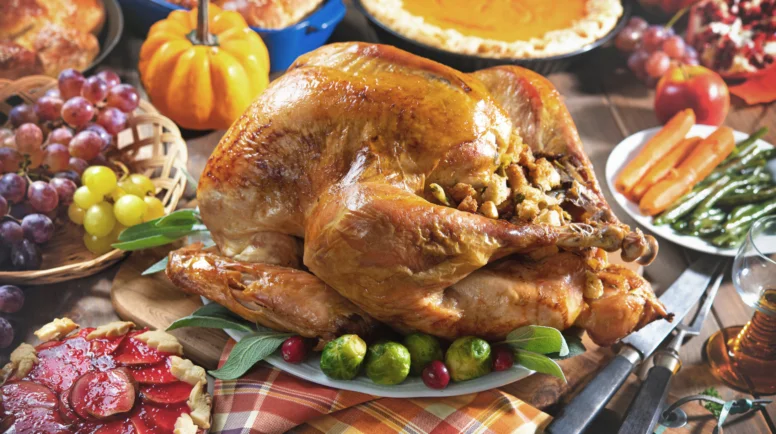
He had spent the day and part of Thanksgiving Eve in the kitchen, baking, roasting, carving, boiling, grating, sautéing, sending waves of savory aromas through the house. He is the chief chef on the holidays; I am chief scullery maid, collard greens picker, meat thermometer-finder, last-minute store runner, wine bottle opener.
The reason for the call was that we had put out an open invitation for Thanksgiving dinner for folks who were stuck in town, maybe working, possibly thousands of miles from home. Because many of our friends were in the news business, many of them worked holidays — us included. Having specific holidays off wasn’t a guarantee, especially when 20 people in a department had seniority over us. And everyone was required to work one winter and one summer holiday, which made it harder for us, a dual-news family with kids, and tricky for our colleagues who had family in other places. Often, those working a holiday were treated to a special meal in the newsroom, sometimes served up or even cooked by the publisher/news director. This was a nice gesture – warm, even – but it could be hard not to feel displaced and out of sorts, even on Thanksgiving, when I make sure everybody knows how I feel about the colonizer rhetoric that fuels this day.
Even by the time my husband and I could choose our days as journalists, our schedules rarely aligned. And news didn’t stop, even on days of parades and games, fireworks. Who is going to tell people how to avoid house fires while grilling on July Fourth and Thanksgiving? Who’s going to tell people about the house fires on July Fourth, started when people inevitably grill too close to the siding, or on Thanksgiving, when someone tries to deep-fry a frozen turkey?
That particular Thanksgiving was rare: We both had the day off.
My husband overshoots the menu, even when we expect a lot of people over. We still had most of a tray of mac and cheese, a mess of greens swimming in pot liquor, and a mountain of ham. We also had a stack of unused Tupperware. This was after a small but steady stream of displaced writers, editors and photographers had come through, almost everybody leaving with a little package of extra food for tomorrow’s lunch.
We have plenty, we told the late caller. Come on over.
The invitation expanded
Christmas was trickier. Santa needed cookies; the reindeer needed carrots. Whichever one of us worked on Christmas Eve would speed home to get things set up, or load kids into the car for (my family’s) traditional ride to see lights, and then we’d stay up until the wee hours to put bikes together or get a jump on the Christmas meal. Because one of us often worked Christmas afternoon or night, we began to order breakfast from Waffle House so we could finish making the Christmas meal and enjoy the kids. We put out the same call, however: There will be dinner here, and should you need a place to go, you are welcome.
The first time somebody arrived earlier than we expected – actually on Christmas morning – we simply added their order to our Waffle House run.
The holiday gatherings stretched into the nights, following holidays, into football seasons, particularly on the days the Carolina Panthers played out of town (meaning my husband wasn’t needed to take photographs), then on all the Sundays. The group of those who gathered stretched, also. Newer, non-news friends began to come over; my mom would make an occasional appearance. On any given Sunday, the neighborhood kids would arrive on their bikes. Eventually, a black pug named Blue was a football Sunday fixture, panting and begging outside the kitchen door.
The best year was the 2015-16 football season, when the Panthers went on a winning streak that took them to the Super Bowl. That year, my husband didn’t photograph the in-town games, but he’d wake up early to get something simmering on the stove or check whatever had been smoking overnight. By the time church was over and folks had changed into jerseys, the bog, roast, spaghetti, chili or brisket had reached perfection. Tossing additional burgers or hot dogs and veggies on the grill took no time.
We never asked for money. We were cooking regardless. But because folks didn’t want to take advantage, they contributed to the food fund or brought a few things to add to the mix and share with everybody.
Bring some corn
Our neighborhood, particularly among the original families, is a generous place. Recently, one neighbor has begun allowing a food truck to set up camp at his house — for no special reason, and for anybody who stops by. He hired a food truck for a birthday party and realized that many passersby thought it was for general use. It is now. He doesn’t need to know you to make sure you’re fed. He springs for food served by the truck. His only caveat: If you come into my yard, you must come in peace.
For about 10 years, an up-the-street neighbor would drag his grill to the front yard in the summers and holler at cars passing by, inviting whoever slowed down enough to listen to bring whatever they had in the fridge, and he’d cook it for them. He figured he would offer a break after a long day.
“What do you need us to bring?” we’d yell from our car — or yard. “Whatever you want,” he’d holler back, sometimes adding, “Bring some corn if you got it!”
We shared garden vegetables up and down the street. One evening, a neighbor knocked on the door and handed me a plate of freshly baked rolls.
There’s a saying about having young children: The days are long, but the years are short. I see those days through a haze of time, remembering them as perfect, knowing they weren’t, but feeling like they graced us with extra hours of joy.
Using the word “displaced” seems wrong, however, to describe how we felt when we couldn’t spend time with family. Displacement is a forced act of survival. In the 2025 book Setting a Place for Us, editor Hawa Hassan describes a displaced person as “someone who has been forced to leave their home . . . due to a variety of reasons, including conflict, persecution, violence, natural disasters, or human rights violations.” People who are violently corralled and sent to rot in concrete-block prisons are displaced. People who are separated from their parents and children because they are not “legal” are both displaced and dehumanized. People who are captured, kidnapped, held against their will, transported to lands unknown — well, that’s a torture that’s worse than displacement.
What would you call a place that’s built by a series of displacements?
We were not displaced. The more I think about it, however, the more displacement and dehumanization seem to be the name of the game: past, present, future.
We were not displaced. But some of us were far away from the people whose genes recognized ours immediately, who automatically welcomed us, far away from familiar foods that harken back to generations we might not have even known. That is a lonely space in which to exist, but it’s a space from which many of us have come.
One December Sunday, when the thin winter sun was just warm enough, I glanced around.
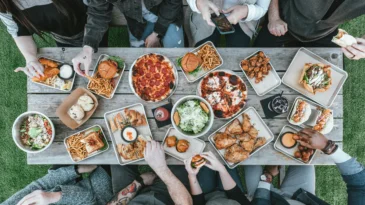
Here’s what I saw: A fully grown friend running around the backyard with several kids and a black pug named Blue hot on his heels. Someone perched on a barstool, holding a plate and yelling at the TV. Two people in deep conversation, somehow, despite the TV and the armchair quarterbacking. My husband scooping food into a container. A person standing at the door, holding a stack of red-topped plastic bowls and saying goodbye for the fifth time.
Y’all still got food? Yes, always. Come anytime. We have Tupperware. You might want to bring some corn.