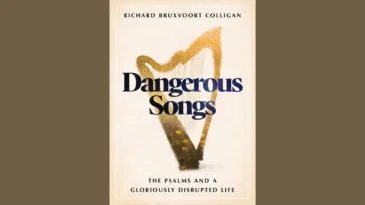
by John Mulder with Morgan Roberts
Cascade Books, Eugene, Ore. 208 pages
REVIEWED BY BARBARA G. WHEELER
Several years ago, Robert T. Coote catalogued the contents of all 28 hymnals published by six English-speaking mainline Protestant denominations during the past 125 years. Among the almost 5,000 songs they contain are 27 hymns that appear in at least 26 of the publications. These 27 hymns, plus “Amazing Grace,” which has become popular relatively recently, are the focus of this fascinating new book by John M. Mulder and Morgan Roberts.
The book’s title is catchy, but not quite apt. Those likely to pick up the book — hymn-lovers and readers of this publication — have already sung these hymns many, many times long before they approach the ends of their lives. That is, in fact, precisely the problem that the book addresses and helps to solve. These great hymns of the Christian church have become so familiar through constant re-use that we sing them by rote; the meaning of their words and even the power of their tunes no longer penetrate our minds and pierce our hearts.
Mulder and Roberts take complementary approaches to refreshing these classic hymns. Morgan shines theological light on the texts. Mulder provides histories of the text and the tune, emphasizing the circumstances of those who wrote them. Most of Mulder’s accounts end with a compelling twist, a nugget of spiritual insight that bridges to Morgan’s theological reflection that follows. The information and insight they together provide is extraordinary. I’ve just finished five years of service on the committee to compile the new Presbyterian hymnal, and many of the facts and perspectives in this book were new to me even so.
Here’s an example of how these two practiced church leaders work together to make old favorites new, even revelatory. John Newton’s authorship of “Amazing Grace” and the story of his conversion from slave-trader to abolitionist are well-known. More obscure is his authorship of another old standard, “Glorious Things of Thee Are Spoken.” When Newton was finally accepted for religious service, he was sent as evangelist to the church at Olney, which was composed, Mulder tells us, “entirely of poor people.” The great poet William Cowper moved there and together they published a volume of “Olney Hymns,” of which “Glorious Things … ” by Newton was one. Read through the lens of an impoverished congregation, the words take on new resonance: “ … and all fear of want remove.” What a promise! God is working to assuage all our thirsts. Ultimately — Mulder ends on this note — God provides.
Roberts then draws out the apocalyptic note that Mulder has sounded. He weaves together the hymn’s metaphors for the City of God, the community that lies east of our idyllic but individualistic Edens. To Newton’s many images from Scripture, Roberts adds conceits from popular music too, from “doing it my way” (in our private gardens) to people being lucky enough to need people (in God’s city). Roberts draws it all together with another line we sing too often without thinking, “We’re marching upward to Zion, the beautiful City of God.”
Read these two fine writers on your favorite hymns before you die. You will never sing the beloved words and tunes the same way again.
BARBARA G. WHEELER is the former president of Auburn Theological Seminary. She was a member of the Presbyterian Committee on Congregational Song.