by C. Christopher Smith
Christian education serves a wonderful purpose in the life of our churches. When done well, it gives us space for studying Scripture together, for theological reflection and for meaningful conversations with one another. And yet, the practice of Christian ed is, in many churches, divorced from the everyday realities of our members and our neighbors.
In my book “Reading for the Common Good,” I suggest that the imaginations of churches could be stirred by business guru Peter Senge’s concept of the learning organization, a community in which learning and action are intricately bound together. “At the heart of the learning organization is a shift of mind,” writes Senge, “from seeing ourselves as separate from the world to connected to the world. … A learning organization is a place where people are continually discovering how they create their reality. And how they can change it.”
My own church has reclaimed a good deal of our Christian ed time for reading together – reading Scripture and well as other books – and for having conversations about what these books we are reading might mean for our shared life in our particular neighborhood. Our practices of reading and conversation are not only drawing us closer together – by clarifying our identity and mission – but they are also drawing us into the life of our neighborhood. As we go deeper into our calling as disciples (that is, as learners) we discover God’s transformation – not only in the midst of our congregation, but also increasingly in our neighborhood.
Here are a few books that have been helpful for us on this journey of reimagining Christian education and reclaiming our identity as learners.
- As a church that takes Scripture seriously, “Reading in Communion” by Stephen Fowl and Gregory Jones was essential for us in making the shift from consumption of Scripture to participating together in the work of reading, interpreting and embodying Scripture.
- Sherry Turkle’s recent book “Reclaiming Conversation: The Power of Talk in A Digital Age” echoes much of our experience with learning to talk together. Appreciative Inquiry is a way for organizations to have meaningful conversations together about their past, their future and their identity.
- Mark Lau Branson’s book “Memories, Hopes and Conversations: Appreciative Inquiry and Congregational Change” was helpful for us in learning to talk gracefully with one another and in showing us the power of conversation for imagining a hopeful future for our church and neighborhood.
We once had a Sunday school class that read several of Quaker master educator Parker Palmer’s books over the course of a year, the most pertinent of which was likely “To Know as We Are Known,” which elegantly invites its readers into the joy of knowing and being known in God’s interdependent, interwoven creation. Although written primarily for Jewish synagogue communities, Isa Aron’s “Becoming a Congregation of Learners,” was a compelling introduction to the basic philosophy of Peter Senge and stirred my imagination for churches as learning organizations.
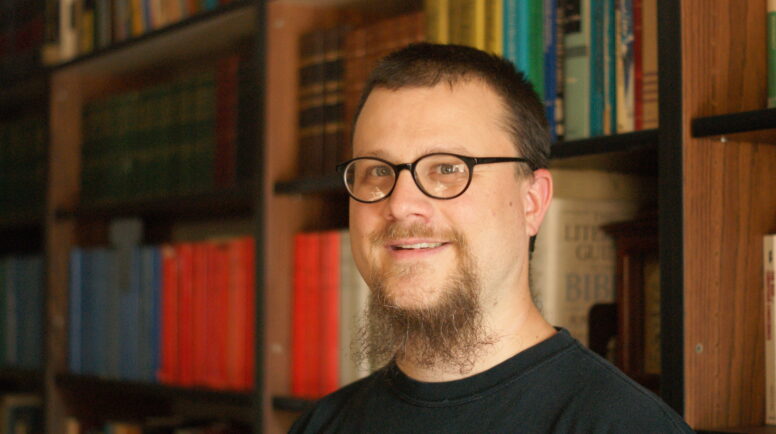
 C. CHRISTOPHER SMITH is founding editor of The Englewood Review of Books (EnglewoodReview. org), and author of the new book “Reading for the Common Good: How Books Help Our Churches and Neighborhoods Flourish.”