Andrew Jackson, whose presidency is marked by the Indian Removal Act, was a Presbyterian. He was also a slaveholder. One might, of course, argue that this reality is tied to his geography and context, but he not only owned human beings, he worked hard to keep the institution of slavery in place and to even expand it. In “Deliver Us from Evil, the Slavery Question in the Old South,” historian Lacy Ford notes, “General Andrew Jackson’s hard-won series of victories over the Creeks and the British, and his constant vigilance against slave revolt, did much to make large stretches of the lower South safe for slavery and staple agriculture.”
Woodrow Wilson was the son and nephew of Presbyterian ministers. His uncle, James Woodrow, founded and edited one of the Outlook’s ancestor publications. Both uncle and father taught at Columbia Seminary before it moved to Georgia. Woodrow Wilson, steeped in Presbyterianism, is remembered for much — including his abysmal record on race while in the Oval Office. Ibram Kendi, in his book “Stamped from the Beginning,” notes Wilson’s relationship to the film “Birth of a Nation.” Kendi writes, “During his first term, Wilson enjoyed the first-ever film screening at the White House, and the selection was a stark symbol of his ideas about race.” In a meeting with civil rights leader William Monroe Trotter, Wilson said, “Segregation is not a humiliation, but a benefit and ought to be so regarded by you gentlemen.”
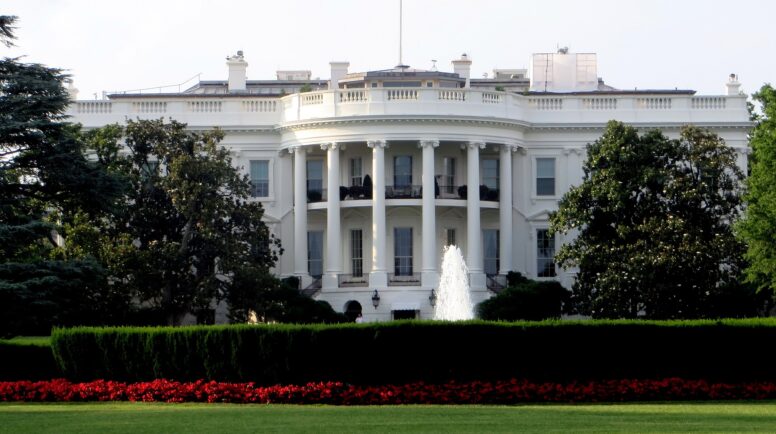
Donald Trump was confirmed in a Presbyterian Church and took the oath of office with his hand on his Scottish immigrant mother’s Bible. A portrait of Andrew Jackson hangs on the wall of the Oval Office since he has occupied the historic space. He and his father were sued by the federal government for housing discrimination. Father and son took the first settlement agreement offered by the feds, admitting no guilt. Steve Bannon, darling of the alt-right, now gone from the administration, now formerly of Brietbart News, shaped the campaign, leadership choices and policy pushes of the early days of the Trump White House.
We have heard from President Trump that there were “good people on both sides” in the Charlottesville events of August 12, 2017. Remarks early in his campaign about Mexican immigrants are infamous. In recent days, he allegedly made disparaging remarks about African nations, Haiti and El Salvador. These comments were contrasted, it is reported, with the question of why the United States does not have more immigrants from countries like Norway. Rhetoric is one thing, policy is another. However, policies like building walls and enacting travel bans demonstrate that the words of our president are not empty, but represent his will.
Admittedly, there have been many other Presbyterian presidents of the United States. Presbyterians trail only Episcopalians in numbers of those who have occupied the Oval Office. Admittedly, too, the three I have named could be evaluated by many other criteria. It is also true that Episcopalian, Methodist and other religiously affiliated leaders do not have stellar records on race. And yet, I cannot help but wrestle with what appears to be a troubling pattern among notable leaders shaped by my own tradition.
Tom Currie, in his article “What does Jesus mean when he tells us to love our enemies?” forthcoming in the Presbyterian Outlook, notes that when pressed “to speak to the situation” in Germany, Karl Barth instead said he would do theology “as if nothing happened.” Currie makes clear that in so doing, Barth does not imagine that the gospel had nothing to say to the situation but rather, “what the church is called to do is to preach the gospel. No other agency has that charge. And when the church does preach the gospel, it helps the culture raise the kind of questions that need to be asked.”
What, then, are we preaching from our pulpits? Is it the gospel being taught in our Sunday school classes and raised in our session meetings? Are we as a church at least partially culpable for the character of leaders who have been shaped in our sanctuaries, fellowship halls and classrooms?
Further, in a tradition marked by whiteness and privilege, what are we doing with and about that exponential white privilege? Why have presidents confirmed in our tradition not been those noteworthy for championing causes that shared wealth, increased equity and upheld the weak?
I am deeply troubled that Presbyterianism is a common thread tying together presidents who have fought for policies of suppression and exclusion. Would that their legacies instead were shaped by questions raised by the gospel — questions like “Who then was a neighbor to the man?” or “Where can we buy bread for these people to eat?” (Luke 10:36; John 6:5)
Recognizing that none is righteous (no not one!), we are yet called to seek God’s Word amid the din of alternate litanies. Those of us with platforms, pulpits and lecterns should prayerfully, diligently, boldly preach the gospel and then be prepared to answer the questions it raises with our lives. Presbyterians have long been active in the public square; ours is not a tradition that espouses retreat from culture. In fact, our theology demands the opposite of such sequester. What then will the legacy of our public lives be? Will they be marked by love or fear? Good news for the poor or a crushing of the vulnerable? Justice or oppression? Faithfulness to Jesus or a capitulation to Caesar? The beatitudes or the NASDAQ? In other words, questions raised by the gospel or the rhetoric of culture? (1 John 4:18; Luke 4:18; Micah 6:8; Matthew 16:25; Luke 6:20-26)
What shape will the Presbyterian threads help weave on the tapestry of history? Would that over time they reveal the cross of Jesus Christ.