 Since the attack on the World Trade Center on September 11, 2001, the United States of America has been at war. By 2015, the U.S. military deployed 2.77 million service members (for a total of 5.4 million deployments) to Afghanistan and Iraq in order to support its Global War on Terrorism in these two fronts.
Trauma and veterans
The prolonged warfare has impacted combat veterans, most often manifested as post-traumatic stress disorder (PTSD) or moral injury (MI), the latter gaining more attention in recent years. Combat deployments affect people and veterans return changed. Some come back worse than others, but no one comes back the same. Many have experienced various forms of trauma. Whether directly from combat operations or not, trauma can be a significant part of one’s experience in war. Trauma can cause severe physical, emotional and psychological reactions often diagnosed as PTSD.
Trauma may manifest in symptoms of PTSD, but the injury to the psyche, or soul, is more than just symptoms of a disorder, reparable through medication and therapy. There is a deeply spiritual aspect to combat that is much more than mere psychological or physiological, and yet they are interrelated.
Many veterans have seen people die and/or get severely injured, came close to death, been injured or killed people — sometimes innocent women and children. Even for those who have not encountered direct combat, long deployments and multiple deployments have caused many to suffer from stressors related to combat deployments.
Therefore, the treatment of combat veterans’ symptoms needs to address the moral aspects of the combat experience. The argument is that the treatment of an individual with combat trauma cannot be devoid of the spiritual aspect of the person. I want to emphasize that any treatment of combat trauma should encompass not only the psychiatric and psychological treatment (with the use of medication and therapy), but also the spiritual.
The impact of these combat deployments is not just isolated to the affected military service member. Families, friends, neighbors, churches and the larger society all bear burdens long after veterans return home. It is difficult enough to leave full-time active duty and try to adjust to civilian life. Issues related to combat stress for Reserve and National Guard members (who serve part-time and are often referred to as “weekend warriors”) after combat deployments can be even more exacerbated because of the lack of immediate support systems upon returning home. Regardless of the type of service, the issue remains for local churches, communities and families to provide support to these brothers, sisters, sons, daughters, nephews, nieces, mothers and fathers who struggle with the aftermath of their combat experiences and try to reassimilate into “normal” life.
What is post-traumatic growth?
 Research appears to support that people can grow from their traumatic experiences, and their religious faith can play an important role in encouraging post-traumatic growth (PTG). PTG describes the phenomenon of traumatized people growing (becoming stronger, healthier, happier and in all aspects better) after traumatic experiences. PTG can be expressed as the improvement experienced in various facets of one’s life and self, because they have struggled with trauma. People who have experienced PTG state that although they would never want to go through it again, they can look back on the trauma as an experience that helped them to be a better person.
In the 1980s, researchers Lawrence Calhoun and Richard Tedeschi began asking about the possibility of people growing from their traumatic experiences. In “Facilitating Post-Traumatic Growth,” they wrote: “Post-traumatic growth is positive change that the individual experiences as a result of the struggle with a traumatic event.” People can endure significantly difficult events in life and come out of those experiences having a perspective that they are better people because of the experience, although it was pure “hell” for them during the trauma. Growth can occur after trauma, and individuals experience growth after much wrestling with the trauma. The struggle helps with meaning and purpose, leading to a new worldview to better make sense of the experience. Trauma leads one to struggle with painful experiences and the suffering of the resulting symptoms, which eventually can lead to growth.
The underpinning meaning of PTG is growth, and many may experience the improvement profoundly. Calhoun and Tedeschi identified five domains of PTG, which can have different measurements of experienced growth for various individuals:
- Greater appreciation of life and changed sense of priorities;
- Warmer, more intimate relationships with others;
- A greater sense of personal strength;
- Recognition of new possibilities or paths for one’s life; and
- Spiritual development.
Faith appears to be important and helpful in helping trauma sufferers heal, as indicated by PTSD research. In fact, research appears to indicate that those with religious faith do better in experiencing healing and growth than those without faith. Therefore, regardless of what the individual suffers from, addressing the spiritual component of combat experience can be instrumental in engendering PTG.
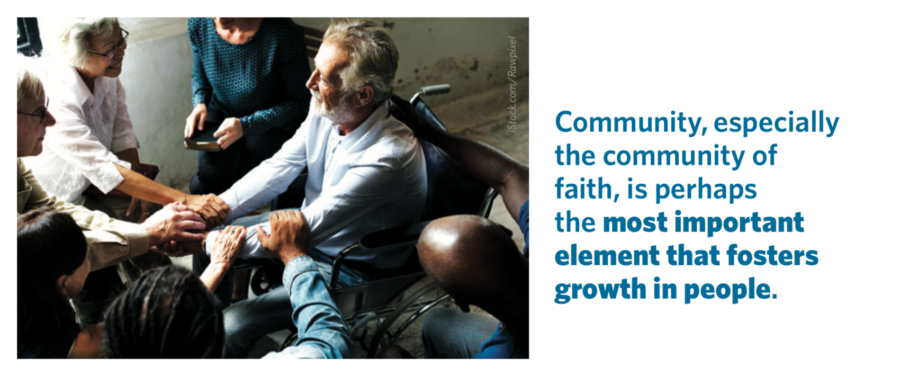
What is it about one’s faith that facilitates growth? Growth is dependent on more than an individual’s faith, theology or even spiritual disciplines. Community, especially the community of faith, is perhaps the most important element that fosters growth in people.
How can the church help?
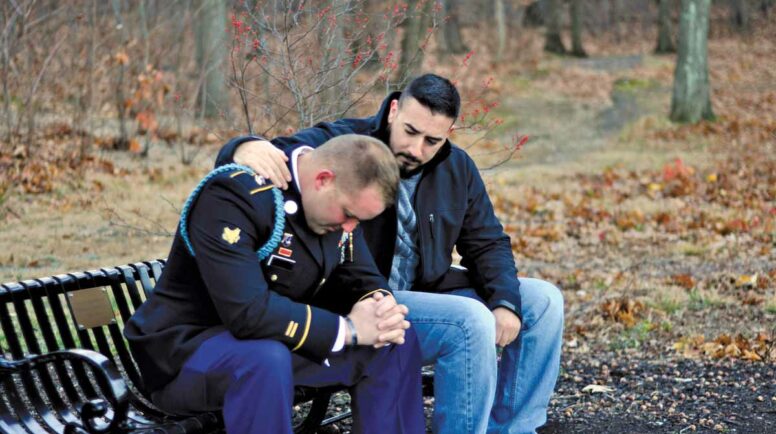
One of the key components to facilitating growth in combat veterans is community with fellow veterans who can share in their experiences. Spiritually, sharing the community of faith with those who have experienced similar trauma appears to be the single most important factor for growth. Why? Community provides a safe place to share and to find help and support, which gives people the sense of the collective will: I can survive because they have survived. Community offers friendship and a sense of bond between people who shared similar experiences of loss, fear, pain and despair, and allows people to give to one another the healing brought through friendship. In these groups, members can begin to hope for the future, find a sense of resolve to move on, as well as learn from the trauma.
What constitutes community in Christianity? The Christian concept of community is perhaps best represented by the church, the ecclesia. According to Daniel Migliore in his book “Faith Seeking Understanding,” the ecclesia described in the New Testament “refers to a unique and transformed way of being human in relationship with God and with other persons. It designates a distinctive form of human community characterized by mutuality, interdependence, forgiveness, and friendship.”
 What is the importance and role of the church in providing the help necessary to move people from sufferers to those who have experienced growth in the aftermath of their trauma? First, the Christian community, the ecclesia, is a “new community of free persons centered on God’s love in Jesus Christ and empowered to service by the Holy Spirit,” Migliore explains.
Community begins with relationships: the church as the body of Christ. “The community participates in one Lord, one Spirit, one baptism, and thus becomes ‘one body.’ … The unity of the church as one body is indispensable if it is to be effective in carrying out its mission in the world,” writes Migliore.
This definition of the church offers the best imagery of the kind of community that aids in promoting growth for those who suffered trauma. The body of Christ then represents, incarnationally, the ministry of Jesus Christ.
The Christian community is called to love God and others in unity while acknowledging and appreciating the individuality of persons. We have unity with God and one another, as brothers and sisters in Christ Jesus; we are united in our baptism and communion, and we must acknowledge our multiplicity that we are diverse individuals. We cannot separate ourselves from the community and we cannot lose our individuality and be subsumed by the group’s identity. As Miroslav Volf put it in “After our Likeness,” our union is based on the union with God, modeled on God’s own relational nature. Volf wrote, “Jesus’ high-priestly prayer, that his disciples might become one ‘as you, Father, are in me and I am in you, may they also be in us’ (John 17:21), presupposes communion with the triune God, mediated through faith and baptism.”
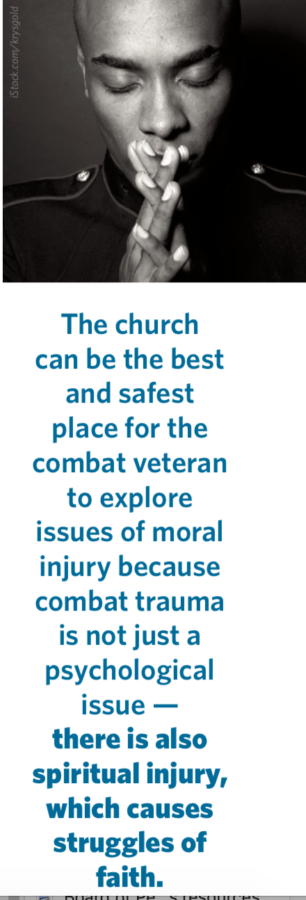
The church is important because the veteran’s trauma can fracture relationships between the injured and other significant people in the veteran’s life. Veterans are highly encouraged to “incorporate community and relationships as aspects of their spiritual experience,” according to Charles Figley and William Nash in “Combat Stress Injury.” A faith community is particularly important and helps veterans find support in the question of theodicy and to help restore and reintegrate the veteran to a healthy relationship with God and the worshipping body. The ultimate hope is that faith communities can help lead the veteran to a new, renewed or restored relationship with God and find healing and eventual growth. The church can be the best and safest place for the combat veteran to explore issues of moral injury because combat trauma is not just a psychological issue — there is also spiritual injury, which causes struggles of faith. The church is essential to promoting PTG.
In the account of Jesus’ resurrection, the Synoptic and Johannine Gospels indicate that women came to the tomb early in the morning. The Gospels also indicate that Peter and other disciples were together, although they are not very clear as to where and how long. Furthermore, there is an account of two of Jesus’ disciples on the road to Emmaus as they encounter the resurrected Christ (Luke 24:13). The interesting discovery here is that in all of the accounts, people are together. They are huddled together, locked in a secluded home somewhere, traveling together and, more importantly, supporting one another. The rest of the world does not share their pain, loss and grief. The rest of the world does not understand their fear and trauma. No matter what the rest of the world does not share or understand, these individuals do; they share their trauma together as a community. Perhaps they knew only fear, despair and hopelessness. However, they find strength and encouragement together as a community because of their shared bond.
The community was the single point of nexus for these individuals, turning their fear, confusion, chaos, hurt, despair and trauma into hope, clarity, order, comfort, peace and growth, both individually and collectively. They needed one another and perhaps even yearned for one another. They felt support for and with each other.
Fundamentally, community for the Christian church is not mere coexistence or even common congregation. Rather, it is the movement to friendship as a way of sharing and inviting others to belong, a deeper way of relating and being with one another (Read more about this concept in “Resurrecting the Person” by John Swinton). Friendship moves individuals in groups from merely being included to really belonging to one another and to the larger community. In this type of friendship, people are called to be with one another, to share life together and to support each other. Belonging involves shared stories and vulnerabilities with a sense of coexistence and mutuality — factors that bond individuals spiritually.
Practical ways to help
 Community is extremely important to facilitating growth. If a military installation is nearby, congregations can help by partnering with a chaplain to host dinner fellowships. These small-group (no larger than 12) gatherings provide a “safe haven” for discussions facilitated by the chaplain or a mental health provider, where veterans can just share their stories. For those farther from military bases, inviting veterans in small groups with another veteran and pastor facilitating would also be effective. Another possibility is to invite younger veterans to meet with older veterans for meals and mentoring in small groups. This offers veterans opportunities to connect and create community as “brothers-in-arms” across generations. The key is safe space for small groups to discuss and share fellowship. Veterans would much rather share their stories with other veterans. Another idea for outreach to larger groups of veterans might be to have special worship services that include rituals of healing and reconciliation, perhaps over Veterans Day each year. There are also veteran groups, like Team RWB (Red, White and Blue), which is an all-volunteer organization that might welcome a faith community to provide space and meals, and to invite them into a safe space to gather.
Finally, for families with a deployed service member, periodic cooked and delivered dinners for the family; monthly or quarterly alone “me” time for spouses without kids; and monthly gathering of spouses for support and fellowship in small groups (with free childcare) would be outstanding. There could be other creative ways in which a faith community could reach out to those families of deployed, letting them know that the church is there to care for them physically and spiritually.
Replicate the ministry of Jesus
Combat changes people and no one comes back the same. The stressors experienced in combat can result for some with PTSD and for many more with MI. Regardless, there is the potential for people who have trauma to grow. The key to facilitating such growth is community. This community is the very incarnational representation of Christ to those combat veterans suffering from PTSD or MI.
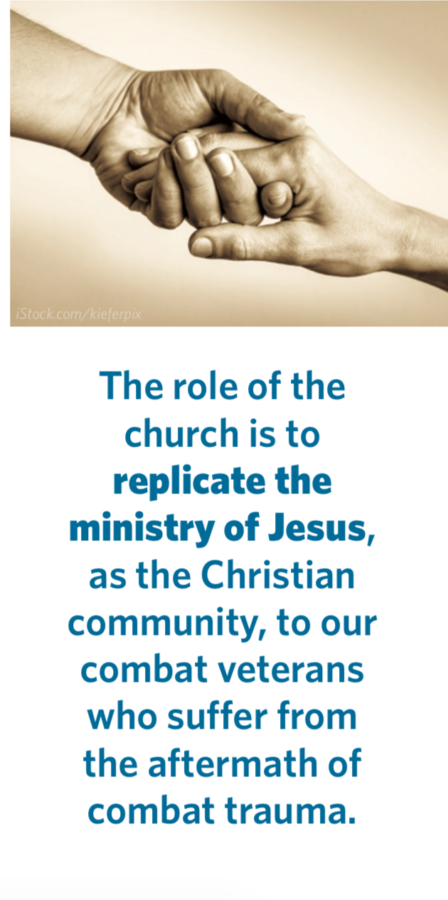
The significant element of this kind of community is love, the love of Jesus Christ. The role of the church is to replicate the ministry of Jesus, as the Christian community, to our combat veterans who suffer from the aftermath of combat trauma.
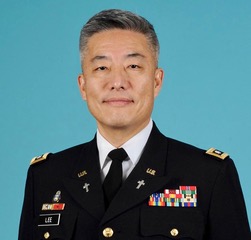 Chaplain (Lieutenant Colonel) MARK LEE is a Certified Educator Candidate with the U.S. Army’s CPE System in San Antonio. With over 17 years of military chaplaincy experience, Lee has given numerous presentations on MI, PTSD and PTG to churches and other civilian organizations.