
It has been over 22 years since the Presbytery of Greater Atlanta sustained my ordination after I completed a gender transition from male to female. While it was certainly historic (I am the first mainstream minister to make such a transition and remain ordained), it did little to change how the church deals with the issue of gender. The world, however, moved on.
Gender has become one of the major conversations in our culture, and if the institutions of faith are going to influence this conversation, we must first learn how to speak this language. Last summer the 223rd General Assembly gave us encouragement in the adoption of an overture from the Presbytery of New Castle, “On Affirming and Celebrating the Full Dignity and Humanity of People of All Gender Identities.” The document goes a long way toward challenging us to treat people whose gender expression varies from what we might call “normal” with dignity and respect. A wise and courageous position for our church to take, it dares us to open our hearts and minds to transgender and gender-nonconforming experience.
Actually, this is the challenge that followed me through childhood, adolescence, marriage, parenthood and middle age. I was 10 years old when I first realized that I wanted to grow up to be a woman. Though the oldest of three children in a family of five, I felt profoundly alone, a stranger in a warm and loving world. At the time (it was 1957), I knew no words for what I felt. It was strange and unknown, and I was afraid that people might think I was twisted and deformed. I was a little boy who wanted to grow up to be a woman, and I believed that I was the first and only little boy with such thoughts.
So I kept them to myself, and when I heard the message from our neighborhood Presbyterian church that God knows me, secrets and all, and that God loves me, secrets and all, it made sense in my little head and gave me a feeling of divine presence that has never left me. God and I were buddies, and we had a secret.
This truth was so profound that when I realized I was on the wrong path studying electrical engineering at Georgia Tech, the way seemed to open to the Presbyterian ministry. God saved me from myself, and therefore my self belonged to God. This path led me through a marriage, being father to two beautiful daughters, a career as a pastoral counselor and into the dark woods of middle age. God and I did a reasonably good job of it, but the joy of relationship and accomplishment waned as middle age proceeded. I successfully carried the secret God and I kept for almost four decades, and it once more threatened to destroy me.
My faithlessness led me to believe that my world couldn’t and wouldn’t contain the terrible truth I clasped close to my chest all those years. My predicament bewildered me. I was then 47 years old, had a loving partner who had become exhausted by my growing depression, two grown daughters who made me proud, a group therapy practice that also made me proud and a good relationship with Greater Atlanta Presbytery where I had been nurtured and challenged. My gender secret encouraged self-destructive thoughts. I was in crisis, unable to continue clutching the secret I had carried for so long.
It was a backslid Roman Catholic, a psychologist from Prague, who issued the challenge that changed my life. “You just think the people you love in your life won’t be able to accept you if you tell them who you really are,” Margaret exclaimed. “And that’s not all,” she added. “For a Presbyterian minister, you have very little faith.” Her words penetrated my loneliness and fear. I came home from our meeting spiritually transformed.
I began to live my life as the woman I had always wanted to be. Family and friends were surprised, shocked even. But they learned to accept my new reality. I learned that gender transition is not a solitary endeavor, but one in which the whole community transitions. The church was the final community I had to open my truth to. This seemed ironic since it was a Presbyterian church that saved me when I was small and bewildered about myself.
It went as you might expect. Initial shock, followed by silence, then hard questions about how I envisioned my future and my ordained work. “I love my life and my work, and the only thing I want to change is my gender,” I asserted hopefully.
“Nevertheless,” replied the chair of the Committee on Ministry, “we will need a letter from you stating your plans and intentions.” It sounded ominous.
That ushered in 18 months of committee meetings, presbytery meetings, individual meetings, prayers, tears and frustration. The story got into the newspapers and turned my professional counseling practice into a disaster area. I struggled financially. I began to wonder if I had made the right decision and not given suicide enough consideration. The Committee on Ministry made overtures asking me to resign my ordination and worked hard to find ways to make this happen.
In the midst of this I met Ida. She left a message on my office voicemail the week after a large article about this appeared in the local papers. I returned her call and braced myself for another lecture about how I should trust God’s judgment about my gender. It didn’t come. She said that she had read and appreciated the recent news article and noticed that it said I got some of my treatment in Baltimore. I was astounded when she asked if we might have had the same doctor there because she had been treated at Johns Hopkins in Baltimore. I was so delighted that I asked her to breakfast, and we met the next week.
Ida and I met for breakfast at the Majestic, a dingy, if historic, Atlanta institution on Ponce de Leon Avenue. As I approached the worn concrete of the diner’s front porch, I saw a small old woman with a cane wearing a rather stylish beret.
“Reverend Swenson?” she called out. I thought to myself, “She looks just like any other tiny old woman, and she is really quite handsome.”
Over eggs, bacon and grits, Ida told me that she had been raised an only child in a small town in southern Georgia. As a very young man, she began treatments in Baltimore that would allow her to become a woman. She returned to Atlanta, where she met and married the man with whom she spent most of her life. I imagined myself becoming an old woman like her, and I liked the prospect.
Ida had been raised in the Southern Baptist Church but discontinued her activity as she transitioned. When she entered a retirement community after her husband’s death, she found herself walking through the large wooden doors of a nearby Presbyterian church. She discovered a loving community there and became a regular piano accompanist for church dinners and Sunday school classes. I expressed delight to have found another Presbyterian in the same boat as me, but her face turned dark, and she pulled away. “I have never actually joined the church,” she said.
 “But … but why?” I asked, bewildered and disappointed.
Tears formed in the corners of her eyes. “I could never join the church because of, you know, what I am. No one there knows about me [being a transsexual]. I didn’t think God wanted me to belong to the church. That’s why your newspaper story was so amazing to me. A Presbyterian minister who was like me. I just had to meet you!”
I was overwhelmed. It seemed as if Jesus himself had just spoken to me with the words of an older transgender woman. For the first time in my life I understood what it meant to have a “call.” It took me 21 years, but I finally heard the call that I had been following since I left Georgia Tech.
The committee called a few days later and said that they had it all worked out and I could surrender my ordination without losing things like insurance. My answer was: “No. Thank you.”
That’s when the stinky unpleasantness hit the fan. The story wasn’t going to end as expected. I had to convince the church once more that I had a valid call to ministry. I met with every member of the Committee on Ministry one on one. We prayed, questioned, learned and embraced one another. I told them the story of my encounter with Ida, and when it was finished, the committee made a unanimous recommendation to the presbytery that my ordination be sustained. It was close, but the church followed with a vote of 186-161. All those years, since the age of 10, I had argued with God. “Why?” I had asked through tears or clenched teeth, brimming with anger. At the age of 49 I finally knew why.
Four ideas
So please allow me to practice my new call by offering some of the important things I have learned on my gender journey. It involves four basic ideas that, if understood, pave the way toward full ministry with and for people who are transgender or gender-nonconforming.
 Sex assigned at birth (what we are used to erroneously calling anatomical sex). When I was born on a snowy day in 1947, the doctor took a look at my midsection and congratulated my mother on her new son. Anatomically, I had all the right equipment to be a normal human male. It doesn’t always happen as smoothly as this, and many babies are born with genitalia that defy easy classification. Beyond that, some have a sex announced at birth that turns out to be biologically incorrect! For an enlightening (if lengthy) discussion about this, I recommend Anne Fausto Sterling’s book “Sexing the Body: Gender Politics and the Construction of Sexuality.” Suffice it to say, biological sex is not as simple as we have been taught.
Gender identity. The word “gender” has traditionally related mostly to language. Recently, however, medical professionals and social scientists have adopted the word to differentiate between sex as anatomy and sex as experienced/expressed in personal and social life. Gender identity is the internally held feeling of being a gender (whether that is a man, a woman or something else). For most of us our gender identity is congruent with the sex we were assigned at birth, and all is well. This did not happen that way for me, and from an early age my internally held sense of self was not congruent with being a boy. This happens frequently enough that there are large international organizations devoted to recognizing and supporting people in this situation.
Gender expression. Gender identity is not the same as gender expression. While gender identity is internally held, gender expression is how we portray gender to the world around us. Again, gender expression may or may not be congruent with gender identity. My realization at an early age that I wanted to grow up female inspired only secrecy, not feminine behavior.
Sexual (or affective) orientation. Sexual orientation is different from gender identity. They are often confused, mixing up who I am (identity) with who I am attracted to (orientation).
What I’ve learned
In the years since my gender transition and my new call to ministry, I have been honored by many opportunities to speak and teach on this topic. I am often challenged about my gender, and have an innate patience with people who struggle to understand because I spent almost 40 years of my life trying to understand myself. Occasionally I am publicly challenged by someone who wants to assert: “You’re not really a woman! You don’t know what it’s like to have your first period, and besides, you can’t change your chromosomes!” While I am constrained to admit that this is true, I also must assert that I have never really been a man, either. Puberty for me was a disaster, and I don’t often see my chromosomes. So I can’t assert being either a man or a woman in spite of our culture’s insistence that I be one or the other.
 My gender journey has been difficult and joyful, painful and lifegiving. I have come to understand that this is often true for most transgender folk. Gender expression is perhaps the greatest challenge for growing boys and girls who wonder who they are and who they will be. This is why our schools are a major focus for how we, as a community, deal with gender expression.
Congregational ministers need to be aware, especially in preaching and liturgy, that their congregants are more varied than they can imagine. There are people in the pews who may struggle with rejection by loved ones, with self-doubt or self-hatred, or who may need to celebrate with others the embrace of who they are. Above all, in language and expression, we, the church, must at all times assure all who hear us speak in the sanctity of the pulpit. As one who has been saved by the church teaching that God loves me and who has preached the love of God to many who believe they are outside of God’s love, I encourage pastors everywhere to take their call to preach the good news seriously.
In my journey to wholeness I have come to a place where I can only echo Dietrich Bonhoeffer and say, “Whoever I am, Thou knowest, O God, I am thine.” Our task is to help each one in our care to come to embrace that truth.
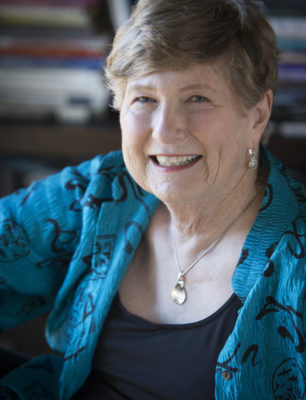 Erin K. Swenson is a retired Presbyterian minister, counselor and writer living in Decatur, Georgia.