CINCINNATI, Ohio — What do these stones mean?
That’s the question the NEXT Church national gathering is asking as about 600 attendees meet in Cincinnati Mar. 2-4.
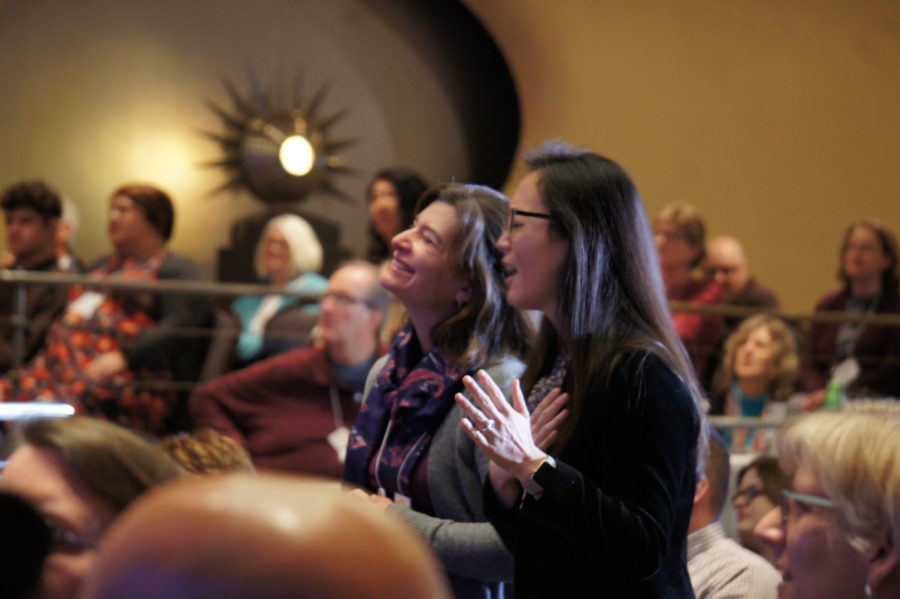
This gathering marks the 10th year of NEXT Church, which describes itself as a network of leaders “across the Presbyterian Church (U.S.A.) who believe the church of the future will be more relational, more diverse, more collaborative, more hopeful and more agile.”
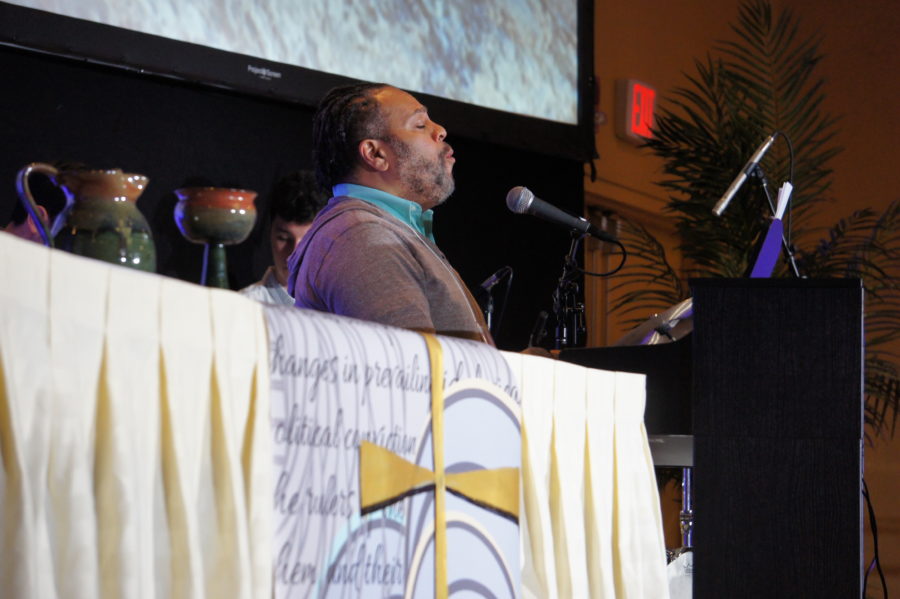
Worship
For opening worship on Mar. 2, NEXT Church’s director, Jessica Tate, preached on Joshua 4:1-10, the story of the Israelites setting stones as a holy memorial in the Jordan River.
Tate asked: “Why are we committed to this church? To the promises of this God?” And: What do these stones mean for the church today?
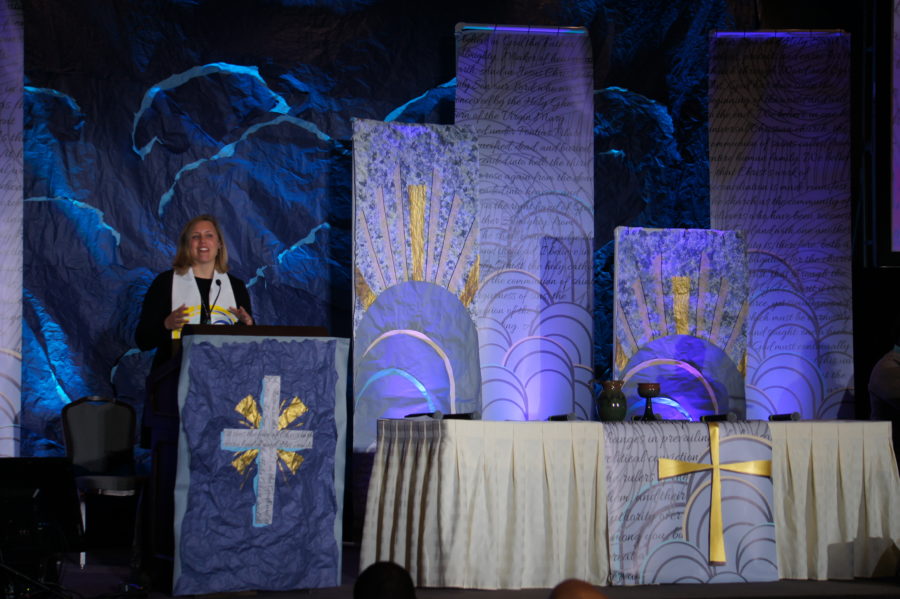
She said the Scripture from Joshua 4 tells that these stones are important markers of memory, of hope.
“This is a place of God’s liberating power,” she said. Tate spoke of Cincinnati’s context, saying there was “new power in this place.” Situated on the banks of the Ohio River, the former dividing line between free states and slave states, “we remember the human brokenness that enslaves us.”
So, what do these stones mean? “These stones help us remember that God is faithful.” Yet, even so, “one person’s liberation comes at the expense of another, as if freedom is something to be hoarded rather than shared.”
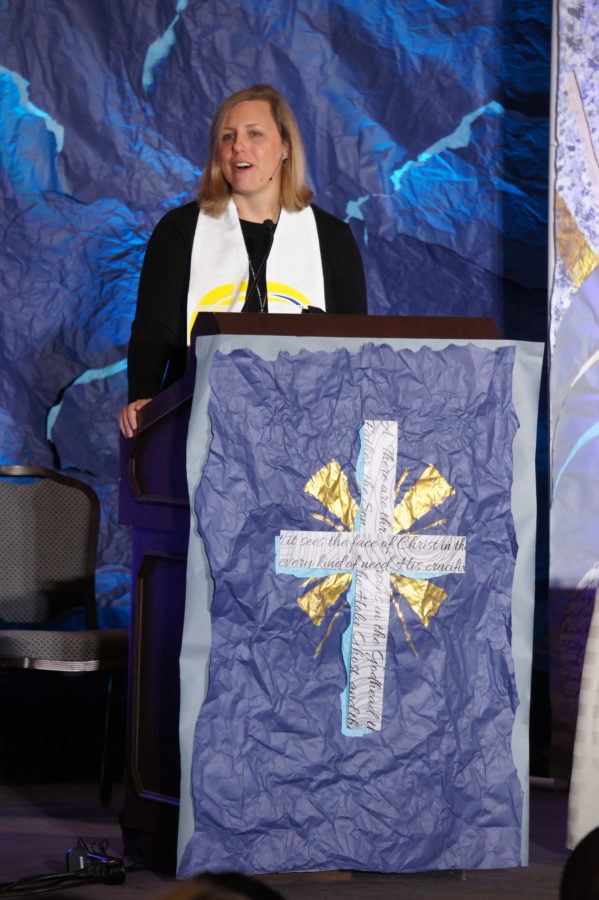 In the Scripture from Joshua 4, “the entire nation crosses over together.” This is an important teaching, Tate preached, because “we are so good at creating fault lines” – especially as Super Tuesday approaches.
“We move into freedom together,” as God’s people, Tate preached. Recalling the Israelites crossing the river, she asked: “What does it mean to stand in the middle and midwife people into freedom?” The stones placed in the Jordan River help “remind us that we aren’t the first people of faith to find our way forward” – but join a long line of people of faith who have gone before. “We will remember together the trials and tribulations of people of faith throughout history and in our time” now.
Looking to the calling of the church, Tate said, “I see us showing up with people in the depths of grief. … I see us striving to be faithful so that peoples’ lives will be changed” by the promises of God’s kingdom. “To be faithful to God’s promises means that peoples’ lives are changed for the better” – to be more whole, to be more free. “We can’t take away all the hurt, and the pain, and the suffering,” but “we can push away the hate. … We become the living stones that relentlessly push for our ministries and our faith” to create fruit in God’s world.”
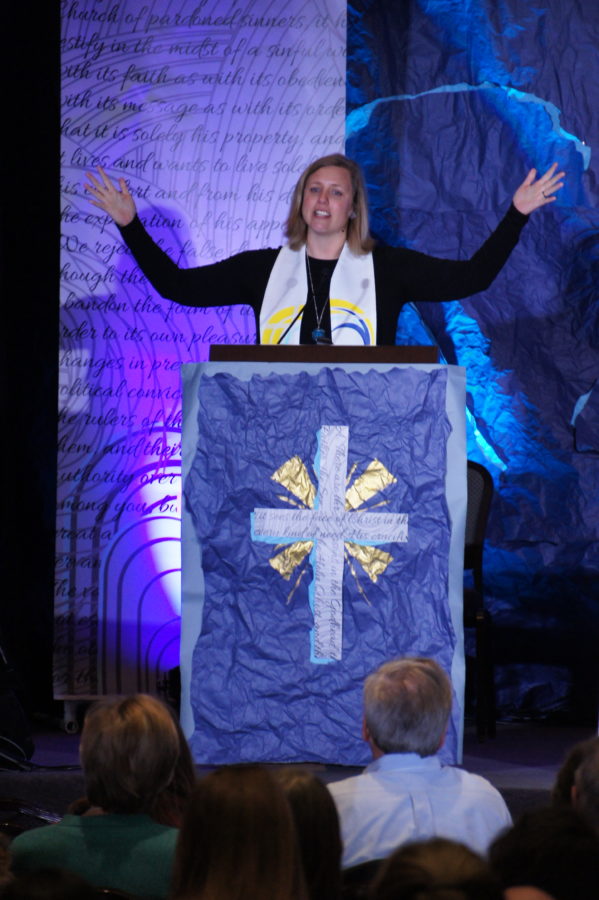
Testimony
During the first testimony, two leaders from Community Matters, an organization in the Lower Price Hill community of Cincinnati, shared the story of their work in the neighborhood. Community Matters launched in 2014 to work alongside residents in efforts to create and develop an innovative approach to community building.
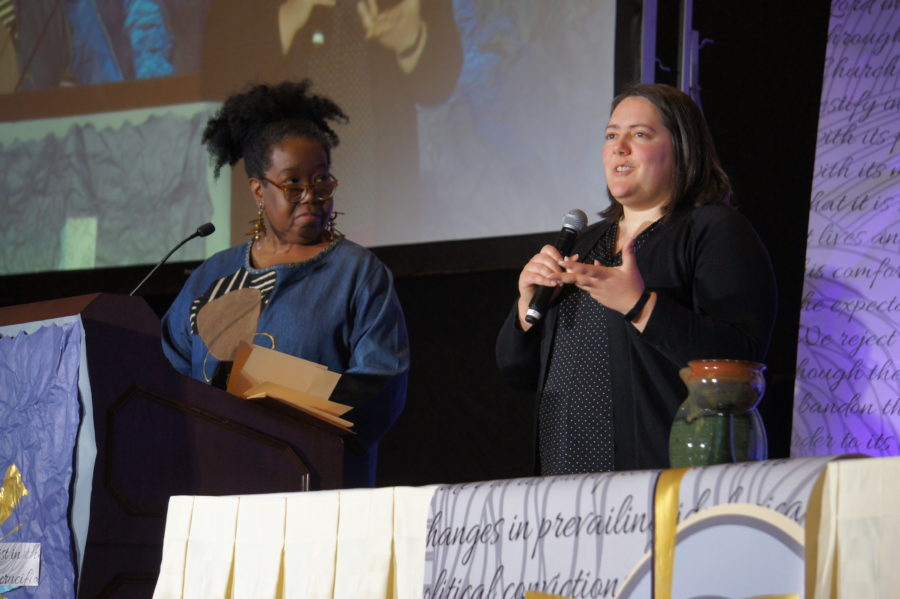
Mary Delaney, the executive director of Community Matters, said people tend to see people in need and categorize them as “the other,” rather than recognize them “at the table with us.”
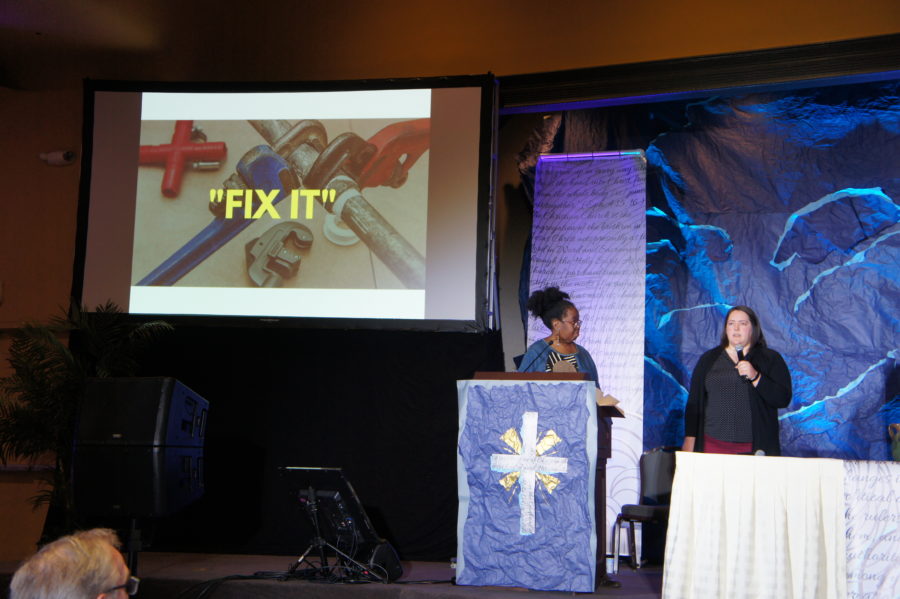
There’s talk of food deserts, she said, but not much mention of “laundry deserts” — there wasn’t a place in their neighborhood to do laundry. They had neighbors who were passionate about running a laundromat, so Community Matters worked to get funds to buy machines and open a laundromat.
Cynthia Ford, the president of Lower Price Hill Community Council and a lead organizer with the Community Action Team, said that the neighborhood only had one grocery store, which recently closed when the owner was ready to retire. That left only a convenience store, which sold “chips and pops and basically junk food — nothing very nourishing.” It “cast us into the depths of a food desert.” The neighborhood got together, Ford recalled, and started to brainstorm what they wanted to have in that space. As a result of community efforts, a social enterprise neighborhood grocery store will launch this summer, building off the model of the laundromat. It will be run by residents, and youth entrepreneurs will be able to sell there.
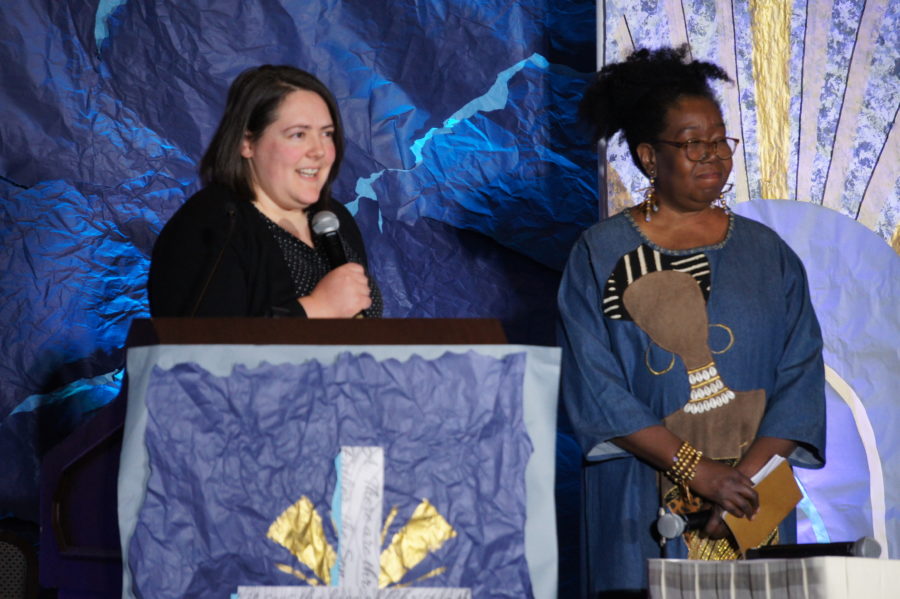
Community Matters looks for talent in the neighborhood, Delaney said, and uses that to build the community through social enterprise.
She said that folks who would visit her community would say that it needs to be “fixed” – but don’t see skills of the people living there, the talents and creativity they bring.
No one wants to be seen or judged by only their struggles, “what we don’t have,” she said. “If none of us wants to be approached that way, why do we do it in communities?”