

"This is most likely the greatest thing I can possibly do because this is what Christ told us to do, go and serve others. So, we are literally taking the words of Christ and putting them into action." So states Will Foltz. A powerful statement, made even more so when you realize that Will Foltz is 14 years old.
What does Will keep going back to? It is called the Agape Community Kitchen, and each Wednesday evening in Elizabeth, New Jersey, it serves about 250 guests a warm meal. It is a ministry begun by the Presbyterian Church in Westfield. Not exactly unique, you might think, but this is not the usual soup kitchen. It was started, and continues to be run, by the youth of the church.
In some places, Presbyterian camps and conference centers are shutting down -- as beloved as they may be, there's just not enough money to keep going.
But Ferncliff in Little Rock, Ark., has a different, more positive story to tell.
Over the last 20 years, Ferncliff, the camp of Arkansas presbytery, has experienced slow but steady growth.
It's found new life through innovation: by responding to incidents of school violence and, more recently, by becoming involved in disaster assistance efforts.
And the heart of its vision, according to Executive Director David Gill, is the realization that Ferncliff isn't just a fun place to visit, but a center of mission and ministry as well.
The Rev. Dr. Sheldon W. Sorge has been named associate director of the Louisville Institute, effective January 1, 2007.
This summer Camp Hanover, a ministry of the Presbytery of the James (Virginia), will celebrate an important milestone. For fifty years the camp has been providing a summer residential camp experience for children and youth, and hosting a variety of church group retreats during the other seasons of the year.
Like many other denominational camps, Hanover was organized in the heyday of church camp startups in the 1950s and 60s. At that time congregations were flourishing and full of young families. Churches instinctively built vital, cooperative partnerships with the camps. Camp and church leaders frequently noted that a week at camp was worth a whole year of Sunday School.
The Presbyterian Church (U.S.A.) is creating a new Office of Leadership and Vocation -- a combined venture of the General Assembly Council and the Office of the General Assembly.
The new office -- part of a continuing reorganization of the denominational structure -- will pull together elements of work involving congregations calling pastors, efforts to prepare candidates for ministry, the training of commissioned lay pastors, support of Christian educators and programs to encourage vocational discernment.
(RNS) WASHINGTON -- Congress approved a bill Dec. 6 that allows people who have filed for bankruptcy to continue to tithe and to make charitable contributions.
LOUISVILLE -- To stay in business, the major fundraising drive of the Presbyterian Church (U.S.A.) needs to find money soon for operating expenses.
So the General Assembly Council's Executive Committee has decided to provide $720,000 to cover those administrative costs. That means the Mission Initiative: Joining Hearts & Hands campaign should be able to keep working until the General Assembly meets in 2008, trying to raise the last $14.5 million of its five-year $40 million goal.
That $720,000 will be "essentially a loan" that would be repaid, said David York, Joining Hearts & Hands' new executive director. The money to do that would come from a 5 percent administrative fee that would be taken out of restricted gifts made to the campaign -- in other words, money that congregations, presbyteries or individual donors provide while specifying that it will be used for particular projects.
In this financially-stressed denomination, what is the future of presbyteries and synods?
With some regional governing bodies already being pricked by fiscal pain, that is a question being asked with some fervor and urgency in the Presbyterian Church (U.S.A.) these days.
Last September, the Synod of the Southwest and the presbyteries of Santa Fe and Sierra Blanca sent letters asking the General Assembly Council to "convene a consultation at an early opportunity in order to address the viability and stability of the synods and presbyteries of this denomination."
The council has created a Task Force on the Viability of Presbyteries and Synods.
And each of the 173 presbyteries and 16 synods is being asked to send a representative to a meeting Feb. 14-16 in Albuquerque to discuss the issue.
"It is no secret in the church that many of our presbyteries and synods are experiencing a 'crunch' that seems to becoming more critical each year," states a letter announcing the consultation. Life is becoming more complex for middle governing bodies, and "the resources to do mission and ministry are becoming more and more scarce," the letter states.
Though not an overachiever like the seminary classmates who memorized the death dates of every important figure for the church history final, I did manage to commit the most important events to memory. And, as every student of church history knows, some of those events were the church councils--
325: Council of Nicea, Arian controversy.
381: Council of Constantinople, doctrine of the Trinity.
431: Council of Ephesus, Theotokos.
451: Council of Chalcedon, Monophysite controversy otherwise known as two natures, one person
553: Council of Constantinople, more Monophysite controversy
Though they seemed definitive, these councils were not the end of the story for everyone.
I was shocked to find out, as an attendee at a conference, "The Forgotten Faithful: A Window to the Life and Witness of Christians in the Holy Land," that many of the indigenous Christians in the Holy Land refer to themselves as non-Chalcedonian. The conference, held in Jerusalem Nov. 2-9, was sponsored by Sabeel, an ecumenical grassroots liberation theology movement among Palestinian Christians headquartered in Jerusalem.
.
Thomas Woodrow Wilson was born just a hundred and fifty years ago in Staunton, Va., on Dec, 28, 1856. The Woodrow Wilson Presidential Library in Staunton is celebrating the occasion this year. Historians rank Wilson as among the first of American Presidents as well as an international figure.
Wilson was named Thomas Woodrow, one of the offspring of Joseph Ruggles Wilson. The senior Wilson, a Presbyterian minister with Scots-Irish and Ohio roots, and mother Janet, or Janey, was of English descent and the daughter of another Presbyterian minister. They brought Janet with them from the Old World to the New before she was a teen.
"And thou Bethlehem, in the land of Judah, art not the least among the princes of Judah: for out of thee shall come a governor that shall rule my people Israel." (Matthew 2:6).
Nestled on a hillside in the Judean mountain range, Bethlehem looks like many other Middle-Eastern towns -- the business district fairly cramped, with windy poorly tarred roads, the outlying areas a mix of farmhouses and villas built into steep, craggy hillsides.
But of course, Bethlehem is different from all the others.
While there is no longer a stable, or any ancient hint that this was Jesus' birthplace, it is to this small town that thousands make their way every year, especially in December. Most Christians drive into the town in buses, with their tour guides pointing out the key locations before making their pilgrimage to the Church of the Nativity, which tradition holds was constructed on the spot where Mary gave birth.
LOUISVILLE -- Will Browne described these days as being "a weird twilight zone" for those involved in the mission work of the Presbyterian Church (U.S.A.)
The denomination is reorganizing -- basically reconfiguring the house top-to-bottom. Some top staff members have left, some new leaders are coming aboard.
Groups outside the denomination's structure are jumping in to international mission in fresh and energetic ways -- for example, by using the Internet to link evangelistic partners around the world. A newly-created alliance between Presbyterian Frontier Fellowship and the Outreach Foundation intends to start sending its own missionaries by the summer of 2007. The Presbyterian Global Fellowship will hold its second national gathering Aug. 16-18 in Houston.
And Browne said the denomination's staff has "probably been guilty of defining mission in too small a circle" -- in trying to control too much, and not understanding clearly enough how significantly the grassroots church is involved in international mission work.
LOUISVILLE -- The Rev. Tom Taylor, a Southern California pastor, touted by colleagues as a bridge-builder in the Presbyterian Church (U.S.A.), has been named deputy executive director for mission by General Assembly Council (GAC) Executive Director Linda Valentine.
His appointment needed confirmation by the GAC's executive committee at its meeting Dec. 7; his expected date to begin work was Jan. 8.
Taylor, currently pastor of the 1,400-member Glenkirk Church in Glendora, Calif., will oversee all of the GAC's mission activities including supervision of six program directors who were to be named after Taylor to manage the council's six restructured program areas.
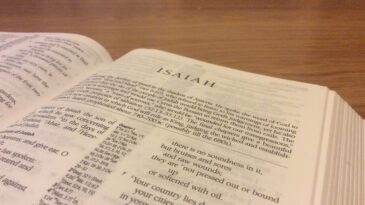
Isaiah 9:2-7; Luke 2:1-14 (15-20)
We know how the story goes: Unmarried pregnant teenager; no room at the inn; baby born in a manger; Emmanuel, God-with-us. It's so familiar -- prompting one little boy to ask his pastor with that blunt, no-holds-barred, child-like honesty: "Do we have to hear that same story again?"
Over-familiarity is challenging for preachers, too, an occupational hazard for those whose job is to listen to ancient texts and proclaim a fresh message from God. It takes commitment. But it also takes courage. Presbyterian pastor James Lowry warns: "Any preacher who can sleep soundly on Saturday nights. ... Any preacher who has no form of gastrointestinal distress on Sunday mornings" -- or on Christmas Eve! -- "has not dealt with the texts ... and is not to be heeded."
In the recent mid-term elections, moral issues such as the war in Iraq and concern over poverty and torture played a significant role -- more so than "wedge" issues such as abortion and same-sex marriage, according to a new exit poll released Nov. 15.
The exit poll was commissioned by Faith in Public Life https://www.faithinpubliclife.org/ and Catholics in Alliance for the Common Good, https://thecatholicalliance.org/new/ both groups working to mobilize voters concerned about religious issues.
"Americans voted their values in this election," said Katie Barge, communications director for Faith in Public Life.
LOUISVILLE -- In a denomination that is losing members and cutting budgets, what does it mean to be a "connectional church?" Why does being part of the Presbyterian Church (U.S.A.) matter?
For Carolyn Crawford, congregational life pastor at Bel Air Church in Los Angeles, that's sometimes hard to answer. Hers is a fast-growing congregation -- with about 100 folks showing up for new-member classes four times a year.
"I can count it on one hand, if that," the number of people who say they've come to Bel Air specifically because it's Presbyterian, Crawford said at the national Moderator's Conference Nov. 17.
"What would you tell me to tell those new members, or people in the pews" about why being Presbyterian matters, she asked.
COLUMBUS -- It's been 50 years since Life magazine photographer Alfred Eisenstadt showed up for Margaret Towner's ordination service in Syracuse, N.Y.
Her mother borrowed a pastor's robe and some women hemmed it up so she wouldn't trip over it.
Earlier, some of the male pastors from Cayuga-Syracuse presbytery, believing that it was time for the Presbyterian church to finally ordain a woman, had taken some of their skeptical colleagues out to play golf. They let the skeptics win. Then they started talking about the possibility of ordaining Towner.
She was ordained on October 24, 1956 -- to her amazement, the first woman to become a minister in the Presbyterian church.
Advent 3: Luke 3:7-18
Commanding stages across the land, and even a few pulpits, including the chapel at our Presbyterian Church (U.S.A.) headquarters, the National Prayer Breakfast, and the Willow Creek Association, he laments the global wildfire of AIDS consuming 8,000 lives every day. One person every 10 seconds. Describing the horror of seeing African refugees "queuing up to die, three to a bed," he delivers a stinging rebuke: "We can get cold fizzy drinks to the farthest reaches of Africa, but we can't get lifesaving medicines to the people who need it" most? The lead singer of the rock band U2, Bono, confesses: "I don't have any letters after my name ... I don't even have a name after my name ... but I am determined to turn around this supertanker of indifference."
It has long been the job description of prophets, including John, who came preaching a baptism of repentance. He, too, was intent upon turning around a supertanker of human indifference -- indifference to the Living God.

Advent 4: Luke 1:46-55
I didn't grow up in the church. As a teenager my faith was incubated in the Jesus movement of the early 70s, culminating in several trips down the aisle to follow Christ. It took me awhile to learn that the gospel is bigger than personal salvation. And yet if this passage is any indication, it is certainly not less. In the first stanza of the Magnificat Mary sings: "My soul magnifies the Lord, and my Spirit rejoices in God my Savior ... all generations will call me blessed; for the Mighty One has done great things for me ..." The use of the first person singular pronoun indicates a very personal experience of salvation.
Entering a world remarkably like our own, marked by political upheaval, economic uncertainty, and religious conflict, the God who acts in Jesus Christ, notes Charles Talbert, "did not go to the top (to Caesar or Pilate) to get things changed; nor ... to the left (to the Zealots)," much less to the religious right (to the Pharisees, or the Sadducees). No, God made a beeline for the bottom. God went to the poor, to the oppressed, to the outcasts, beginning with a teenage peasant slave-girl from the boondocks of Nazareth, a nobody from Nowheresville we know simply as Mary. But Mary is also evidence that God goes to the center, straight to the heart, offering forgiveness and deliverance, and seeking to reign there as Savior and Lord. Blessed are you, Mary, and blessed are you and I, for responding personally.
Jessie Woodrow McElroy Junkin McCall, 87, of Black Mountain, N.C., longtime Presbyterian missionary to Asia, died November 8. A memorial service in celebration of her life was held November 12 at Montreat (N.C.) Church, where she had been an active member since 1981.
She was born June 24, 1919, daughter to Presbyterian pastor, I. Stuart McElroy Jr., and Alice Wilson McElroy, missionaries to Japan. In June 1939, she graduated from the University of Richmond and married William (Bill) F. Junkin Jr.
COLUMBUS -- Joan Gray, a dedicated gardener and the moderator of the 217th General Assembly, calls this an "out of season time for the Presbyterian church."
It's not a definite time for sowing, for pruning, for reaping the fruit. It's an "out-of-season season," Gray said -- a time of uncertainty.
And the Covenant Network of Presbyterians, which drew about 350 people to its recent national meeting, reflected that uncertainty -- much of it centering around how the Presbyterian Church (U.S.A.) should respond to the Theological Task Force on the Peace, Unity, and Purity of the PC(USA).
Here's the short version. Many evangelicals in the church are churned up about the task force report -- talking about withholding funds, making lists of essential tenets, possibly leaving the denomination. The task force report emphasizes that decisions about ordination are made at the local level -- and conservatives are pushing measures in many presbyteries to make it clear that sexually active gays and lesbians won't be ordained, at least not there.
Progressives, on the other hand, tend to be happier with the task force report -- but not with the PC(USA)'s constitution, which limits ordination to those who practice fidelity if they're married or chastity if they're single.
So how hard do they push to try to change the constitution?
People aren't exactly holding their breath, waiting for Denver businessman Stanley Anderson to come up with the $150 million he promised in June to give to the Presbyterian Church (U.S.A.).
But the denomination is close to realizing more than $9 million in unrestricted funding -- the result of a bequest made by a Colorado family more than 40 years ago, which has been held in trust since then and is just now becoming available.
Basically, church officials have heard little since Anderson stood up before the General Assembly in Birmingham and promised a massive unrestricted gift -- the day before the news broke that Anderson had financial difficulties.
He said then he'd give the money by November 2006, but so far nothing has materialized. "He's given several different dates," said Joey Bailey, the PC(USA)'s chief financial officer. "If it comes in by the end of the year, we're going to be really happy."
Editor's Note: The following essay is the fifth in a series dealing with topics of interest and importance to Presbyterians. Author Johnson explains: "The report from the General Assembly Task Force on Peace, Unity, and Purity of the Church provides us both the occasion and the urgency for theological dialogue within the PC(USA). This and succeeding essays are offered as a constructive effort in that direction."
Like the preceding essays, this one aims to break open a conversation between two adversaries locked onto one another. I am respectfully looking for fresh--and faithful--avenues through the current impasse of the Presbyterian Church (U.S.A.) while giving voice to the center in the current theological discussion.
The focus for this essay is the difference between two primary ways to articulate the Gospel, one using the phrase Christ in me/us and the other using the phrase me/us in Christ. Both phrases belong to the Bible, especially Paul and John, but Western Christianity over the last 350 years has stressed Christ in me/us almost to the exclusion of the other phrase. With this emphasis Christianity grew in huge numbers during the 18th-19th centuries.
Advent 2: Luke 1:68-79
Behind this text is a life-long struggle with infertility, and then the announcement comes: "Your prayers have been answered!" What? Zechariah is not quite speechless; doubt escapes his lips: Are you sure? We're getting up there in years, you know ... I guess the angelic messenger hoped for better from the priest: "Behold, you will be silent and unable to speak until the day these things come to pass..." He's speechless now.
Nine months later Elizabeth gives birth to a bouncing baby boy, and only when a still-mute Zechariah scribbles down the instructions, "Name him John," does he go from silence to sound. But the proud father doesn't merely sing the praises of his own newborn son. In this passage Zechariah is singing in the reign.
The Presbytery of New Covenant, based in Houston, Texas, has uncovered three years of mishandling funds, effectively redirecting restricted funds (contributed to particular causes) to the presbytery's own mission efforts. In a letter sent November 9 to all member churches, General Presbyter Mike Cole and Moderator Rupert Turner announced the dismissal of Phillips Lacy, the director of business affairs. They state that Lacy does not appear to have benefited from the inappropriate actions. However, his handling of such funds was hidden well enough to avoid discovery by either their internal checks and balances or their annual, external professional audits.
The presbytery's leadership is studying options for paying back the funds, which will be explored at length at the stated presbytery meeting scheduled on November 18.
© Copyright 2026 The Presbyterian Outlook. All Rights Reserved. Privacy Statement. Website by Web Publisher PRO
