

As we were working on this issue of the Outlook, an incident arose at the British Acting and Film Awards (BAFTAs). An audience member who lives with Tourette's syndrome and is an advocate for others who live with Tourette's syndrome shouted out a racial slur as two Black actors came on stage to present an award. The audience member, who quickly left, later offered an apology, as did BAFTA and the BBC (which failed to bleep out the slur). An emotion-filled photograph of the actors filled the internet. There has since been much discussion about the nuance of inclusion, generosity and responsibility. Who was or was not protected here?
Had this happened during a church service, what would the discussion have been?
Most of us like to think we’re inclusive. Inclusion, however, is expansive, and it asks those who already sit on the inside to reconsider “normal.” If you need to wonder, then you’re probably on the inside. Inclusion is a roundhouse intersection of race and ethnicity, neurodiversity, gender identity, age, socioeconomic situations, physical abilities and needs, education and faith. Discerning who is or isn't at our table requires asking hard questions of our spaces and our own selves.
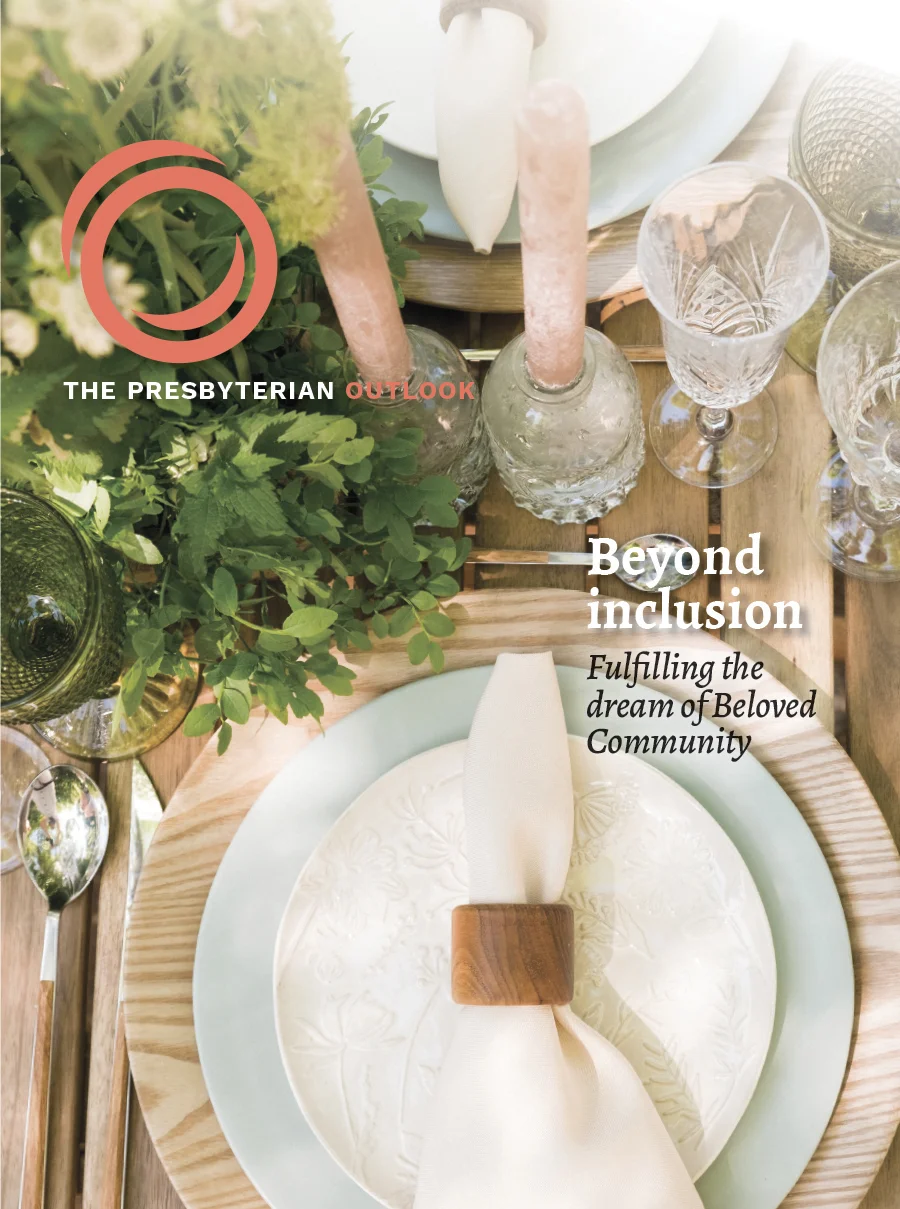
In this issue of the Outlook, we hear from those who advocate for inclusivity, emphasizing the importance of love, acceptance, and understanding across different backgrounds, cultures, historical understanding and beliefs.
© Copyright 2026 The Presbyterian Outlook. All Rights Reserved. Privacy Statement. Website by Web Publisher PRO