“He was in the world, and the world came into being through him; yet the world did not know him. He came to what was his own, and his own people did not accept him.” (John 1:10–11 [NRSV])
“Let mutual love continue. Do not neglect to show hospitality to strangers, for by doing that some have entertained angels without knowing it.” (Hebrews 13:1–2 [NRSV])
As I pen this reflection, the nation last week observed the 150th anniversary of Lincoln’s “Gettysburg Address,” in which he exhorted, “It is for us the living, rather, to be dedicated here to the unfinished work which they who fought here have thus far so nobly advanced.” In the same week we observed the 50th year since the assassination of former President John F. Kennedy, an iconic leader whose greatness was not by longevity of service but a vision of hope for a better world, a world that was rife with a Cold War and a nation that struggled with the unfinished business of racial inequality.
The national division over race and slavery created a deep theological rift that caused the Presbyterian family to have its own civil war, and it took the revolutionary and renovating work of the Holy Spirit to unite divided churches to come together in 1983 to become the Presbyterian Church (U.S.A.).
Yet the unfinished work of a church and nation of reconciled strangers remains. We in the PC(USA) have goals for a truly multicultural church, yet membership statistics tell us that in the last 40 years racial-ethnic membership has not grown as a percentage of the total membership over this same period. None of our six national agencies are headed by racial-ethnic leaders (only one woman serves as head), only three of our 10 theological seminaries are served by racial-ethnic presidents (none are women), two of our 16 synods have racial-ethnic synod executives, and less than 10 percent of our 173 presbyteries have racial-ethnic executive presbyters/general presbyters.
The stained glass ceiling of a multicultural church remains.
In the end this is not about numbers. We can have racial-ethnic people serving in every level of the
denomination and in every council, but cosmetic change does not get to the heart change that is needed. A multicultural church, a multicultural nation, a multicultural society are about hearts that are widened and deepened to welcoming difference as God’s gift.
Multiculturalism means our capacity to engage all who are different from us is high and wide. It means welcoming people without a second thought, a welcome that doesn’t need to study the issue or set 10-year goals and strategies. It means a Church and nation that welcome because it is in our DNA, it’s in our soul and heart just like breathing.
That’s what the commitment to be an anti-racist, multicultural church and society means – undoing racism in all its pernicious forms, including individual, institutional, ideological and theological. This is why the PC(USA) is committed to immigration reform. This is why I have publicly and wholeheartedly supported passage of the Belhar Confession to become part of our Book of Confessions and why the 221st General Assembly will be asked to consider this important Confession again. That is why March 12–14, 2014 Whitworth University will host the
Moderator’s 3rd Conversation on Unity with Difference, where we will focus on race, gender and religious identities.
We enter the holy season of Advent. The doctrine of the incarnation is about the bridging of the Creator- creature distinction, what seemed inseparable, insurmountable, and impossible. The Gospel of Jesus Christ according to St. John tells us that Jesus was not recognized nor welcomed by his own. Joseph and Mary became immigrants in Egypt as they sought refuge from the evil schemes of Herod. Again and again throughout covenant history, the presence of God among us is ignored and unrecognizable.
Advent and Christmas present the Gospel to us: the Good News that God as Jesus Christ through the Holy Spirit has entered our lives. Yet in so many ways and in so many times and places we don’t even know it. The Holy One who took upon Himself flesh and blood that was unlike Him, who took upon the human condition that was foreign to His nature, shows us that to deny difference in our common humanity is to deny the very person and act of love of the God-man who took that same difference upon Himself.
To deny human difference is to deny the fullness of our humanity as being redeemed and welcomed by the triune God. To receive and welcome each other as friends, as sisters and brothers means to welcome into our hearts and into our lives the very Christ who abides and makes His unlikely dwelling among us.
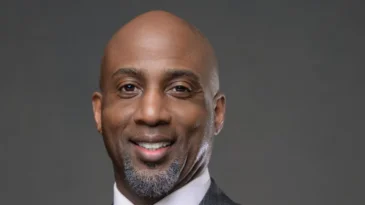
 NEAL D. PRESA is moderator of the 220th General Assembly (2012).