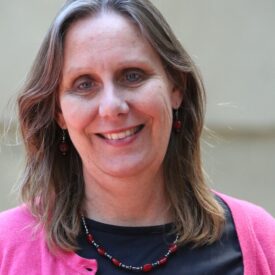
LOUISVILLE – The Presbyterian Mission Agency Board spent a day talking about what makes a good governing board. “An organization will be no stronger than its board, at least in the long term,” Rebekah Basinger, a consultant who led the discussion and who has expertise in fundraising and board governance for faith-based organizations, said at the start of the conversation.
Among the issues the board discussed:
- Who controls the agendas for the board’s meetings? Is time being spent on what matters most?
- How can the board measure whether it’s making progress on things that matter? Where’s the accountability?
- What should the relationship be between the board and the national staff of the Presbyterian Church (U.S.A.)?
- How can board members be ambassadors for the PC(USA) once they leave these meetings and head back home?
Here are some points from the discussion.
How much detail? How can board members get the information they need to make good decisions without micromanaging the staff? For example, as budgets are developed in an era of declining revenue, “we may have questions about why this is funded and not that,” said Marianne Rhebergen of New Jersey. How can the board get answers and be transparent about what’s funded (and what’s not, and why) without interfering with the staff?
Basinger responded that as board members, “you’re more focused on the big picture.” Have confidence that if you need to ask questions, “the drill-down information is there . . . That you have good people in place who understand financials. But you shouldn’t be down mucking in that kind of thing.”
She also said that board members should hold one another accountable and be “supportively interested” without probing inappropriately. “That’s a very fine line between digging too deep and being curious,” she said, “and knowing the right way to ask questions.”
Unity. Basinger discussed the “rule of oneness” – the idea that once the board has made a decision, even a controversial one, it members should support it. Once a decision is reached, “that’s it,” she said – explaining that dissenting voices can be heard inside the board room, but not outside it. Once the vote is over, “you’ve all agreed what the message is when we leave, and we’re all on board . . . Everybody is on message,” perhaps with an agreed-upon spokesperson.
Who controls the agenda? Roughly half the board members (40 voting members) are new at this meeting. Some voiced frustration that they don’t always have time to discuss and vote on or even comprehend the most substantive issues.
Too often with boards, “the important, meaty stuff comes at the end, when we’re tired and people are leaving for the airport,” Basinger said. “If we’re going to rush anything,” it should be “the mundane, the trivia, the tedious.”
In the past the board has made too many decisions based on stories or impressions rather than data or measurable metrics, said Molly Baskin of Illinois, reporting on the gist of a small-group discussion. “We have not demanded excellence. There’s no clear way to measure results. We have not arranged our agendas to allow time for critical discussions or decisions,” and with too much time spent “doing kind of low-return stuff.”
She claimed the agenda has been too driven by the staff, with important business crammed into the last morning when “a lot of people leave, a lot of people check out mentally.”
At the end of a long day, the board discussed ideas for “next steps” for what it can do differently, with ideas flowing about strategic goals, ways to measure accountability, ways to change the agenda, ways to make sure board member understand PC(USA) finances, ways to connect the board with Presbyterians across the country.
“When you come back in April,” Basinger said, “you will see a difference.”