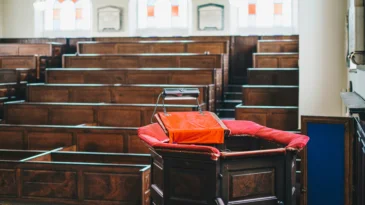
CHICAGO – Brian Ellison, executive director of the Covenant Network of Presbyterians, preached March 17 from a mighty pulpit: to the national gathering of NEXT Church 2015, on the very day when it’s expected that the presbyteries of the Presbyterian Church (U.S.A.) may approve an amendment to change the definition of Christian marriage in the denomination’s constitution to involving “two people, traditionally a man and a woman.”
 Ellison used that opportunity to preach from the fourth chapter of Ephesians on unity and speaking the truth in love. When the amendment passes, “the church will be forever changed,” he said. “Someone will put it on Facebook, someone will Tweet it out – that will be me, actually – and the church will be forever changed. In that moment, some, many, will say that the church has turned around, broken new ground, gone down a profoundly different path. And they’ll be saying that with joy or anger,” as same-sex marriage and the ordination of gays and lesbians have been issues that have rocked and roiled the PC(USA) for years.
If the amendment passes, change won’t end for the PC(USA), Ellison said. Ephesians speaks of unity – and the words “one body and one Spirit,” the call of “one Lord, one faith, one baptism, one God and Father of all” are words that Presbyterians trot out “whenever there’s church conflict to tame about sex or money or power or anything else,” he said.
The passage also speaks of “speaking the truth in love,” and as the PC(USA) moves forward after the presbyteries vote on same-sex marriage, then “speaking the truth in love – this is the change on which the church depends,” Ellison said. “Our growing up by speaking the truth in love.”
The way towards a church that is together and whole is for Presbyterians “to say what is true and honest,” even when the issues are difficult, and to do so with real compassion.
“Telling the truth in love means naming out loud where there is poverty or brokenness,” Ellison said. It means naming inequality, and those who profit from it. Naming how gays, lesbians, bisexuals and transgendered people “still do not stand on equal footing in many of our churches and presbyteries today.” Naming the role churches play “in perpetuating old patterns of racism.”
Ephesians speaks of unity, but “there is no unity in silence,” Ellison said. “There is no reconciliation in avoidance.”
Another reality: “We don’t agree on the facts.”
Over the past year, Ellison has visited a half-dozen presbyteries or so with Paul Detterman, who is national director of The Fellowship Community and an evangelical Presbyterian who wants to keep the current language in the PC(USA)’s constitution – defining Christian marriage as being between “a man and a woman.”
On those trips, “we’ve listened to each other, critiqued each other, gently corrected each other, teased each other,” Ellison said of his friendship with Detterman. They’ve listened to each other “in actual love.”
Last November, in Donegal Presbytery – which just today voted in favor of the same-sex marriage amendment – an evangelical minister approached Ellison after the meeting and said, “This has changed me. I’m committing now to not see you as the enemy anymore . . . That was it, but that was everything.”
The church will be forever changed, Ellison said, if more Presbyterians can do that: form those authentic relationships, be honest, speak truth to one another, not from snarkiness or anger but authentic caring.
At the close of today’s worship service where Ellison preached – on a day when the PC(USA) was on the verge of taking a huge step regarding marriage equality – the more than 660 participants at the NEXT Church conference broke down the paper chains they had erected the previous day down the center aisle of Fourth Presbyterian Church in downtown Chicago, chains representing confessions of things “that hold us back and keep us from going beyond,” they heard the previous day in worship.
Tearing down that barrier symbolizes “us being set free from our walls and our fears,” Ellison said.
“This could well be an historic day in the Presbyterian church. But my hope and my prayer is that every day would be one of deep and even more lasting transformation.”