A caveat as I begin: Scripturally speaking, it is true to speak of the Holy Spirit as a dove. After all, the Holy Spirit descended on Jesus during his baptism “in the form of a dove” (cf. Mark 1:10). I ask the title question in order to explore the metaphor in today’s context – specifically, my context as a young(er) female Presbyterian pastor in a suburb of Houston.
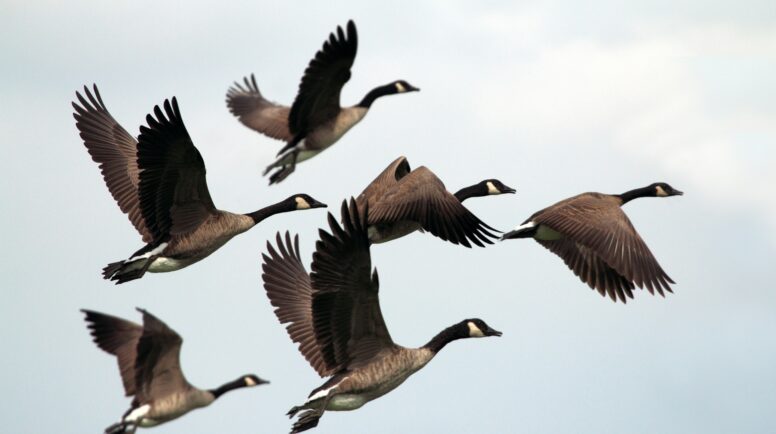
On top of my stack of books these days is Ronald Ferguson’s history of the Iona Community, “Chasing the Wild Goose.” Iona is a 3.5-mile-long island in the Scottish Hebrides with a deep spiritual history. St. Columba, an Irish priest, founded the first Christian community on the island in the 6th century. Celtic Christianity, in which Columba’s community was rooted, thinks of the Holy Spirit less like a dove and more like a wild goose.
The imagery of the Holy Spirit as a wild goose captured my imagination. It’s a startling image, in part because I am afraid of geese. Though the details are fuzzy now, when I was eight years old and my brother was almost three, I witnessed an aggressive goose attack and bite him. No one can remember at this point if my brother approached the goose or if the goose chased after my brother. I don’t even have a clear memory of the event, other than a deeply rooted terror of geese and ducks.
Geese, in my imagination, are aggressive, untamable. Chasing after a wild goose is a fruitless exercise, as the phrase “wild goose chase” implies. I also learned that geese are adaptable and strong creatures; they have not only endured urbanization, but have thrived. Wild geese can live into their 20s; I read that one wild goose even lived to be 30 – pretty impressive for an herbivore subject to multiple predators (including humans!).
When I think of doves, on the other hand, I remember the flock of doves released every Easter during the sunrise service at Forest Lawn Cemetery in the Hollywood Hills. Once released, they flew together in formation. As they disappeared from sight, I assumed they returned to their owners, still in formation. Doves seem gentle, even domestic. They aren’t frightening, nor do they strike me as a particularly hearty bird.
It may be that I have a false impression of doves. Perhaps I have stared at the image of doves for too many years, appreciating their form stitched in beautiful church banners and etched into stained glass windows, without appreciating the strength or unpredictability either of doves or of the Holy Spirit. Thinking of the Holy Spirit as a dove feels safe, comforting.
Thinking of the Holy Spirit as a wild goose is uncomfortably dangerous. If the Holy Spirit is like a wild goose, then he (or she) cannot be pinned down or domesticated. Like a goose aggressively approaching a picnic in the park, the Holy Spirit doesn’t always wait for us or our requests in order to act. The Spirit doesn’t give up on God’s children or God’s world in times of struggle or difficulty, just as I imagine wild geese don’t give up in the midst of a hard winter or when surrounded by predators.
We need an untamable, strong, undomesticated Holy Spirit today. So much in our world and our lives breaks our hearts and strikes fear in our bones. But, the Holy Spirit is hearty and indefatigable, and we have that Spirit living inside of us. If we truly received this reality, then how might our lives change, not just in how we feel, but in how we act?