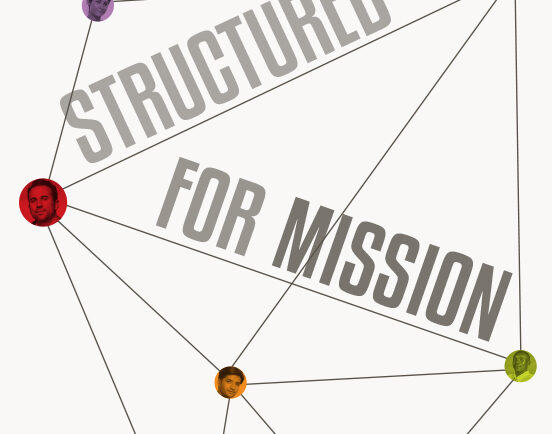
 by Alan J. Roxburgh
InterVarsity Press, Downers Grove, Ill. 172 pages
REVIEWED BY ALLEN D. TIMM
In this book, Roxburgh, one of the leading writers on the future of the church, says that our current day institutions are unraveling. Those of us who live near or in Detroit saw the city spiral into bankruptcy. The Rotary Club of Detroit has an average age of 65 and has dropped from a high of 600 members to fewer than 100. So why have many of our trusted institutions become irrelevant, including the church? Roxburgh says that the many institutions do not allow easy access. To lead a new project, a newcomer has to move up through the “chairs” of leadership. In many churches, if elders see potential recruits, they ask them to serve on a committee. Or maybe they are invited to teach Sunday school. And if they are good at that, then maybe they will be asked to be a deacon, and if they are lucky, they will move “up” to session.
But Roxburgh says church structures cannot be thrown out. Structures give form to lived-out narratives. When something has to get done, there needs to be a plan and a group that will work on it in an orderly way. Roxburgh suggests that structures need to be more flexible and accessible. He believes that structures today are often top down, sending down orders. They are not distributive of authority and resources, giving easy access to resources without taking months. He would like to see sessions give away more authority in deciding about the use of resources and the work of ministry. If the session is going to be more permission giving, they need to establish trust. Leadership needs to find more ways for people to engage at the entry level. There need to be networks that are local rather national. Congregations can work with other churches. They can find partners in schools, agencies and local governments. Leadership needs to help members engage in their context.
Roxburgh writes that pastors can increase their effectiveness by forming learning communities with the leaders or pastors of their community. In these groups, Roxburgh suggests pastors might ask, “What are the challenges we currently face for which we presently have no answer but must address if we’re to live into God’s future for us?”
In coalitions, leaders can ask adaptive questions that seek to change values and practices. Not only does Roxburgh say we need a change of culture in the church. Churches also need to rewrite narratives that cultivate a movement that is ready to change lives. They can do this through calling together “charrettes,” groups which including residents of the neighborhood, and discuss scenarios for facing challenges. Experiments are suggested and then tried. By gathering these broad coalitions, narratives can be changed. People work together in an egalitarian style. I have seen this work on the East side of Detroit as the Villages Community Development Corporation worked to make the neighborhood more livable.
Pastors and elders, and even higher governing body leaders, who study this book will be challenged to lead by inviting others to join them in service and ministry.
ALLEN D. TIMM is executive presbyter of the Presbytery of Detroit.