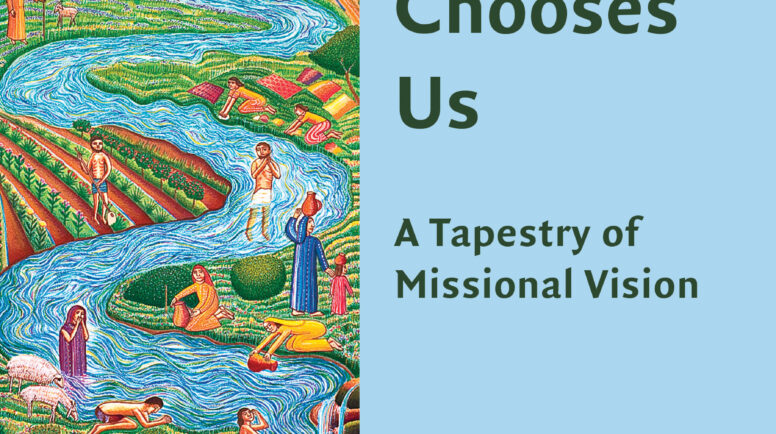
 by George Hunsberger
Wm. B. Eerdmans Publishing Co., Grand Rapids, Mich. 176 pages
REVIEWED BY MICHELLE SUMPTION
In this book, George Hunsberger gifts us with 10 poignant essays that weave vibrantly into the missional church conversation. Written over the past 20 years, these essays speak to those who seek to be missional in our changing culture, engaging the culture with the gospel and the church.
The book is the author’s testament that he “has been laid hold of by Another,” and he encourages the reader to embrace his or her own role in the gospel story. He brings a sensitivity to, and passion for, the church’s missional identity and practice. He specifically speaks to the North American church, with its expectations, viewpoints and practices. In light of this perspective, Hunsberger dates each essay with the year it was written, as each essay is a response to particular concerns or opportunities that arose in that context.
I read this book from my own perspective of a 20-something pastor, two years into her call, curious as to what the church may look like in 10 or 20 years (or maybe even upon retirement). But whether that curiosity comes from wariness or excited anticipation, Hunsberger’s insight and theology has given me a hope-filled conviction to continue engaging in the missional conversation. In many ways, his work has provided inspiration and motivation to see afresh the ways that the missional church can be sought.
The first essay brings into focus that “the daily lived performance by vibrant communities of Christ is the most fundamental testament to the gospel’s force and power.” Yet as the world is constantly changing, “it is along such a storm front as this that the church finds itself called into being and implicated on the side of what God is still steadily and faithfully intending for the world, a world in which there is more at work than the force of evil.” Each essay packs its own punch, providing insight and witness to the challenges and opportunities confronting the church. I had to take it slowly.
The book brought me into the classroom of Professor Hunsberger, with each essay being its own lecture, requiring its own amount of prayer, contemplation, discussion and response. Yet if the reading of the book is considered the classroom, it could also be considered the call into the mission field as he expertly narrates the gospel’s captivating call on our lives.
Hunsberger urges the church to ask: “Are our structures and our assumptions about the church’s nature and purpose no longer suited to the time and place in which we currently live?” The question ties in with many conversations and prayers I have been involved in recently concerning the opportunities of today’s church. But he also reminds the reader that the church’s calling is “to embody the gospel’s ‘challenging relevance,’” pointing out that the Chinese character for “crisis” combines two characters — one for “danger” and one for “opportunity.”
As the Chinese character is made of both danger and opportunity, so is the current situation of the church. This book is an important resource — a necessary tool and aid as one prayerfully discerns this opportunity for the church. I am blessed and thankful for this wonderful work.
MICHELLE SUMPTION is teaching elder at York United Presbyterian Church in York, New York.