by Kristin Frederich
“Never” was the response.
I had called the chair of the personnel committee to go over things before session that night. I caught him on his cell phone, but the connection was poor.
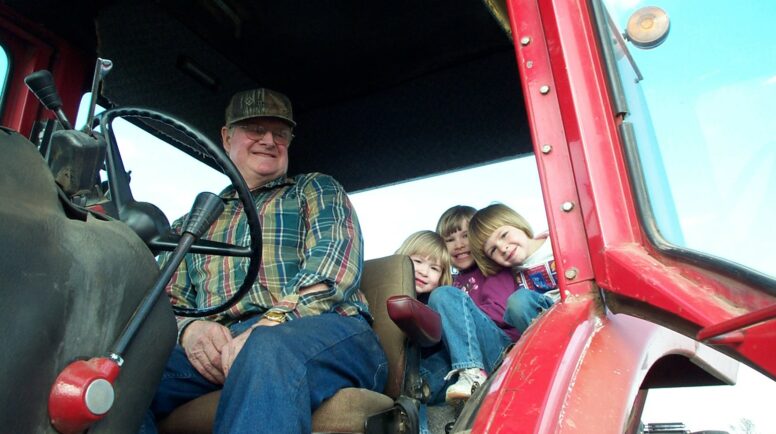
“I’m on the tractor,” he shouted. “I’ll call you right at 5:30!”
True to his word, he called. “Well,” I asked, “Did you get it all done?”
“Never” was the response.
What wisdom I have learned from those who work the earth! It is both humbling and wonderfilled.

Several years ago I moved from the City Line of Philadelphia to pastor a parish in rural Wisconsin. Welcoming me to the presbytery a colleague advised, “You will know you are working hard, when you work like a farmer.” People who till the earth and care for its animals work hard. The job is unrelenting — there is always more to be done. But the work is in rhythm. Animals must be tended daily, at roughly the same time each day. Fields must be cultivated in the spring and harvested in the autumn, as the weather allows. One cannot rush a field in its growing, or a cow with the time of calving. Weather is never a constant, yet ever a partner in the endeavor. Working steadily with patient endurance and living in rhythm are foundational to a flourishing farm.
Every one has their place on a family farm. A local youth minister says, “If you want something done — get a farm kid to head it up.” He adds, “There is a reason they use the phrase ‘Get ‘er done.’” Chores are a wonderful tool for learning community, responsibility and accountability.
Farmers take the long view, whether it’s a dodgy year for crops or a child who has lost her way. One farmer spoke peace to the sad and regretful mother whose teenager was far from home. He simply nodded, “She’ll be back.” Fields can be replanted. Nothing is ever without worth or beyond saving.

Now I see the father in the prodigal story — working his fields, keeping track of his animals and employees — always with an eye to the horizon. No wonder “when he was still a long way off” the farmer/father was the first to espy the wanderer.
Farmers’ eyes are always looking up and around. Good cultivators know the weather. They don’t fight it (and the best ones don’t even complain about it), but partner alongside the weather, with a serenity that looks nothing like my own fevered attempts to plant a garden. Allowing time and weather to run their course, without striving to control them, allows for a steady tempo in the days.
I was surprised that a crucial piece of living with the rhythm of the earth is Sabbath keeping! Several of the winning enterprises in this parish have never labored on the Sabbath, Sunday morning. A member of our congregation, noted in the region for his wise discernment and calm advice, is one of these. After services one harvest day, I commended him and his wife for their persistent attendance in church and availability to their kids and grandkids every Sunday.

The wife put her head to one side and said with a sparkle, “It’s never been a trouble. You know, the work always got done. That’s providence.”
Trusting in provision and believing in abundance seem to be a fruit of rural living. This worshipping community is known far and wide for their funeral luncheons. Following a service in witness to the resurrection, the generous hospitality of welcome, cooking and serving a meal offers loving comfort and gentle support to those bereaved. Laughs one cook, “There’s always enough… Even when there isn’t.”

Last week we had three such services. Clearing up for the last one on Sunday afternoon, a former pig keeper told me: “I know we always say ‘Glad to do it!’ when asked, but maybe you won’t ask again so soon.”
When I am questioned by colleagues, “What about non-church members, do they get all that too?” I’m made aware of another way this rural parish has educated me. Farmers “get” the agrarian parables of Jesus in ways I never learned from commentaries. “Rain falls on the just and the unjust” (Matthew 5:45). It doesn’t matter. One of our elders remarked that funeral lunches were one of our best tools for evangelism! “Trouble is,” he added, “folks are just dying to get in.”

Recognizing the wisdom of allowing the wheat to grow alongside the tares (Matthew 13), this parish is welcoming to people of all ages and stages. The openhanded lived hospitality of this church continues to challenge and teach me to put heart into and arms around my city-bred open-mindedness (emphasis on “mind”). The church body took on a homeless teen as their corporate responsibility. He was able to graduate with church members putting on his graduation party! The young man still lives and works in this parish — four years later!
The farmers I know are resilient, innovative and always learning. They read up on agrarian technology and attend workshops and conventions. My farm friends are constantly preparing and diversifying in order to move with the times and meet the needs of another generation. Some in our parish are exploring wind power, while others are raising caribou. This is a great model for our Christian education team as they innovate and design new ways to reach children and young adults in efforts to deepen their faith and understanding. It is planning for the future while protecting today. Those who work the land invest in the future in concrete and priceless ways.
A friend asked me, “Don’t you get bored? Stuck out there in the middle of nowhere?”

“Never,” I replied. My perspective has been changed by the gracious acceptance and gentle instruction of those who cultivate that “nowhere.” Now, rather than seeing big, empty spaces between cities, I recognize some of the richest, most productive land in all the world. What a privilege!
Finally, I have learned from the way most farmers spend a lot of time on their own. Each finds a way to be at home in his or her own mind. Farmer and author, Wendell Berry, refers to this when he writes: “I come into the peace of wild things who do not tax their lives with forethought of grief… . For a time I rest in the grace of the world, and am free.”
Kristin Frederich was ordained in the U.S. for work with the Church of Scotland. She is currently learning and pastoring in rural Wisconsin.