by John Reiter
 “I thought refried beans only came from a can,” the volunteer chuckled, while scribbling down the recipe for homemade refried beans. The 6-year-old translated for his mom, who spoke little English, and for the volunteer, who spoke even less Spanish. He was bouncing and fidgeting because he did not want to be translating. He wanted to be playing with his neighbors and some of the younger volunteers who had just started a kickball game. His mom gave him permission to go. Both women watched him take off and exchanged a look and a laugh, both being quite fluent in “mom.”
This was the story that the volunteer shared that night as tears rolled down her cheeks. “We couldn’t be more different!” she reflected. “When my kid has a school project, I go to the store and buy the poster board and markers. When her kids have a project, she has some hard decisions to make. What can they do without that month? Can they ask the school, again, for supplies? Culturally, socially, educationally, ethnically, we are so different… but we both speak ‘mom.’”
Twelve years ago, the staff at Cedarkirk responded to a need by developing a new type of short-term, domestic, mission trip experience. Cedarkirk is the camp and conference center of the Presbytery of Tampa Bay and Peace River Presbytery. For 45 years, this center near Tampa has served the PC(USA) churches of southwest Florida and beyond.
After several summers of receiving requests to house youth mission trips in the area, the camp’s leadership began to explore the possibility of offering a similar experience. Mark Orendorf, Cedarkirk’s assistant director, explains, “Rather than just hosting mission groups, we took a look at the needs of our surrounding region and were keenly aware of the poverty and injustice in our own backyard. For us, two main areas stood out: the plight of the farmworker and struggle of the poor and homeless in the greater Tampa Bay area.”

In developing a new program to address these concerns, the staff didn’t want to simply provide hands-on work projects or field work. They believed there was an opportunity to create something different – a type of educational experience that would continue to transform the lives of participants long after they had left the work site. Orendorf says, “We wanted to design a program where youth, young adults and intergenerational groups could help with service projects, but could also have opportunities to learn about foundational factors that are at the root of these issues of poverty, homelessness, underemployment, workers’ rights and immigration. Their experiences in the field along with their growing awareness would then be held up to the light of Scripture as the group reflected on and explored our biblical call to serve and love our neighbor.” The result was a new program called Challenge to Change. For over a decade now, groups of all sizes and ages from across the country have taken the Challenge to Change through summer mission trips and alternative spring break experiences.
“Our purpose is to increase awareness of how we can fulfill God’s command to love and care for our neighbor, how we can relate to and serve others,” says Orendorf. “To do that, we must ask the tough questions and explore Scripture with our eyes focused on those who are oppressed. We strive to raise awareness of the impact we can make through our actions, words and choices. We look not only to ‘teach a man to fish,’ but discuss how to make sure the lake isn’t polluted and how to give this same man or woman access to that lake.”

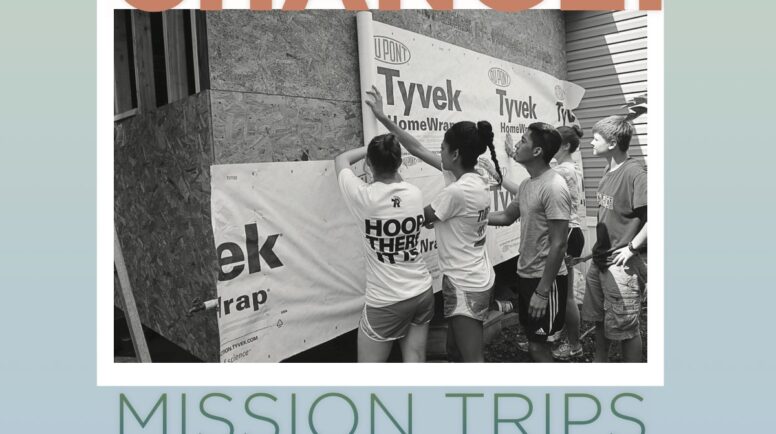
The experiential nature of this program is profound as participants discover that developing relationships is crucial to creating an atmosphere of change. One high school student learned this lesson on a Friday night as the sun was about to set. The hammers were on the floor, the sounds of the circular saw had stopped and the smell of sawdust was now replaced by the smells of a home-cooked meal. On their last day, this Chicago-based youth group was working late to finish the final touches of a room addition for a growing multi-generational family. However, the family had a different goal: to gather with their new friends who came to work beside them. The family matriarch assured the group that her family could finish the room and asked the group to join them for a meal of thanks. One young lady did not want to stop working on the room; the gift wasn’t finished! After encouragement and a heartfelt conversation with her pastor, she realized that breaking bread and giving her presence to this family was more important than completing the project.
The lessons offered through Challenge to Change give the participants a chance to learn more about the struggles of their fellow brothers and sisters in Christ and then be challenged to think about how they might continue to respond to their neighbor with love. Rather than simply focusing on acts of service, the program strives for change by focusing on increasing awareness of systems that contribute to the marginalization of those being served. The hope of those leading the program is that these participants will discover that there are ways they can make a difference beyond physical acts of service. Soon, the youth in these programs will have the opportunity to make a difference with their voices, votes and resources. The decisions they make regarding what they purchase and where those items come from makes a difference. Their ability to speak out about injustices and bring change to our world will only grow as they become young adults.
Debriefing and discussion each evening allows groups to reflect on the hands-on work and intentional learning earlier in the day and to explore how they can respond the next day and later in life with continued action. This cyclical pattern of action and reflection is critical in shaping this transformative educational experience. An innovative approach of field work, scriptural study and social awareness in concert provides an educational opportunity for learners to discover that we are all created and called to love our neighbor, that it is important to look deeper into the root of the causes of injustice and that
we have the power to transform our world.

The customization of this Christian education program is another unique characteristic. Orendorf explains, “Many of our groups are looking for a particular focus or type of mission and educational experience, and because of our location and mission partners, we are able to offer specially designed programs for each group. For example, youth groups from a more urban setting that would like a more rural setting partner with Beth-El Farmworker Ministry or the Coalition of Immokolee Workers for experiences centered around farmworkers, human rights and immigration. For those requesting a more urban setting, our partners at Metropolitan Ministries provide a comprehensive ministry with residential care, ‘soup kitchen,’ food bank, job training and counseling. Some of the groups also like to have sabbath and fellowship experiences here at the camp or at nearby attractions and that can be customized as well.”
The strength and uniqueness of the program truly lies in this blending of service, study, reflection and response. In rural settings, groups can work in the fields, help stock the food pantry and clothes closet, care for children through VBS or back-to-school programs and repair homes in the community. In urban settings, groups can help to distribute food and clothing, work with families and assist in facility improvements. Regardless of location, opportunities for increasing awareness lie in fact-gathering tours of the ministry settings and interviews with farm workers or those who work with at-risk populations. In addition to times for study, worship and reflection each evening, participants can enjoy a variety of fellowship and group-building opportunities at Cedarkirk, like the high and low ropes courses, as well as swimming, kayaking, climbing the rock wall, zip lining and more.
At the conclusion of a recent Challenge to Change program, the group was asked to answer the question, “What did you do this week?” The group responded with comments like, “served others,” “grew,” “learned,” “shared my faith” and “gave hope.” Yet the most powerful answer was simply put: “not enough.”
To learn more about Cedarkirk or how your group can take the Challenge to Change, you can visit cedarkirk.org. You can learn more about their mission partners online: Beth-El Farmworker Ministries at beth-el.org and Metropolitan Ministries at metromin.org.
 JOHN REITER is the executive director at Cedarkirk, a PC(USA) camp and conference center in Lithia, Florida. John grew up attending Cedarkirk as a camper, met his wife there and discerned his call to ministry while serving on summer staff. He is married to Loli Reiter (a Presbyterian pastor and Outlook blogger) and has two daughters.