 On Augustine
Rowan Williams
Bloomsbury, 240 pages
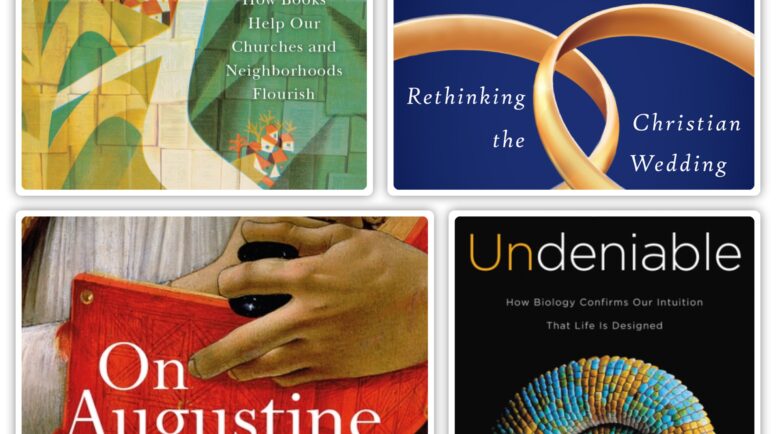
This collection of essays on Augustine spans nearly 25 years of insightful reflection by one of our finest theologians. Rowan Williams demonstrates how theology can honor the past while bringing it to the present. He covers Augustine’s Trinitarian theology, evil and sin — as well as the proverbial restlessness of the heart.
A Small Porch
Wendell Berry
Counterpoint, 80 pages
Wendell Berry continues to inform, delight and challenge through his poetry and essays. This collection covers his Sabbath poems of 2014-2015. The poems are a persistent reminder of the earth and our relation to it, summoning us to listen more attentively. He also includes a probing essay in which, among other important questions, he asks a theological one: What is happening to our souls?
Word by Word
Marilyn McEntyre
Eerdmans, 234 pages
What can happen if one takes a single word and lets it permeate the heart and mind? McEntyre, one of our finest writers, engages that question using the classical practices of lectio divina and centering prayer to engage a word for seven days from seven angles. Words include rest, resist, listen, welcome and dare. This is a demonstration of the power of language to shape our hearts and minds as well as our practice. I can imagine groups engaging this together and preachers drawing inspiration from it.
 From This Day Forward
Kimberly Bracken Long
WJK, 204 pages
This is a book for our time. Long has engaged the subject of Christian weddings with theological depth and open-eyed understanding of the current circumstances for couples and the pastors who preside. The great gift here is that tradition is respected while opening new possibilities for liturgical language that honors the present understanding of marriage. Pastors and couples will be edified by Long’s work on their behalf.
Buechner 101
Frederick Buechner
Frederick Buechner Center, 170 pages
We don’t want to lose a treasure! This collection of essays and sermons by Buechner is a great way to ensure that new generations of readers are introduced to one of Christianity’s best writers. This collection includes tributes by Barbara Brown Taylor and Brian McLaren as well as Anne Lamott, who choreographed the writings of these friends.
Way of Love
Norman Wirzba
HarperOne, 272 pages
It was Tertullian in the second century who reported that the Romans would say about Christians, “see how they love one another.” We are now in the 21st century and few are saying that about Christians. Wirzba wants Christians to rediscover the way of love that is at the heart of Christianity. He shares stories that point to that practice and argues that the purpose of the church is to shape Christians in the ways of love. The author lives what he believes and writes from experience that is grounded deeply in theology. If we are to regain the status the Romans once gave Christians, this book will an essential guide.
Fifty Ways to Help Save the Earth (Revised ed.)
Rebecca Barnes
WJK, 132 pages
There is no more practical book than this one for those who are looking for user-friendly practices to help the earth. Rebecca Barnes not only cares about creation, she has the biblical and theological skills to integrate those practices for individuals, families, congregations and the wider community. The suggestions here are doable! The chapters include energy use, food and agriculture, the wilderness, transportation, water and people. It would be a great thing a community to take on these 50 practices over a year.
Memories, Hopes and Conversations (2nd ed.)
Mark Lau Branson
Rowman & Littlefield, 286 pages
What congregations need right now is hope for the future and the courage to step faithfully into that future. This expanded book is precisely the kind of resource that congregational leaders can use with their communities to discern next steps. Appreciative Inquiry is a method that has stood the test of time. Few leaders are better guides than the author. This is a trusted guide and resource for those with the courage and faith to step into God’s future for them.
 Reading for the Common Good
Christopher Smith
IVP, 179 pages
Chris Smith, who co-authored “Slow Church,” is quite an imaginative fellow. In this book, he describes how churches can become learning organizations that will help both neighborhood and congregation flourish. He argues that “reading carefully and attentively” is the path through which individuals grow in the practice of love – and communities along with them. This is a remarkable way to imagine a missional church not “doing” for others as much as “being” with their neighbors. Like the small lending libraries that have appeared in neighborhoods, what wonderful thing might happen if congregations engaged in a similar practice for the common good?
A Christian Justice for the Common Good
Tex Sample
Abingdon, 144 pages
Tex Sample has been around the block more than once. He is walking the walk and talking the talk. That is what makes this a reliable guide for Christians who are seeking a justice grounded in their convictions about the God of the Bible while respecting others who are seeking the common good. Sample is not ideological. He is a theologian who believes deeply that Jesus came to “change the course of history” and has acted upon that conviction as an advocate for justice. This is practical book that is filled with stories and written for seminary students, church leaders, social activists who care about Christian justice.
Hillbilly Elegy
J.D. Vance
HarperCollins, 272 pages
This is a memoir — an honest one. It tells a story that is worthy to be heard — especially given the sorrows that continue to engulf desperately poor people in Appalachia for decades. Thousands of Christians have descended upon the region on “mission trips.” The author escaped that poverty, serving as a Marine, graduating from Yale Law School and now living a comfortable life. He writes honestly about the white working poor who suffer from drug addictions, poverty and hopelessness. These are the “hillbillies” he loves and whose lives he describes with passion and humor. Read this book; better yet, get to know the people Vance describes.
Glory to God: A Companion
Carl P. Daw Jr.
WJK, 416 pages
This is a work of love that will benefit church musicians and pastors. Every hymn in the “Glory to God” hymnal is annotated with fascinating historical descriptions of the origin that bring a new understanding to the hymn. Each selection also includes performance suggestions and liturgical use. What’s most remarkable is that historians, musicians, pastors and curious church members will enjoy this treasure.
Surprised by Christmas
Rich Reifsnyder
CSS Publishing, 80 pages
These stories of Advent and Christmas created by a long-time pastor will draw readers into a deeper experience of the incarnation. Each story was created for Christmas Eve, though the author is quick to suggest other occasions for their use to deepen the experience of Christmas and Advent.
 Undeniable
Douglas Axe
HarperOne, 304 pages
Read this book if you are willing to challenge long accepted scientific conclusions about the origin of life. If you are not interested in the insights of scientists who argue that biology indicates an intricate design unexplained by Darwinisim, this book is not for you. Statements of faith declare: “We belong to God.” The author revels in the astonishing truth of that declaration from a scientific perspective.
How to Be Here
Rob Bell
HarperOne, 224 pages
John Lennon once said, “Life is what happens when you are busy making other plans.” Rob Bell challenges that notion. Rather, he calls for an intense creative engagement with what life gives you as a way to fulfillment and deeper happiness.
A Letter to My Anxious Christian Friends
David Gushee
WJK, 128 pages
The writer is a distinguished professor of Christian ethics and the author of numerous books focused on difficult social problems. His letter to American Christians is a brief and serious attempt to help move readers from fear to faithful action. He is a committed Christian who brings his resilient faith to bear on the most vexing of concerns troubling this country.
Today When You Hear His Voice
Gregory Lee
Eerdmans, 335 pages
This is a fascinating and important work of constructive theology and exegesis focused on the book of Hebrews. The author argues Hebrews has a great deal to teach us about the unity of Scripture. His work includes critical engagement with Augustine and Calvin.