My confirmation class mentor was the first person to teach me the notion that Christians are called to be in the world, but not of the world. As an eighth grader, I was struck by that phrase. I spent time thinking about how I could make my way in this world choosing to be free in Christ rather than strictly bound by worldly conventions and constraints. The idea of being part of something, while remaining separate from it, is challenging. It’s one I have been thinking about a lot lately.
As I enter intentional interim ministry, I have been clear with my new congregation about my role. I will shepherd them through this transitional time and then I will leave. Establishing this boundary is important to me, both for the health of the congregation and to ensure I do the most effective ministry that I can among them. This boundary has also made me unsure of how to talk about my place in this congregation. Pastors are always in the congregation, but not of the congregation. Yet interim ministry intensifies this truth.
In previous calls, I felt myself thoroughly woven into the fabric of the church. I was in the church and of it. In all my preaching and leading, I talked about the congregation as a “we.” We were called to a new ministry. We were implementing a new curriculum. I was doing it all right there alongside them and planned to be there to see the impact in the future.
Now, as I sit in meetings, I hesitate before I say “we.” Sometimes I choose to talk about “your” church and what God might be calling “you” to do. Even in preaching – where my professors sternly warned me that speaking in the second person can come across as shaming or didactic – I occasionally use that pronoun. Saying “you” has felt strange, but important. When used well, I intend for these words to remind both the congregation members and myself that the church belongs to them. I will be here for a while, but the mission is truly theirs to discern and carry out. I am here to help and to guide, but soon enough I will be gone. Instead of relying on the pastor for major decisions, I want them to own their choices and to claim their vision for the congregation as they feel the Spirit leading them.
Words matter. Transgender folks and people in the queer community have been good teachers in helping me understand that choices about something as simple as a pronoun have the power to sow love or division. When I choose to differentiate myself from the members of my church, I do so as part of my plan for ministry in this place. My goals are to guide the congregation in seeing God’s unique calling for their church, to help them embrace the process of working through the their struggles and to build confidence that their community can thrive in times of steady leadership and times of transition. I am in their church and fully so, seeking to love and lead them with faithfulness. But I am not of their church, as I seek to remain enough outside the system to be able to analyze it in healthy ways.
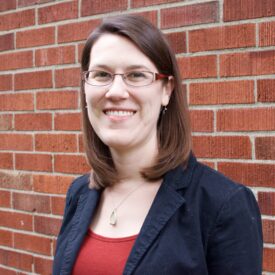
 EMMA NICKEL serves as interim pastor at Beulah Presbyterian Church in Louisville, Kentucky. She is passionate about congregational ministry, trying new recipes and keeping her baby’s naps on schedule. She lives in Louisville with her husband, Matt, and their young daughter.