KANSAS CITY, Mo. (Outlook) – The short version is this: The growth in the numbers of religious “nones” in the United States has been significant and hard to miss, with nearly a quarter of adults in the country – 23 percent – calling themselves atheists, agnostics or “nothing in particular.”
The Pew Research Center also has found a growth in the population with low religiosity. And pastors are well aware of the “dones” – people who showed up faithfully Sunday after Sunday, sometimes for decades, volunteering and serving on church committees, and who reach a tipping point where they’re finished with church as well.

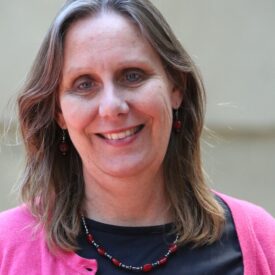
Linda Mercadante, a professor of theology at the Methodist Theological School in Ohio and a Presbyterian Church (U.S.A.) teaching elder, spoke at the NEXT Church national conference March 13 about the research included in her 2014 book “Belief without Borders: Inside the Minds of the Spiritual But Not Religious.”
“It’s the most pressing concern the church has,” Mercadante said. “We have to take that seriously.”
In her presentation, Mercadante did not, for the most part, plumb the nuances of views in depth. She said, for example, that everyone she interviewed “all said the same sentence first” – that everyone is born good. Mercadante also said, “I’ve never met a conservative” spiritual but not religious person, and that “I heard very few stories of religious distress,” or people who said they’d been harmed by the church.
In general, she said, the spiritual but not religious:
- Are less interested in joining, affiliating and committing. They’re drawn to experimenting, and having more choices.
- View religion as institutional, dogmatic, unessential, and spirituality as more individualistic and open.
Many who don’t go to church or believe in religion “feel there must be something more,” Mercadante said, and are “actually haunted by the echoes of religion and long for it.”
A Pew report from 2016 found that “religious ‘nones’ are by no means monolithic. They can be broken down into three broad subgroups: self-identified atheists, those who call themselves agnostic and people who describe their religion as ‘nothing in particular.’ ”
Pew also has found that atheists and agnostics make up an increasing share of the religiously unaffiliated.
Mercadante contends that churches have much to learn from this research – for example, about how the spiritual but not religious think about the nature of God (if they believe that God exists), or whether they equate all Christianity with only the views of more conservative Christians.
Some believe in a universal energy source, “kind of like a cell phone charger,” she said. Some envision a “petty, vengeful, all powerful God.”
Another thought from her presentation: Some people sitting in the pews are spiritual but not religious as well.