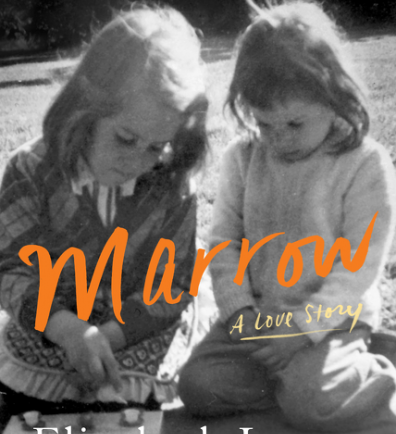
 Elizabeth Lesser
HarperCollins. New York. 320 pages
Reviewed by Leslie Klingensmith
The subtitle of this book (“A Love Story”) is accurate, but not in the way we would initially imagine. Thankfully, we are living in a world where we are learning to recognize and celebrate love in all its forms, as well as the myriad ways that we experience it as human beings and children of God. Lesser writes in her introduction: “This book is a love story. It is primarily about the love between two sisters, but it is also about the kindness you must give yourself if you are to truly love another. Love of self, love of other: two strands in a love braid.”
“Marrow” is a genre-defying narrative. It is a memoir of one sister (Elizabeth) donating marrow to another (Maggie) in an effort to save Maggie’s life as she battles lymphoma. It also is an expository description of the whole medical process of a bone marrow transplant, and at the same time it is a spiritual meditation on relationships, forgiveness and authenticity.
One of Elizabeth Lesser’s tremendous strengths as a writer and leader is that she owns her own imperfections and admits from the beginning that she is still trying to figure things out. If you are looking for a guide to “becoming a better person,” this is not a book that will satisfy you. But, if you want to look behind the curtain at a heartbreakingly honest account of two people trying to heal old wounds and move into the future more whole, “Marrow” should find a place on your bookshelf.
When Maggie’s cancer returned after a seven-year remission, her family was told that the only hope of extending her life was a bone marrow transplant. The entire family was delighted when Elizabeth turned out to be a perfect match for her sister. Elizabeth instantly agreed to be her sister’s donor, but wrestled with a nagging question: Was there anything she and Maggie could do to increase the chances that the transplant would be successful? Elizabeth and Maggie had a good relationship, but there were old hurts and resentments that had festered. If they unburdened their hearts and spirits, was there a greater hope that Maggie would accept Elizabeth’s cells as her own?
That desire to do everything possible to extend Maggie’s life led the two sisters to a process of examining what Lesser calls their “soul marrow.” They each were willing to dig deep and be honest with each other (and themselves) about what was holding them back from full relationship. The account of the sisters’ conversations and process of reconciliation is moving.
Did the soul marrow transfer aid in the success of the bone marrow transplant? It depends on how we define “success.” Maggie only lived a little over a year after the transplant, but a lot of healing occurred in her life during that time. Shortly before her death, Maggie called that one year Elizabeth gave her “the best year of her life.”
None of us knows how many days we will reside here on earth. But “Marrow” is a gorgeous contemplation of what it means to live and love with our whole being, regardless of the amount of chronological time we are granted. Read it and be lifted up; share it and lift up others.
Leslie Klingensmith is the pastor of St. Matthew’s Presbyterian Church in Silver Spring, Maryland.