LOUISVILLE – The Presbyterian Mission Agency will move towards imposing a flat rate within the agency for recovering overhead and administrative costs. The exact rate will depend on the budgeting process, but the cost recovery rate for the agency overall is currently 19 percent.
The Presbyterian Mission Agency Board approved recommendations Sept. 22 from a ministerial team that has been considering how the Presbyterian Mission Agency (PMA) allocates overhead costs. The team – which includes members of both the board and the PMA staff – concluded that the rates PMA charges are reasonable, but that the agency should generally charge agency departments a single, flat rate and that donors need more information about how such administrative costs are assessed.

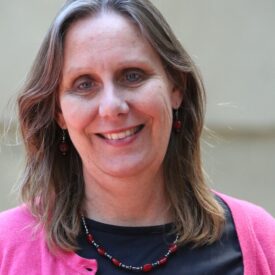
Wendy Tajima, a mid council executive from California who led the Overhead Costs Ministerial Team, said the team compared PMA’s recovery cost rate with that of five other denominations and four national nonprofits, as well as other resources in the nonprofit world, and found that “PMA is in fact fully in alignment with other similar organizations.”
PMA does need, however, greater clarity in how it communicates how those costs are handled, particularly to donors, Tajima said.
Moving to a flat rate of 19 percent would raise the costs for some PMA departments (such as World Mission, which currently pays about 11 percent), but likely would free up about $2.4 million in unrestricted funds, “which may be directed to the negatively impacted departments to help smooth the transition,” the report states.
The report from the overhead costs ministerial team generated limited discussion. Jan Edmiston, co-moderator of the 2016 General Assembly, asked whether the flat rate could pose a particular difficulty for ministry departments with smaller budgets, such as Racial Ethnic and Women’s Ministries. Tajima responded that smaller ministry divisions have sometimes paid more than 19 percent – and that a report on implementing the recommendations will come to the board at its September 2018 meeting, so difficulties that may emerge could be addressed then.
Tajima also raised the possibility that more changes could be considered – saying “there may be ways to be creative in looking at perhaps subsidizing specific, very important strategic gifts” – by collecting less than 19 percent for overhead costs from them.
As an example, “disaster relief is a huge issue right now,” she said, so the PMA leadership cabinet could consider charging a rate for overhead costs of less than 19 percent for Presbyterian Disaster Assistance. There is a concern, however, “that we not chase after whatever is the shiny object of the day,” Tajima said.
Rosemary Mitchell, who leads the PC(USA)’s Mission Engagement and Support efforts, stressed the importance of helping donors understand that administrative and overhead costs are a necessary part of the cost of doing ministry. For example, when the PC(USA) deploys a mission co-worker, the costs involved include not only salary but less obvious costs such as for language training, computer and phone service, emergency evacuation coverage, and providing for medical care and education for the co-worker’s children. For each mission co-worker sent into the field, “there is a network of support behind them,” and that costs money, Mitchell said.
When donors don’t understand how the charges are assessed – or realize that overhead fees may be taken out before the money is distributed – that can lead to reluctance to give, the report states.
The hope is that with a flat fee imposed and a commitment to clear communication about how the system works, trust and confidence will grow, both among donors and the denomination’s staff, Tajima said.
Currently, General Assembly policy requires that all costs associated with the PC(USA)’s Special Offerings be taken from Special Offerings donations. In 2015, that meant PMA retained 36.4 percent from Special Offerings receipts for administration, passing along 63.6 percent to recipients. PMA may want to consider whether it wants to ask the General Assembly to reconsider that policy, she said.
For a deeper look at the details and implications of the ministerial team report, read this Outlook background piece and the report from the ministerial task force (Click here for the full ministry team report).
In other business, the board heard from several ministerial teams. The board has created a series of short-term teams, intended to focus on particular needs or issues in the church. Several are reporting at the board’s meeting Sept. 21-23 in Louisville.
The Power and Privilege team – charged with naming the top three things the Presbyterian Mission Agency can do to address issues of power and privilege within the church and on the board – presented an interim report (I.301 Power and Privledge Interim report).
That report states that the board must think of PC(USA) budgets as “moral documents,” and consider how and whether budgeting in the Presbyterian Mission Agency “is consistent with our theology” and with General Assembly priorities.
The team also proposes creating a permanent committee that would sit above the structure of the board “to continue to hold it and the agency accountable around these interlocking issues.”

“Power and privilege is a systemic issue,” said James Parks of Baltimore, the team’s moderator, in presenting the interim report. He also stressed the need to examine spending that affects power and privilege, because “where your treasure is, your heart is.”
Shannan Vance-Ocampo, a synod executive who is the team’s vice moderator, spoke of the board’s need to consider its own practices as well. The interim report includes a section listing characteristics of white supremacy culture – and the team is encouraging board members to consider how those characteristics might be glimpsed in the board’s own work.
For example, on the previous day, the board’s discussion of recommendations from its Governance Task Force ran long – which meant hotel workers responsible for serving the board’s dinner had to keep the food warm for an extra hour, and international peacemakers waiting to bring greetings were kept waiting in the hall, Vance-Ocampo said.
During that part of the meeting Sept. 21, attendance was strong from both board members and staff, she said. During cultural humility training the next morning on the Doctrine of Discovery, “the room was less full,” even though part of that presentation required participants “to dig deep into centuries of hurt and neglect and pain” for Native Americans. “These are noticings,” Vance-Ocampo said, and “we have to find ways to rise above” those practices.
The Power and Privilege team will bring another report to the board’s next meeting, Feb. 7-9 in Louisville.

Plenary sessions on Sept. 22 also included remarks from Dave Crittenden, who was named the PMA’s acting executive director on Sept. 13, following the sudden resignation of Tony De La Rosa as interim executive director.
“By my count, this is my seventh day as acting executive director,” Crittenden said, adding that if the board meets its hope of calling a new executive director by late in 2017, “this will be my only board meeting.”
Crittenden told the PMA staff he’s proud of them, and said he accepted the call to be the agency’s acting leader “because others believed it could help the church.”
Ken Godshall, chair of the Presbyterian Mission Agency Board, said Crittenden knows the national church – having served previously both in PMA and the Office of the General Assembly – and “offers a calm, non-anxious presence.”
Godshall thanked board members for their service on a variety of ministerial teams and the board’s Governance Task Force, and said “we should welcome this moment at PMA. We should use this opportunity to make changes on the board that in some cases are overdue.”
For PMA, “the future is unclear,” and some of the decisions that could affect the agency may be made by others, such as the All Agency Review Committee or the Way Forward Commission, he said. “The best way to manage uncertainty is to work on PMA reform,” and to collaborate with others working on the same task.