
 The Canticle of the Creatures for Saint Francis of Assisi
Luigi Santucci
Paraclete Press, 144 pages
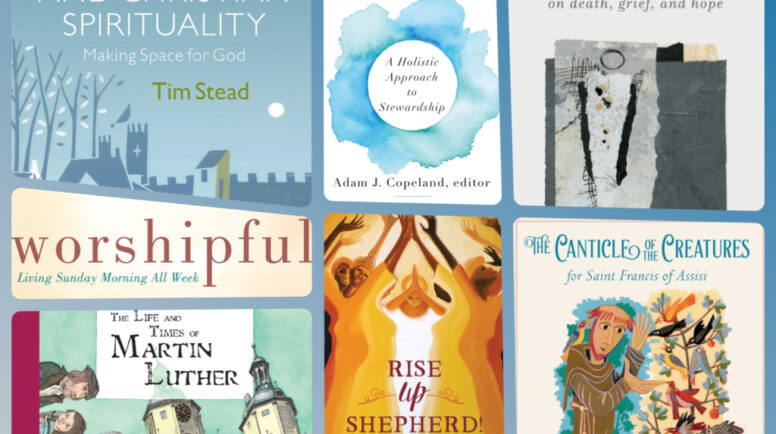
The world is the theater of God’s glory, said John Calvin. Saint Francis actually reveled in that glory, experiencing creatures and creation as windows into the experience of God. This is a beautiful book of art combined with readings from Saint Francis. This book will bring you delight and send you into the world that Calvin said ravished him with beauty.
Love Big, Be Well: Letters to a Small-Town Church
Winn Collier
Eerdmans, 176 pages
These short stories honor small and close relationships. They speak of the church as a community and resist “large” as the measure of success. Written in the vein of Eugene Peterson and Michael Lindvall, the stories will give hope to those pastors who want nothing more than to love their people, preach the gospel and pray with them. “Small is beautiful” never seemed more true than the way it is displayed in these letters. Pastors and members who are anxious to be successful will be edified by the message of this book.
Katie Luther, First Lady of the Reformation
Ruth A. Tucker
Zondervan, 208 pages
Who knew that Martin Luther’s wife was such a strong woman and a trailblazer of the Reformation? The author brings to life the iconoclastic Katherine von Bora who was a hardworking farmer, a home brewer, successful businesswoman and a mother. Hers is a remarkable story, well told by Ruth Tucker.
 The Life and Times of Martin Luther
Meike Roth-Beck
Eerdmans, 44 pages
This is a wonderfully written and illustrated biography of Martin Luther for young readers. I don’t know which is better, the illustrations or the text! The illustrations help you see the actual conditions lived by the people, while the text moves through Luther’s writings to show why his thought continues to echo 500 years later.
Limping But Blessed: Wrestling with God after the Death of a Child
Jason Jones
Fortress Press, 216 pages
Jason Jones confesses early on that the reason he tells his story of shattering loss is to carry forward the memory of his beloved son Jacob who died in an accident. This is the story of grief observed honestly and without varnish alongside theological wrestling for a way forward.
Incarnational Ministry
Samuel Wells
Eerdmans, 245 pages
Wells has developed a systematic practical theology around the gospel conviction that God is with us. He continues his reflections on the practice of being with as a central conviction of Christianity. His reflections flow from a profound understanding of the Trinity though there is nothing abstract in this work. He explores eight dimensions of being with: presence, attention, mystery, delight, participation, partnership, enjoyment and glory. The theology is rich and the application concrete.
 Rise Up Shepherd! Advent Reflections on the Spirituals
Luke A. Powery
WJK, 112 pages
Spirituals arose from the African-American experience of suffering. Powery makes them come alive for all us in as we encounter them in the themes of Advent.
Celebrating Abundance
Walter Brueggemann
WJK, 90 pages
I can only imagine what might happen if congregations choose to read together these devotions for Advent. Each day consists of a small portion from a Brueggemann sermon compiled by Richard Floyd who adds a concluding prayer to each day’s reflection. The portions themselves display Brueggemann’s capacity to tell the truth about our lives while proclaiming the good news of Christian faith.
Forbearance: A Theological Ethic for a Disagreeable Church
James Calvin Davis
Eerdmanns, 240 pages
Now is the time to recover the biblical practice of forbearance. James Davis has previously written in defense of civility. Now he turns his attention to forbearance as a way forward in these times of deep division and rancor. He asks a serious question: “Are there ways in which we can negotiate our differences that are truer to the priorities of love, neighborliness, and unity that characterize the message of Jesus?” Davis argues that disagreement is nothing new nor is a multiplicity of opinions. What is always required is the capacity to think theologically and practice forbearance.
Five Risks Presbyterians Must Take for Peace
Christian Iosso
WJK, 134 pages
The author says plainly “risking war is what nations do. Risking peace is a task for the church.” This small book describes the way the PC(USA) has sought to take five risks in particular.
Calling All Years Good
Kathleen A. Cahalan and Bonnie Miller-McLemore, editors
Eerdmans, 244 pages
This collection of essays explores the ways God calls people differently at different ages. So often people limit the understanding of vocation to those young people searching for their path. This book displays the good news that God calls people at all ages. It will be helpful to pastors, counselors, youth leaders and church educators seeking to help older and younger people discover their deep vocation in response to the call of God.
 Worshipful: Living Sunday Morning All Week
James C. Howell
Cascade, 138 pages
James Howell is a pastor who has been in the trenches and a professor who knows how to write well. This book is a good example. He takes the moments of the Sunday morning liturgy for worship and engages each one with reflections on how it can be carried into the week as Christian practice. For instance, the sacrament of Holy Communion becomes an occasion to consider a trip to the grocery store and a meal with friends in light of Jesus’ own meals. Baptism opens the possibilities of renewed understanding of the gift of water. The entire worship service is reflected upon in this way, making it especially helpful for those who fail to make any connection between Sunday and the other days of the week.
Echoes of Scripture in the Gospels
Richard B. Hays
Baylor, 524 pages
Rowan Williams calls this “a real masterwork.” Literary critic Alan Jacobs says, “This is a book I expect to be revisiting for the rest of my life.” I agree with both. It’s a marvel that Hays is alive. Diagnosed with pancreatic cancer while this book was coming into formation, Hays resigned from his position at Duke to finish writing it. For those pastors who still practice exegesis and theological study, this book will be a serious joy and a great challenge – not only for the length, but especially for the compelling arguments that Hays puts forth. He examines in great exegetical detail each of the four Gospels systematically showing their echoes in the Old Testament. New Testament scholar Susan Garret asks, “Are we really prepared to hear the evangelists speak with this kind of clarity and power?” I hope so.
Gift and Task
Walter Brueggemann
WJK, 376 pages
This is an invitation to spend each day with one of our finest biblical scholars reading, reflecting and praying with Scripture. Why say no to such an invitation? Brueggemann has taken the daily readings and devoted considerable thought to them, including selections from Sirach unfamiliar to most Protestants. He explicitly admits that this is not devotional book as commonly understood. Rather it is meant for “serious church members who are willing to consider in critical ways the cost and joy of discipleship.” This is a great gift to the church and those who take up these reflections will be shaped by Scripture for a deeper discipleship.
The Execution of God: Encountering the Death Penalty
Jeff Hood
Chalice, 128 pages
Jeff Hood is described as a radical theologian of mercy. He wants to practice theology in the face of the most horrendous of all realities: the execution of human beings. He writes in an experimental style that fits the subjects he addresses. Is the execution of a human being the execution of God? If so, how on earth can Christians abide it? If not, where is God and what is God doing to bring about a new heaven and earth where there shall be no more tears? Hood, a Baptist pastor living in Texas, has placed himself on the frontlines of protest against the death penalty and forms of killing. He is a witness that will not be silenced and we do well to listen to him.
 Beyond the Offering Plate
Adam J. Copeland, editor
WJK, 200 pages
The author is the director of stewardship leadership at Luther Seminary. In this collection he has gathered 10 church leaders – pastors, professors, educators – to reflect upon stewardship from a comprehensive perspective. Rather than limit the discussion to money matters, these essays address time, technology, community and more. It is designed to shape a more comprehensive view of stewardship than is commonly understood. Preachers, teachers and stewardship teams will benefit from it.
The Magnificent Story
James Bryan Smith
IVP, 192 pages
Many people make the claim that we are shaped by stories. Smith makes that claim convincingly in this compelling book, the first of an expected trilogy. He wants us to be caught up in the astonishing story of God among us in beauty, goodness and truth. The world is desperate for hope. There are many narratives that undermine all hope. The author says there is a different, more magnificent story: “The good news of the gospel is similar to feeling glad when we see someone perform an unexpected act of kindness for a stranger. This is what God is like.”
 Mindfulness and Christian Spirituality
Tim Stead
WJK, 160 pages
Tim Stead helps Christians make space for God in their lives by a practice that has changed the lives of millions of people. Mindfulness mediation can provide a welcome aid to Christian faith rather than an alternative to the contemplative tradition. Stead says: “We cannot save ourselves. We cannot even heal ourselves. … But there is something we can do – and need to do – and that is to make space for God to come to us.”
A Brief History of Sunday
Justo L. González
Eerdmans, 176 pages
What happens when Sunday becomes just another day? Most of us have seen that pattern. A venerable church historian takes on the history of Sunday in church, theological traditions and Scripture. It’s a good read and may even renew the hearts of those feeling bewildered by the onslaught against the celebration of worship on Sunday.
 Among the Ashes: On Death, Grief and Hope
William J. Abraham
Eerdmans, 127 pages
Nothing about this memoir is easy. There is not a cliché in it. Theological explanations that will erase the pain of his child’s death do not appear. What does appear is hope, hard earned and unvarnished. This is what makes this book so valuable. The author deep in the depth of grief draws upon Job to confront the significance of grief in the face of evil. At the same time, he offers a compelling case for hope in eternal life as the central core of Christian faith grounded in the death and resurrection of Jesus. Although this is a small book, its substance is profound. It belongs alongside classic memoirs of grief by C.S. Lewis, Richard Lischer and Nicholas Wolterstorff.
 Roy W. Howard is the pastor of Saint Mark Presbyterian Church in North Bethesda, Maryland, and the Outlook book editor.