BALTIMORE – What can churches learn from urban geography?
Put another way: What are some lessons of race and place?
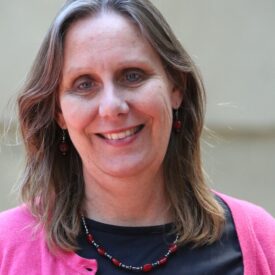
David Leong, an associate professor of missiology at Seattle Pacific University and Seminary, gave a keynote address Feb. 26 at the NEXT Church 2018 national gathering in Baltimore – raising questions about how people tend to think (and need to think) about “desert places” in struggling city neighborhoods. The theme of this conference is “The Desert in Bloom: Living, Dying and Rising in a Wilderness Church.”
And Leong asked this: What if “abandoned places of empire” and other places typically associated with decay and neglect are actually fertile soil for renewal and rebirth? What if these are the places to which people of faith should be paying attention?
Leong has written about these issues in his 2017 book “Race and Place: How Urban Geography Shapes the Journey to Reconciliation.”
He told NEXT Church that people who live in these places – he used the city of Detroit as an example – often have stories to share of both success and struggle.
“What they don’t need is our pity or our charity. They are not places to be rescued” or researched, Leong said. “They are not poor and under-resourced, folks who need a little bit of white savior-ism. These places offer us a gift,” a mirror in which communities and churches can see themselves to ask about “what we really believe about our life together.”
So what can churches learn?
Location. Take a look, Leong said, at where you have located your life. Geography shapes “who is at your table and who is not at your table” – for example, who you see at your child’s school and at the grocery store or neighborhood park. Think about where you are located, and “why are you planted where you are?” – including the forces of economics, injustice and exclusion that come into play.
Patterns of race and place. Leong cited the work of journalist Nikole Hannah-Jones, a MacArthur “genius grant” winner in 2017, on patterns of racism in housing and education.
Regarding school desegregation and resegregation, it’s not enough to recognize that having integrated public schools is essential and important, Leong said. “It’s not enough to believe that it’s right. … We must also believe that it is truly good” – and make choices involving our own children which reflect that belief.
If schools are resegregating, we can’t say “that’s somebody else’s problem,” Leong said. “If we do not speak and we do not act, we will have spoken very loudly to folks in abandoned places desperate to hear good news.”
Cultivating communities of belonging. Leong told of people who intentionally build connections across geographic and cultural borders – including his own congregation, Rainier Avenue Church, a multiethnic congregation in the Beacon Hill neighborhood of Seattle. In the 1970s, with the economy changing and people of color moving in, “the whites fled” – about half the congregation, Leong said. The remaining members considered closing the church and moving elsewhere, but “thanks be to God for these old white folks in the community who said, ‘You know, I think God planted us here for a reason.’ ”

Refugees from Vietnam moved in. The congregation sponsored a Laotian refugee family. The church showed hospitality – and the children of some of those immigrant families have become elders in the congregation.
Leong spoke of how the church’s imagination can be sparked by the neighborhood around it and by people outside the church – people who sometimes are more flexible and creative, he said, than those inside the church. Have conversations about working together and sharing assets that are “ not just the extracurricular activity for the social outreach committee,” he said.
Pay attention to where creativity shoots forth in art and culture, he said – citing the “Black Panther” megahit movie and “The Rose that Grew From Concrete,” a poem from rapper Tupac Shakur and the title of a volume of his poetry that was published after his death. Leong asked, Why is “Black Panther” breaking records? What themes emerge from that for the church?
“Institutions are sometimes the death of imagination,” Leong said. “Let’s come alongside artists” – recognizing artists draw from a deep well of imagination, that aligning with them is a way for churches to cross geographic lines.
Think about urban geography, and about the role that systemic injustice has played historically and continues to play in the places of poverty and pain, he said. What if churches outside those neighborhoods begin to build relationships, to learn, and to see these “desert places” as places to celebrate beautiful stories of struggle and triumph?