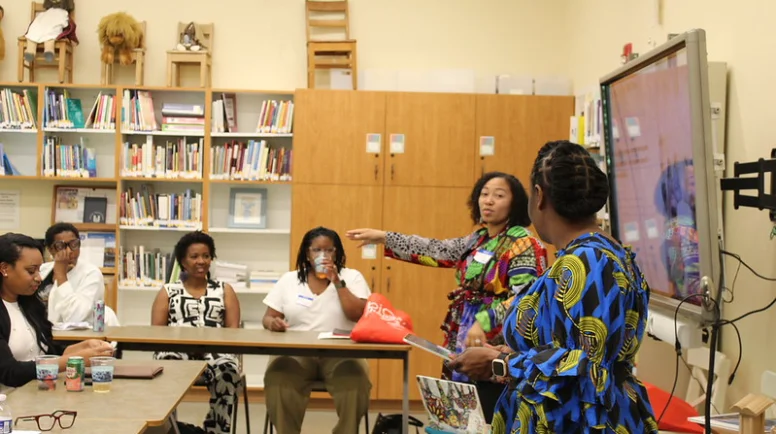
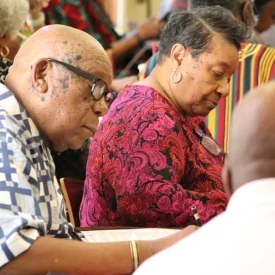
Charlotte, North Carolina – In a packed room where organizers continued to add chairs and participants drove three to four hours to attend, rural Black Presbyterian congregation leaders gathered for what one described as both a homecoming and a turning point.
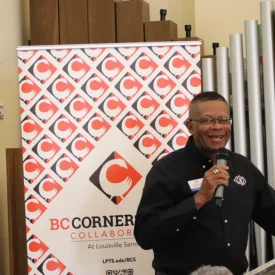
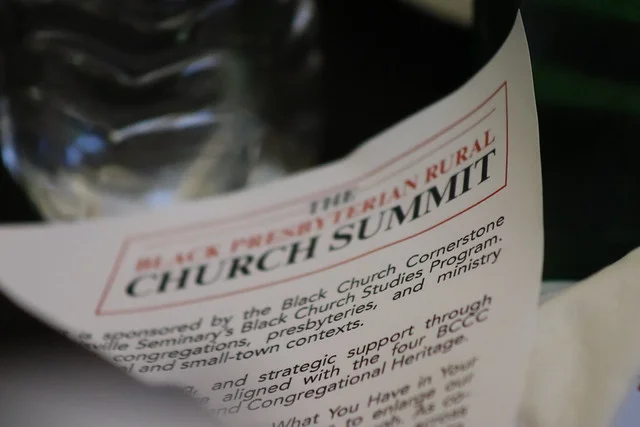
Hosted on June 4 by the Black Church Cornerstone Collaborative, which is part of the Louisville Presbyterian Theological Seminary’s Black Church Studies Program, the Black Presbyterian Rural Church Summit brought together cohorts of congregations that have been journeying together for months through shared learning and missional innovation.
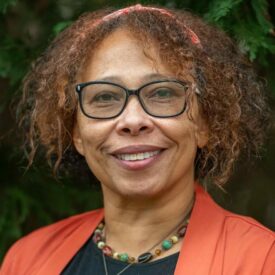
For Perzavia Praylow, assistant professor of historical theology and director of the Black Church Studies Program at Louisville Seminary, the day was about more than a single event. It was about strengthening historic rural Black congregations that have long been cornerstones of their communities, as well as understanding God’s bounty. The day’s theme – “Big Enough: Using What You Have in Your Hands – Co-Laborers for Christ” – called on attendees to “enlarge our vision and trust that what God has already placed in our hands is more than enough.”
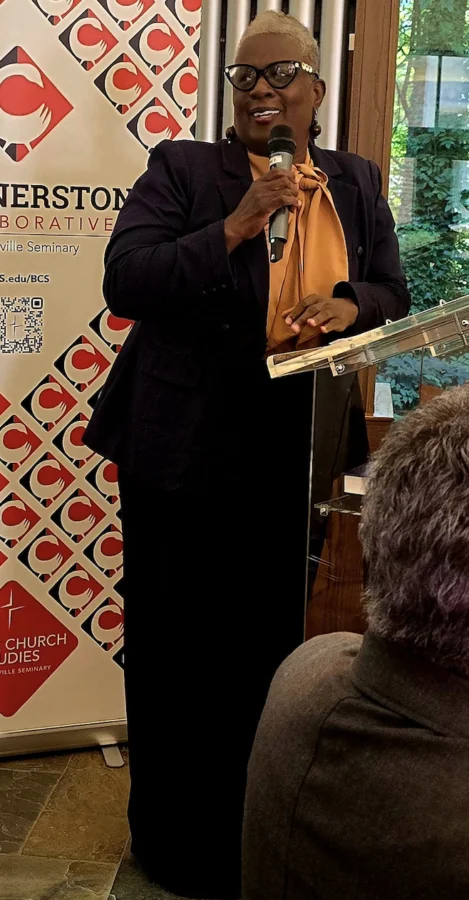
“Though rural congregations may have limited resources, that does not mean that God has forgotten us. It does not mean that our ministry is not impactful,” Praylow said, reflecting on the day’s theme. “We can make a big enough impact with what we have.”
Patricia Bligen Jones, pastor of Hebron Zion Presbyterian Church in South Carolina’s Lowcountry, reiterated this in the opening worship service in her sermon titled “What’s in Your Hand?”
“Do you believe that God has worked for the small church, the big church, the in-between church? Do you believe that God has put everything in our hands to do God’s work? What is in your hands?” Jones asked.
A network rooted in history
The Black Church Cornerstone Collaborative, where Praylow also serves as director, is a Lilly Endowment-funded initiative of Louisville Seminary’s Black Church Studies program. It partners with presbyteries, churches and faith-based organizations to resource and connect Black rural Presbyterian congregations, as well as churches of other denominations.
Related reading: “Lilly Endowment grants foster ministry and mission across the PC(USA)” by Gregg Brekke, Presbyterian Outlook reporting
“Many of the churches in the room date to after Reconstruction,” Praylow said. “That was barely out of slavery.”
“Before you had social and civic organizations, you had the Black church,” Praylow said. “These churches are [still] doing great intentional missional work with the resources that they do have, and that’s transformative.”
The majority of churches in the Presbyterian Church (U.S.A.) have memberships that are below 100, according to the denomination’s statistical report in 2025. Although the denomination is shrinking, having lost about 1% of its churches each year since 1994, there is growth in racial and ethnic groups. For instance, White membership decreased 4.5% in the 2024 statistical period, from 92.1% to 87.6%, while Black and African Presbyterian membership increased by 1.5% to 4.6%, according to analysis done by the Presbyterian Outlook.
A web of partnerships and cohorts
Most attendees at the summit came from North and South Carolina, as well as a few from as far away as Virginia, although the day’s events and discussions were open to anyone.
The Black Church Cornerstone Collaborative partners with multiple presbyteries – Trinity, Charlotte, Coastal Carolina, New Harmony and New Hope, to name a few – to form cohorts of congregations ranging from seven to 17 churches. These groups gather regularly via Zoom, with occasional in‑person gatherings.
Microgrants, missional work, food justice
One of the collaborative’s most strategic tools is a microgrant program that supports congregations in launching or deepening local-level mission.
At a late-morning session, leaders from Trinity Presbytery – Phyllis W. Sanders, Leon Page, Cassandra Daniels and Shirley Green – shared what these microgrants have made possible, including:
- Intergenerational ministry between seniors and youth.
- Food programs and local partnerships responding to hunger in the community.
- Missional ministry outside the walls of the church
Each project emerged from questions about how God might be calling these congregations to serve their communities and steward resources.
“We can get stuck on the challenges facing the church,” Praylow said. “But if we’re not looking outside at what’s happening beyond our doors, we miss what might be a missional priority of God.”
Rethinking pastoral leadership: co‑vocational ministry
Because many churches lack a full-time or installed pastor, co-vocational or bi-vocational ministry settings can become the norm.
This model isn’t new, Praylow said, but she stressed the need for a fresh theological and practical framing for these forms of ministry.
“We expect co-vocational pastors to continue at the same rhythm as prior full-time installed pastors, but we have to have a different expectation for pastoral leadership,” she said.
That might mean:
- Rescheduling session meetings to make them more feasible for part-time pastors,
- Rethinking how pastoral presence is modeled throughout the week,
- And embracing shared ministry models, where multiple congregations jointly support a single call.
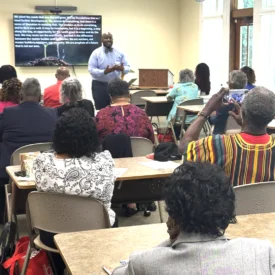
Jerry L. Cannon, vice president for ministry innovation at the Board of Pensions, also addressed these realities of rural ministry in the opening plenary, and he encouraged participants to embrace the bi-vocational or co-vocational models that strengthen the life of the church and support sustainability.
Related reading: “2026: A year for the rural church” by Phillip Blackburn
The BoP helps congregations explore alternative pastoral models and shared ministry in hopes of boosting church sustainability, which could be particularly helpful to the congregations in rural communities.
Charles Heyward, pastor of Edisto Presbyterian Church in South Carolina, led the workshop, “Rooted to Grow: Cultivating Church Growth in Rural Black Presbyterian Congregations,” which focused on congregational development in rural communities.
Other afternoon workshops centered on womanist practices in nurturing congregational growth, sustaining heritage and leaning on the wisdom of experience and history to strengthen community ties; intergenerational engagement, equipping young adults and youth to stand as leaders in Black Presbyterian rural contexts, and exploring ways congregations can include youth as active, rather than passive, partners in mission; and lifting the leadership and wisdom of senior adults, engaging them as active spiritual anchors and leaders in ministry.
The Black Presbyterian Rural Church Summit, convened by Louisville Seminary’s Black Church Studies team, will continue as an annual June gathering in the Charlotte area, which was chosen for its central, drivable location for many rural churches.
Related reading: “Black Presbyterian leadership and churches” by Teri McDowell Ott, featuring Warren Lesane Jr., Shavon Starling-Louis and Stephen Scott
This year’s summit allowed the participants to see and celebrate the larger Black Church Cornerstone Collaborative Network of which they are a part. The Black Presbyterian Rural Church Summit was hosted by the Louisville Katie Geneva Cannon Center for Womanist Leadership at the Union Seminary’s Charlotte campus.
“Today they were able to see how they are part of a bigger network,” Praylow said. “The joy of being present one to another … sparked excitement.”