LOUISVILLE – The Presbyterian Mission Agency Board voted Feb. 8 to approve some changes in its manual of operations regarding the size and structure of its board – but approved other changes provisionally, to give time for more consideration after some board members raised questions.
The board also voted to add two ecumenical representatives as corresponding members of the board, with voice but not vote. The board had voted last September to reduce the size of the board from 40 voting members to 20 – and had decided at that time, after significant discussion, not to include any ecumenical representation on that board.
Some of the matters about which board members raised questions or concerns had to do with:
- Whether the leadership cabinet of the Presbyterian Mission Agency (PMA) has had adequate opportunity to weigh in on proposed changes – such as to the PMA budget process.
- How the transition process would work in the move from having an executive committee of the board – with the power to act between meetings of the board – to a “coordinating committee.”
- What the title of the executive director of the Presbyterian Mission Agency should be.
The board also voted Feb. 8 to ask J. Herbert Nelson, the stated clerk of the Presbyterian Church (U.S.A.), to give it lenience regarding the deadlines for submitting proposed changes to the 2018 General Assembly. The deadline of 120 days before the assembly is Feb. 16 – but to give time for more discussion the board’s Governance Task Force intends to bring some of these matters back for consideration at the board’s next meeting, April 27-29.
The board voted to give provisional approval to some changes in the manual of operations because, without doing that, the committees it had created in the new structure would not have the power to act at this meeting – and those committees had significant work to do.
The manual of operations changes that were approved provisionally are not items that the General Assembly is required to approve, but are being sent to the assembly for information, said Melinda Sanders, who is co-chair of the Governance Task Force.
The board did vote to approve changes in its bylaws and other sections of the Manual of Operations that require approval from the assembly.

The board’s Governance Task Force has been working for more than two years on these proposals – but because of the complexity, the recommendations for changes weren’t circulated until a few days before the board’s Feb. 7-9 meeting began in Louisville.
Some of the key changes involved:
- A description of the core values of the board – those being mindfulness of justice and peace; diversity and inclusion; and creativity.
- A description of the role and title of the PMA’s executive director;
- Changes in the PMA budget process.
- A switch from having a board executive committee to having a coordinating committee.
It didn’t take long, however, for questions to begin circulating.
Conrad Rocha, co-chair of the Governance Task Force, said that in the past “we’ve started with the dollars rather than what do we want to accomplish?” The idea behind the proposed new process is that “it starts out with what are the priorities and what do we want to accomplish? Then we worry about how are we going to fund it.”
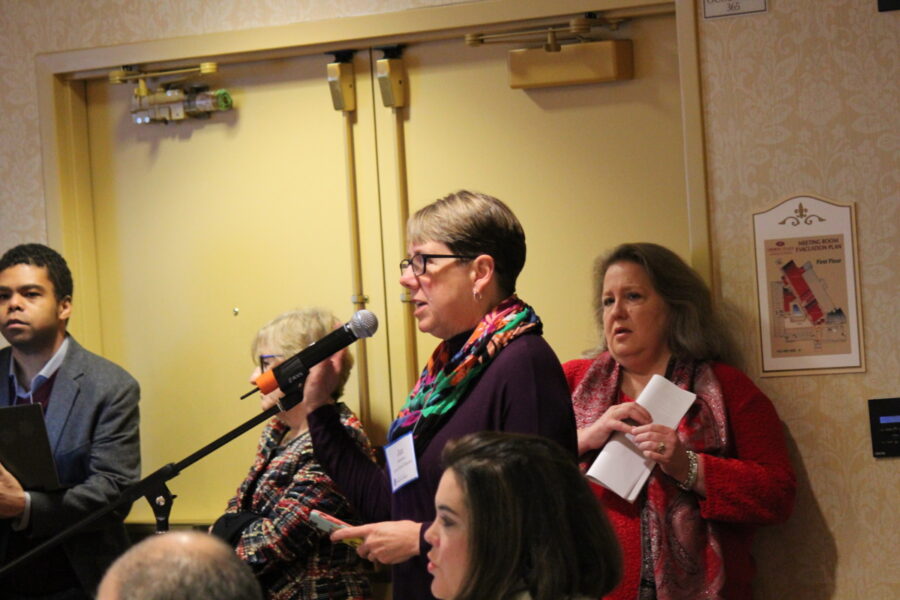
Jan Edmiston, co-moderator of the 2016 General Assembly, asked whether PMA’s leadership cabinet had been consulted about the proposed changes, and was told no.
“I know we’ve got a deadline,” Edmiston said. But she said she wasn’t prepared to vote on the proposed changes “without their input.”
Heath Rada, moderator of the 2014 General Assembly, said some of the proposals “are the healthiest things I’ve seen” during his time on the board. But Rada said he has questions, such as “who would act between meetings of the board. … I think there are some very significant questions” about the details.
Other questions involved a proposal to give the PMA executive director the title of president/executive director, to reflect that person’s role as executive director of PMA and president of the PC(USA), A Corporation. Rocha said the intent is to have the PMA leader be seen as a peer with the heads of the other five PC(USA) agencies.
That changed title could be misinterpreted by people outside the denomination, Edmiston said – because “it looks like it elevates the executive director above everybody else,” at a time when the Way Forward Commission is trying to say the stated clerk should be the seen as the voice of the denomination.

Shannan Vance-Ocampo, general presbyter of the Presbytery of Southern New England, raised the question of ecumenical representation – and made the motion to add two ecumenical representatives to the board, calling ecumenical engagement “very foundational.”
Gregory Chan, a member of the Governance Task Force, acknowledged the difficulty of board members trying to comprehend so much material so quickly. “We’re trying to beat a path to a better way of doing our business,” Chan said. “We’re trying to make a difference. We’re trying to make our work more effective.”
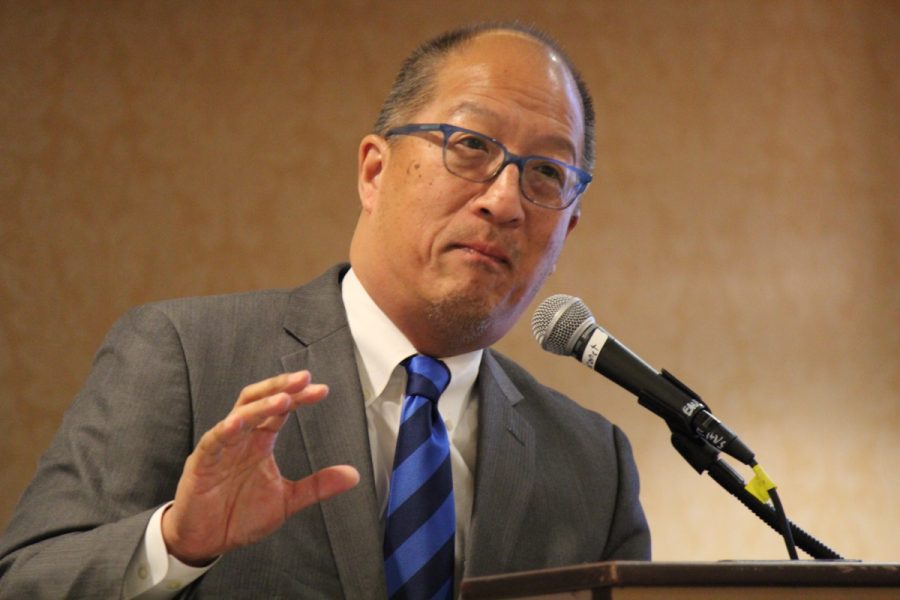
Wendy Tajima, a board member from California, warned that sometimes “deadlines start to drive decisions and decisions are made in haste. … We have to be careful about making the urgency or anxiety of deadlines take over.”