 In a time when every face around every corner seems to be screaming where each of us does or does not belong, the Christian call to love your neighbor can too easily get cloaked in shadows of mistrust and fear. Not only has our sense of responsibility around that call been eroded by demagoguery and misinformation, but the very concept of “neighbor” has become utterly lost by so many of us. We have taught ourselves not to love, not to trust, not even to engage with people who bring something different from our own perspective to the table, and therein have removed ourselves from the path Christ set for us, and looked away from the image of God. With every voice inside and outside telling us to turn ever inward and close every door behind us, how do we open ourselves to the borderless and loving movement of the Spirit?
This was the dilemma from which I could not pull myself away as I graduated from Presbyterian College two years ago. Particularly after doing my capstone research on the church’s role in the refugee crisis, I found myself appalled by our nationally rampant distrust of those whom we are called to love. I felt confused and outraged at our readiness to ignore (and even inadvertently contribute to) the suffering of so many people. I yearned for a way to make a difference.
Like so many other young adults, I was just beginning to see myself as someone with a role to play in changing what I saw as unjust, but I was unsure — and still am, in many ways — exactly what shape that role would take.
A VOYAGE OF DISCOVERY
The search for that role brought me to the Young Adult Volunteer program. More specifically, it brought me to the YAV site in Indianapolis, where I spent 11 months serving and living in a variety of interfaith contexts. It had begun to seem clear to me that I would never be able to make a difference working on my own and operating with only my own perspectives and understandings to guide me. I needed to acknowledge my own arrogance, blindness and trepidation, and open myself to seeing what God might have to offer me through the knowledge and experiences of people who differed from me. I needed to step away from the voices that tell all of us to stick with our own kind and accomplish our own goals, and step into a space surrounded by different voices, seeking to work together to know and to do God’s will.

Even in that new space, though, there were still many voices warning of what might happen to me there. Loving, intelligent and kind people would still occasionally ask me if I was not worried I might lose, or somehow compromise, my own faith by engaging with people from different faith backgrounds. How could I be sure my own identity would survive its embrace with other identities unscathed?
After being told so many times and for so long that the encroachment of diversity is a threat, it is almost impossible to disbelieve it. I believe this anxiety about losing our own faith is embedded in each of us, a part of our instinct to defend ourselves from anything foreign. I knew my identity would likely change somewhat as a result of these encounters. What I felt unable to describe at the time, however, was that change was exactly what I wanted. In fact, whether or not I knew it fully then, it was precisely what I had come to Indianapolis for.
I learned more about myself, about God and about what God is asking me to do in the world during my year of interfaith service than at any other point in my life. In that place of humility, of cooperation and of compassion, I was able to see the image of God reflected in many ways, through many different people.
GLIMPSES OF THE DIVINE
I saw a piece of God’s sovereignty while building houses alongside a faithful Muslim woman named Rema. I saw a piece of God’s compassion in sharing meals with a faithful Sikh man named Adi. I saw a piece of God’s unity while singing praises with a faithful Baha’i woman named Beverly. I saw a piece of God’s ancient wisdom when listening to faithful Jewish rabbis. And I saw a piece of God’s justice for all of creation while protesting alongside a faithful Unitarian minister named Anastasia.

I saw God in ways I had never anticipated, and that certainly and graciously changed me. I became more aware of the ineffable and unstoppable diversity of ways in which God touches creation. My limited conceptions of grace, faith and love were unboxed and allowed to grow into something more meaningful and wonderful than I otherwise could ever have understood.
My year of interfaith service did not cause me to lose my faith at all. Rather, it made it into something magnificent and real. It breathed life into a relationship with God and creation that had previously been academic and inanimate, and it paved the way for continued growth and faithful living.
Not only was my own life changed, but I was able to see firsthand the way that interfaith work changes entire populations. I watched phobias and prejudices slowly get wiped away, simply as a result of shared space and values. When we come together in service, putting ourselves in a position of humility and compassion, it becomes difficult not to see the value and dignity in the people working alongside us. That growth in trust and understanding between individuals then almost inevitably develops into the ability to eradicate xenophobia and mistrust on a larger scale, which finally enables us to love one another deeply, just as God calls us to.

The roots of so many of the problems our society faces seem to come from our inability to see the image of God in those who differ from us. We neglect suffering refugees because of our society’s ingrained fear of people from certain areas and certain faith backgrounds. We seal our borders from people in poverty, because we are told allowing people from other nations into our communities will be our demise.
Even within our own nation and our own faith background, we tend to excuse inaction in the face of sorrow and pain because of differences in region, race, sexuality, gender or socioeconomic background. We consistently neglect our neighbor in need, ultimately because we simply choose not see them as our neighbor. But when we take the time to know them, to work alongside them and to learn from them, that evil of indifference begins to wither away.
A DEEPENING OF ONE’S OWN FAITH
My experience with interfaith service also brought new depth to my interpretation of Scripture. Most notably, it completely changed the way I read the parable of the good Samaritan. I had previously read myself as being either the priest, the Levite or the Samaritan, and understood it as a message of how to treat other people. Though I certainly still believe there is plenty of value in that aspect of the story, I now tend to emphasize another aspect more.

I now relate most to the lawyer to whom Jesus is telling the parable. When he asks Jesus who his neighbor is, Jesus could have answered that question in any number of ways. He could have simply said it outright, although that never seems to be his style. He could have also told a story in which a Jewish person helped a Samaritan. That would have made perfect sense, since his questioner was a Jew asking what he was meant to do.
But instead, he made the main Jewish character in the parable the recipient of the love. In that story, it is not a Jew but a Samaritan who teaches how to be Jewish in a way that demonstrates the values and purpose of that faith. Similarly, during my YAV year, it was not Christians but a great variety of faithful people who taught me how to be Christian in a way that demonstrated the values and purpose of my faith.
I believe that God calls us to something truly magnificent. I believe that God calls us to know and to love one another, and to know and to love God in one another. It is our diversity that makes that calling so valuable, and it is through that diversity that we can begin to understand who God is, and who we are, more fully. As long as we continue to divide ourselves, we fracture the very thing for which God created us. But when we manage to bind the many broken pieces of humanity together as one, I believe we can finally begin to see the true, complete image of God, reflected beautifully across God’s creation.
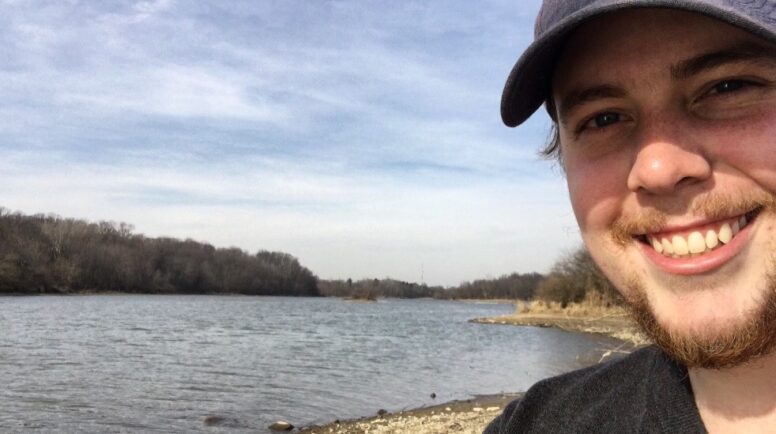
 JONATHAN FREEMAN is currently serving at the Presbyterian Center at the University of Georgia and plans to begin seminary in the fall.