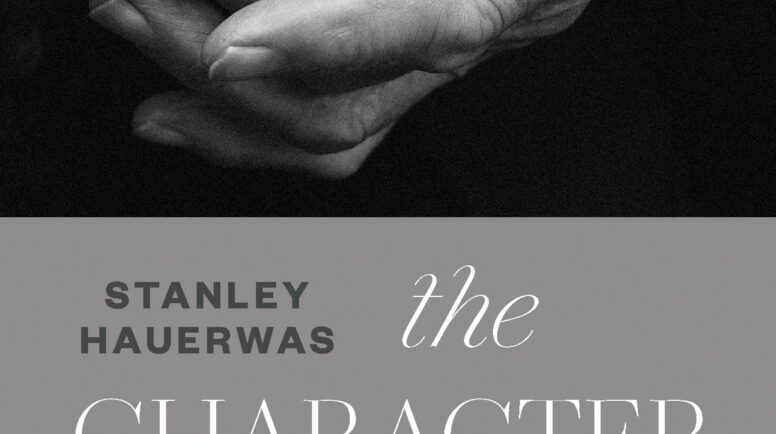
 Stanley Hauerwas
William B. Eerdmans, 192 pages
Reviewed by Deborah McKinley
I am a godmother. Though one wouldn’t know that by my actions. In God’s good providence, by steady, faithful parenting and a congregation that takes discipleship seriously, my goddaughter is now graduated from college and launched into a life of service. She boldly claims the Christian faith around which her life is formed. All without much except prayer from her godmother.
This is not a book about how to be a good godparent. Though the book begins with a forward by Samuel Wells, “On Being a Godparent” is a personal book of letters that prominent theologian Stanley Hauerwas wrote to his godson, Laurie, the son of Wells (another well-known writer, pastor and theologian) and Jo Bailey Wells (a bishop in the Church of England). The letters were written annually on the anniversary of Laurie’s baptism, October 27, 2002, and continue through 2016, with an added letter dated January 31, 2017. Each letter explores a different Christian virtue with classic Hauerwas wit, depth and honesty. He does not paint the Christian life a rosy color, noting the difficulty of living faithfully in today’s world. “If you rightly understand the virtues, you realize that they’re meant not to protect us but rather to help us negotiate the dangers of the world in which we find ourselves.” That challenge is precisely why this is an important book to read, to discuss among church groups and to give as a gift.
Virtues such as kindness, friendship and generosity all take courage (another virtue explored as a letter) in today’s world. Hauerwas notes the interdependence and interconnectedness of the virtues, weaving a web of behaviors and attitudes that make up a life lived well. That, after all, is what these virtues are about: a well-lived life. And, Hauerwas continually reminds the reader: The virtues are not all about our own lives. A well-lived life makes the world a better place for others. And, in order to live that life well, we all need others to help us grow into virtuous living. “The truth is that we can be patient only through being made patient through the patient love of others.” The life well lived is not a solitary endeavor.
The book includes many familiar Hauerwas themes: non-violence, racism, sports. He uses basketball as a framework for understanding that virtues are not something we seek after; they become part of us by practice and by our living into them — the way dribbling becomes automatic after hours and hours of practice. He ends the book with a letter on “character.” He digs deep, going beneath the virtues. The virtues both stand on the foundation of character and become the building blocks of character. “Character is finally that determined orientation that gives us lives worth living in the face of death.”
This is a wonderful book for group study, as a gift to godparents on the occasion of baptism and for personal reflection. As I read the book, I found myself reflecting on and practicing the various virtues explored. It’s a book to challenge the church to live faithfully in today’s world. People of the church who care about Laurie’s life and his life of faith surround him. May it be so for all children baptized into the Christian church.
Deborah McKinley is pastor of East Craftsbury Presbyterian Church in Vermont.