I write this from the passenger seat of Jill Duffield’s car. On the dashboard a plastic Jesus bobs, his palms lifted upwards as if to say, “It will all be okay.” As I got in the car earlier, I said “hi” to Jesus and Jill responded, “He says he loves you just the way you are.” She and I on our way back from a retreat where we read these essays to each other. We used highlighters and crayons to celebrate what we called the “heat places,” those particular spots where we felt the essays emanated heat, spoke truth.
What are these essays about? If that were neatly summarizable, they would not have the power they do. But I will quote from group member Lori Raible who asserts, “If we hope to embrace diversity and understand grace, we must face the nails together.”
What did we learn in this process? That you can be more than your separate self if you share what’s in your heart with others. In these difficult times of taking a long look, isn’t that a lesson we can savor as we think of moving on?
The essays in this issue are the result of a gathering of six pastors and one facilitator. Over the course of nine months, with the theme of “the long look,” we wrote drafts, shared ideas, offered feedback and grew as human beings. Because the nature of art is to capture and preserve what is fleeting, this Presbyterian Outlook issue resides as a record of what otherwise would have vanished in a living room, a church office, a virtual meeting. And so this edition is a glimmering artifact of time spent together sharing, writing, witnessing and honoring. It would be futile to try to describe those hours because they were – and are – glorious and sacred in the way intimate moments can be.
These essays are not mere testimonials; they are works of the heart and the imagination. Together they are a hand-stitched quilt, a kind of mosaic. Except the material is neither cotton nor velvet nor glass. It is imagination and memory, courage and honesty, witness and the power of the written word. May all who read this issue feel enveloped and held.
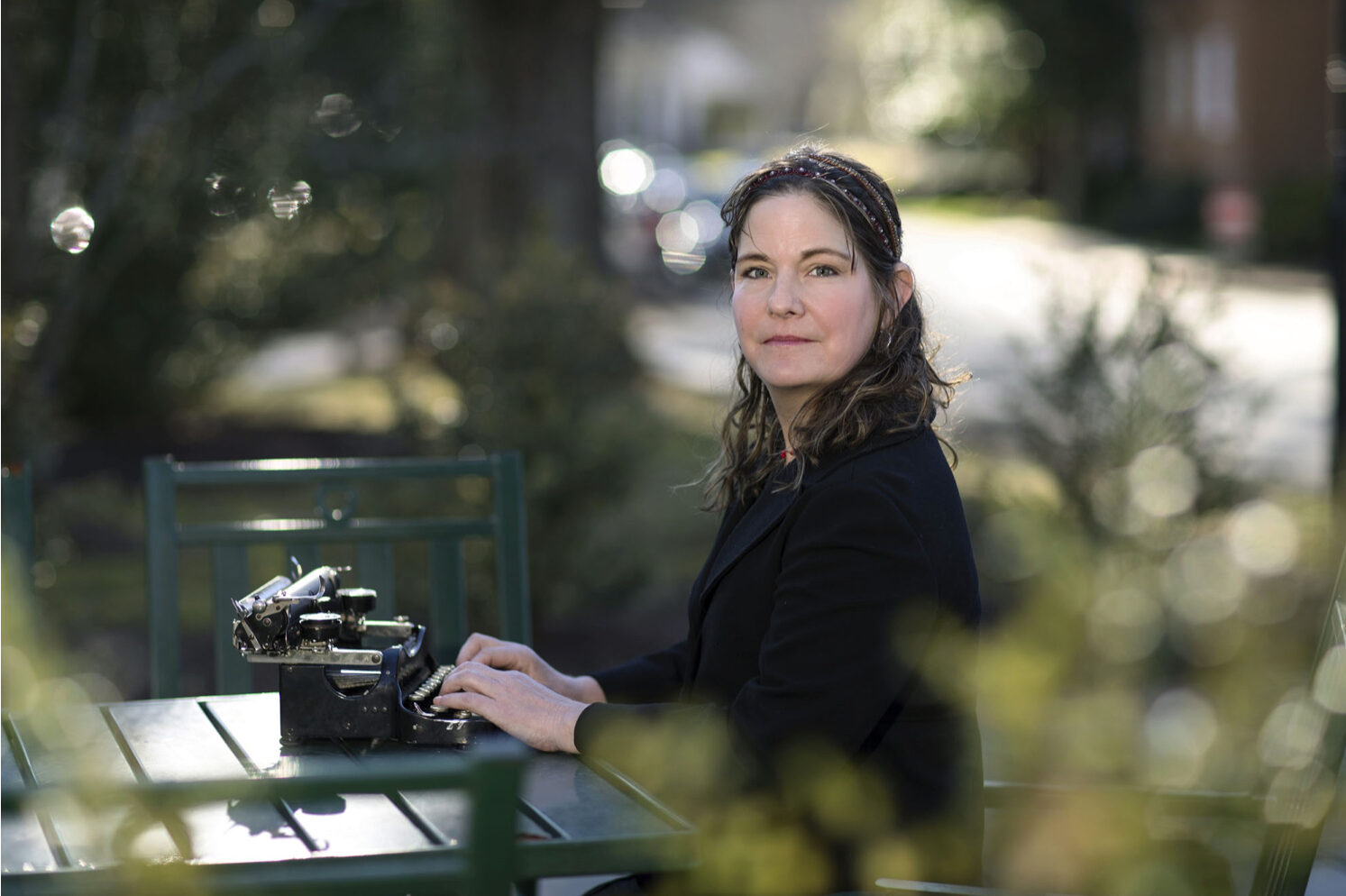 CHARLOTTE MATTHEWS is associate professor in The Bachelor of Interdisciplinary Studies Program at The University of Virginia. She is author of three books of poetry including “Whistle What Can’t Be Said.” She lives in Charlottesville with her husband Albert Connette (who is the pastor of Olivet Presbyterian Church), her two teenage children and a big galumphy black Labrador.