What are Presbyterians doing in response to the influx of asylum-seekers along the U.S.-Mexico border? How can Presbyterians help?
A series of speakers addressed these issues during a Nov. 29 webinar convened by the Outreach to the World Committee of the Presbyterian Mission Agency Board. Here’s some of what they had to say.
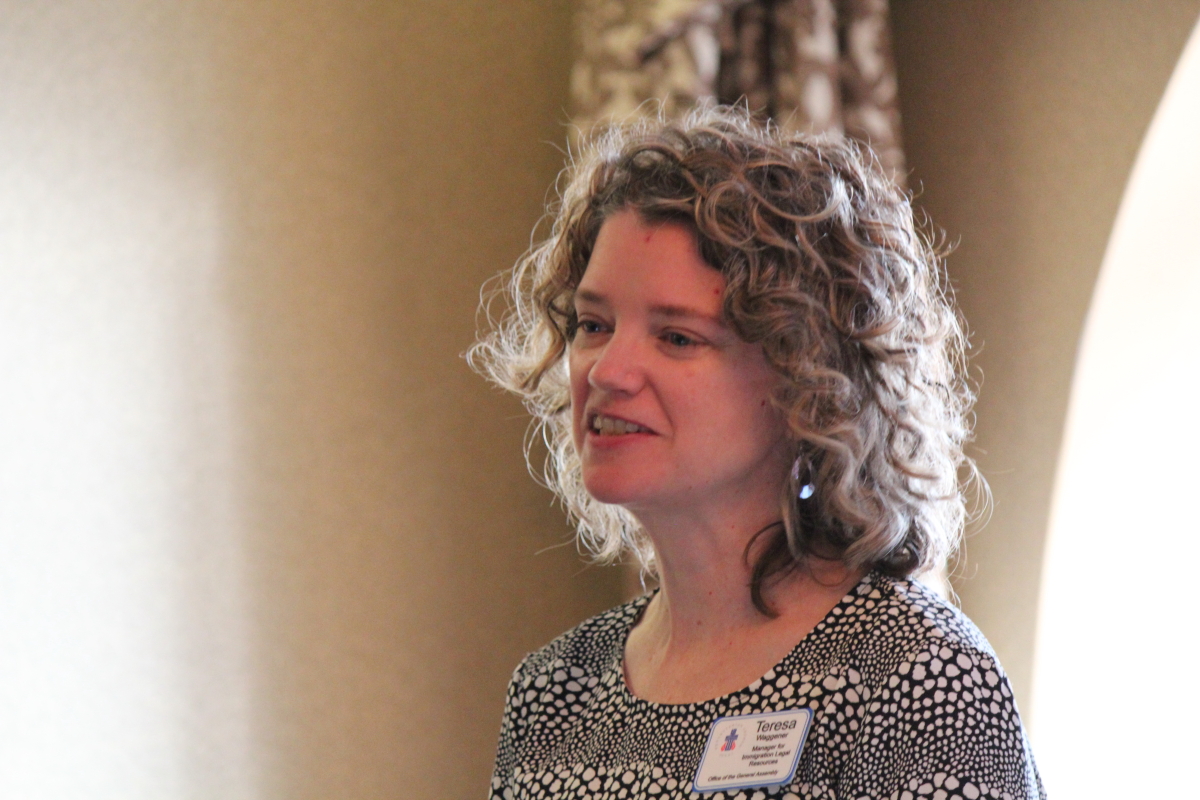
Changes in the asylum system. “What we’re experiencing right now is an erosion of our asylum system,” going back to 2014, said Teresa Waggener, an immigration attorney with the PC(USA)’s Office of Immigration Issues.
Some elements of that, she said:
- The separation of families at the border in the summer of 2018.
- A slowdown in the number of people admitted at ports of entry to try to seek asylum, from several hundred a day per port of entry in the past to maybe 10 or 20 per day now.
- The announcement by President Trump that immigrants who enter the country irregularly – not at ports of entry – will not be allowed to seek asylum. In order to seek asylum, an immigrant has to physically be present in the United States. And “we’re not supposed to punish anyone who is here in our nation asking for asylum, even thought they don’t have proper documentation,” Waggener said. A federal judge has temporarily blocked the administration from denying asylum to those who cross the border illegally.
- Plans to erect or expand tent facilities to detain those seeking asylum. That’s significant in part because immigrants with access to a lawyer have a roughly 50 percent chance of succeeding in their asylum applications, Waggener said. Those without a lawyer – as many in detention likely would be – would have less than a 10 percent chance, she said.
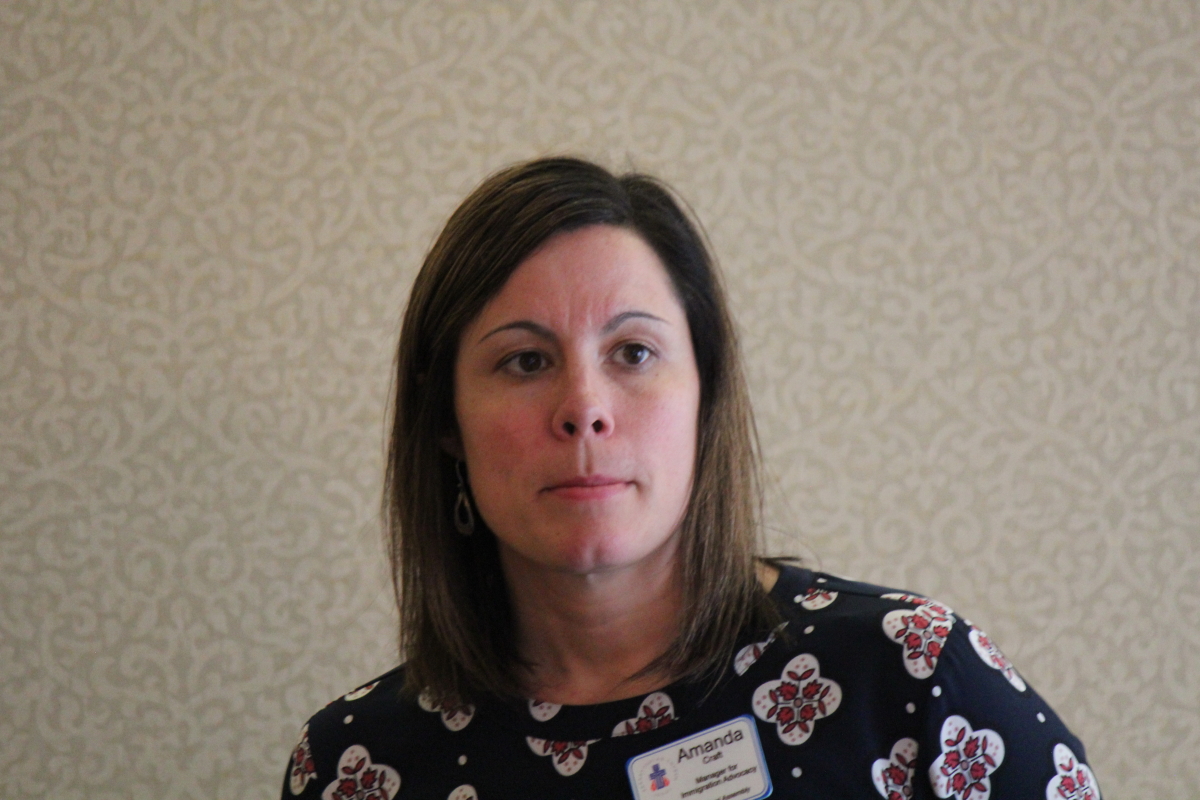
Deportations. Now, unlike in the past, “everyone who can be deported is now a priority for being deported,” said Amanda Craft, manager for advocacy with the Office of Immigration Issues. “For this administration, everything is about enforcement. No other alternatives are on the table.”
Within the interior of the country – away from the borders – immigration arrests are up 40 percent from previous administrations, Craft said.
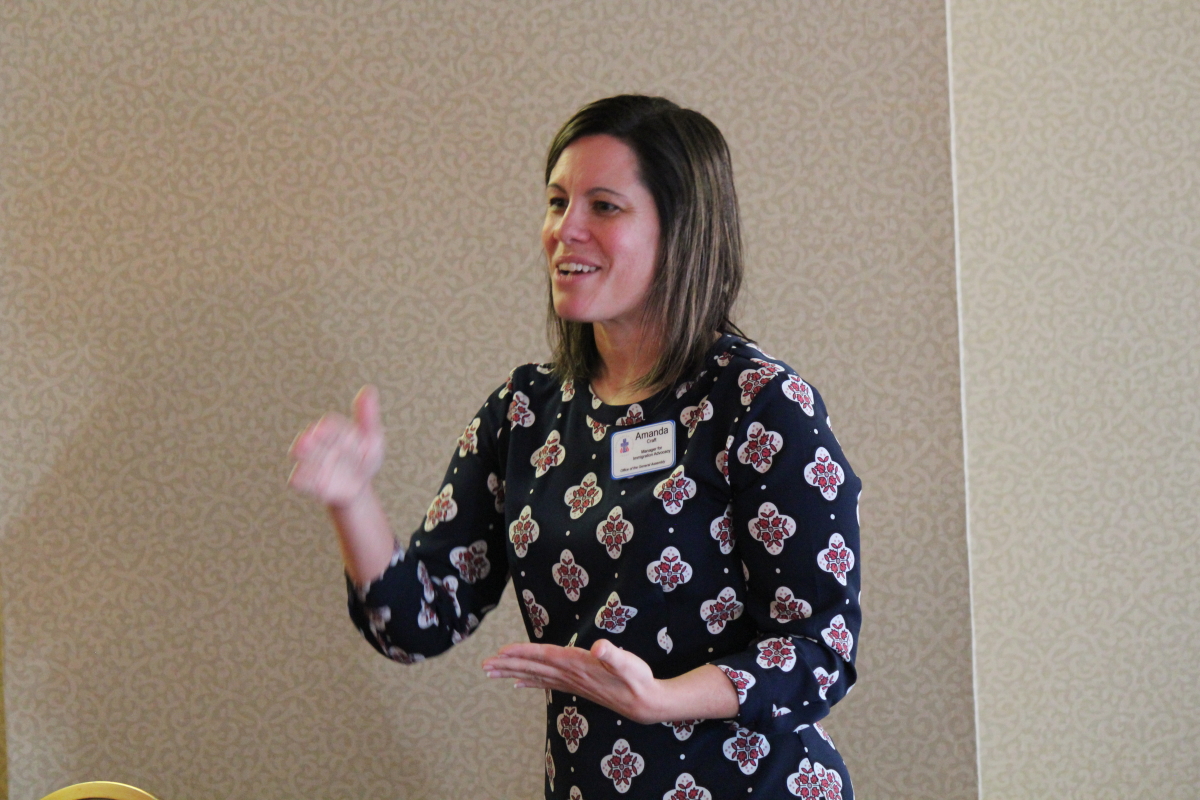
And the number of beds at detention centers (both public and private facilities) has increased to 40,000 – including 14,000 for children, many of whom are being detained for long periods of time, Craft said.
She spoke of the importance of both local and national advocacy on behalf of individuals being detained – for example, the work that First Presbyterian Church of Metuchen, New Jersey did to help win the release from detention of Roby Sanger, an Indonesian immigrant taken into custody by Immigration and Customs Enforcement agents last February while he was dropping his daughter off at school. Sanger was released with an ankle monitor Nov. 15 while the appeal of his case is pending.
Fear and misunderstanding. Leslie Vogel serves as the regional liaison for the Presbyterian Church (U.S.A.) for Mexico and Guatemala. Vogel, who lives in Guatemala, has long experience with border issues and with outreach work in the U.S.-Mexico border region. She spoke of misunderstandings about the immigrants seeking asylum and the reality that “a lot of times people feel threatened” by the immigrants – concerned about the impact they will have on the economy or their job security. “We already have so much stress and so many people facing poverty in the United States,” Vogel said. “It’s really a sense of scarcity, and there’s not enough to go around.”
In reality, however, immigrants often take jobs that “even the poorest U.S. citizens aren’t willing to do,” she said. People respond to inaccurate information in the media and elsewhere, and may not realize “they’re not thugs and gang members for the most part, and they’re not terrorists,” but families or young adults leaving their own countries because of the impact of U.S. policies from the 1970s on that make it untenable for them to stay where they are.
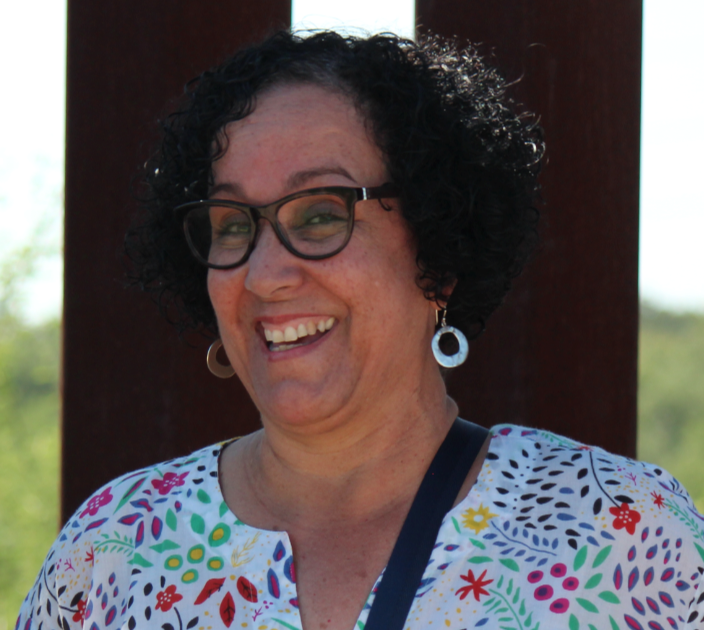
Wall of Welcome. Caly Fernández, a ruling elder from Austin and chair of Mission Presbytery’s Immigration Task Force, told of work already underway to assist asylum-seekers in south Texas and plans for a “Wall of Welcome – Interfaith Caravan of Hope” event being planned in McAllen, Texas on Dec. 14-16.
In Texas, the number of asylum-seekers needing assistance is on the rise. In San Antonio, the Interfaith Welcome Coalition assists those who have been released from detention and are traveling to meet family members or friends while their asylum cases proceed.
In 2017, the coalition handed out 5,000 backpacks with food and personal hygiene kits to immigrants at the bus station and airport. From January to October 2018, the group handed out more than 17,000 backpacks – including 1,778 in October alone, the most ever in one month.
Presbyterian Disaster Assistance is helping to support the Courts and Ports program of Texas Impact, an immersion experience where small groups visit the immigration courts in Brownsville, Texas and meet with asylum-seekers seeking to cross the border bridges. (Read a Presbyterian Outlook story on a day spent in the Brownsville immigration court.)
And at the Wall of Welcome gathering Dec. 14-16, Presbyterians will gather for a weekend of worship and service near the border – with those likely to attend including J. Herbert Nelson, stated clerk of the PC(USA), and Vilmarie Cintrón-Olivieri, co-moderator of the 2018 General Assembly.
Students and faculty from Austin Presbyterian Theological Seminary will lead worship Dec. 15, and those participating will volunteer at the Humanitarian Respite Center run by Catholic Charities, at the McAllen bus station, and possibly other sites as well.
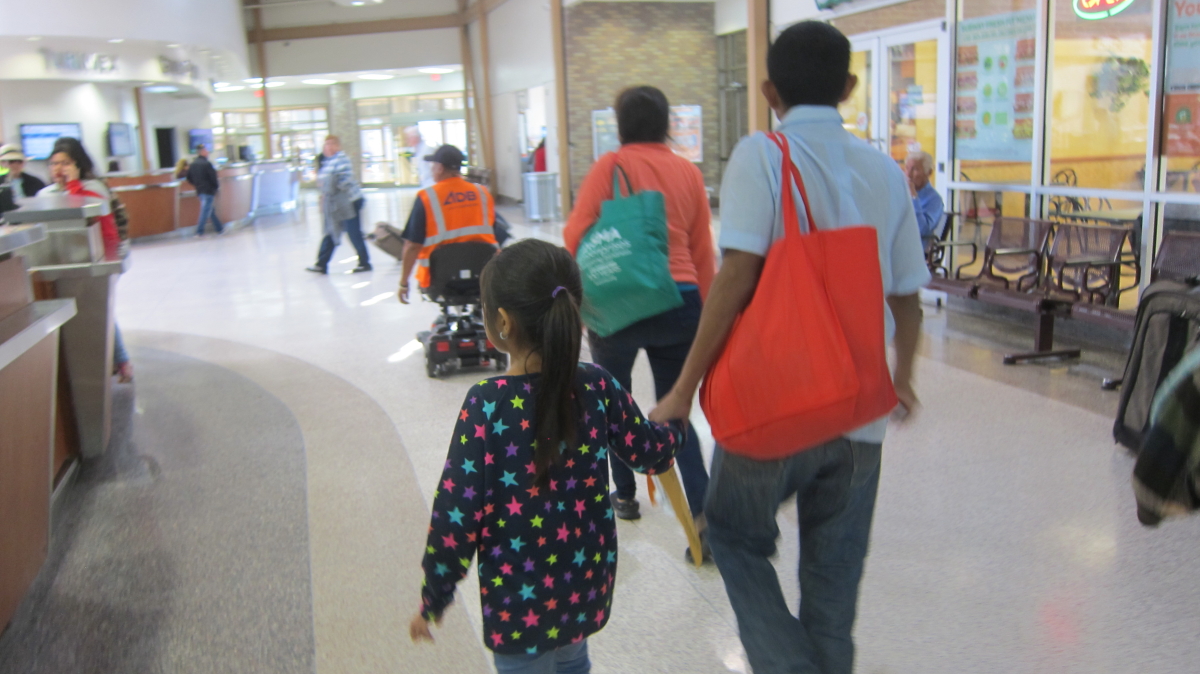
In McAllen, 200 to 500 asylum-seekers are being released each day to make room for the caravan approaching the border, Fernández said, and possibly “to create an atmosphere of chaos and trying to exhaust everyone.” (Read an Outlook account of the humanitarian work in McAllen here.)
In response, “we need more help,” Fernández said. “We always need volunteers.”
How to help. Susan Krehbiel, associate for refugees and asylum with Presbyterian Disaster Assistance, said the PC(USA) has worked through the ACT Alliance, an international faith-based alliance, to respond to the humanitarian needs of the caravan at the Guatemala-Mexico border.
The PC(USA) also is in conversation with its partner church in El Salvador, Vogel said, to find ways to support immigrants who have been deported back to El Salvador and now need help seeking employment and recovering from trauma.
Krehbiel and others in the webinar outlined some ways Presbyterians can help. Among them:
- Support groups already involved in the effort, such as the Interfaith Welcome Coalition in San Antonio, which needs volunteers at the bus station and airport and financial donations for the backpack program. Others on the front lines of response with which Presbyterians are involved include Matthew 25 of Southern California, working in the San Diego-Tijuana area; the New Sanctuary Coalition of NYC; and Annunciation House in El Paso and the Humanitarian Respite Center in McAllen. This Presbyterian Disaster Assistance blog post describes more ways to help.
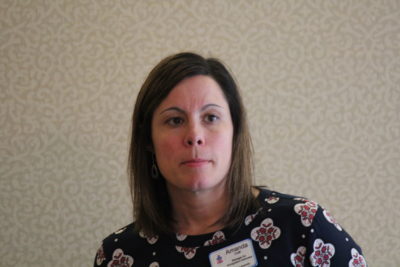
Amanda Craft - Get involved in advocacy on immigration policy, both nationally and on the local level. That can include work on “how to keep at-risk communities safer in your region,” Craft said – to figure out how to if immigration enforcement agents are detaining immigrants in the region.
- Build relationships with immigrant communities. “Getting to know immigrants has been really meaningful and important … so you know each other as human beings,” said Ellen Sherby, coordinator of equipping for mission involvement for Presbyterian World Mission.
- Write letters of support immigrants being held in detention centers. The Casa Mariposa Detention Visitation Program is sponsoring a Holiday Card Campaign for immigrants being detained in Florence and Eloy, Arizona. Other groups have organized letter-writing programs.
A link to a recording of the webinar is expected to be posted soon on the Presbyterian Mission Agency website, along with additional resources.
The following is a guide Krehbiel has written on what to include in letters to people in detention.
WRITING LETTERS TO PEOPLE IN DETENTION
To begin, introduce yourself. You might want to tell your writing friend a bit about where you live, what city you’re from, what work you do.
Share with them you are writing as a volunteer after learning more about the US immigration detention system with a group of Presbyterians…..and you may name that group.
You might include stories about your family, education and hobbies. Your writing friend will be very interested to know about the different things that people do!
You can tell them what the city is like, your favorite places to go, things you enjoy seeing, etc.
Try to keep the letter simple and your writing as clear as possible….leave a finger space between words for ease of reading. Endeavour to use print if one’s cursive writing seems unclear. If your new friend has limited English, there will always be someone else that they can ask to assist them, so do not worry that your letter will not be read. It is a fantastic opportunity for them to learn and practice their English!
Keep it cheerful! As sad as the current situation is, and as sympathetic as you are to what they are going through, try your best to remain cheerful in your topics of conversation. What your writing friend needs more than anything are reasons to hope and things to look forward to. Your letter has the potential to offer a short respite from their stressful environment – let’s use the opportunity to make them smile!
Please refrain from asking your writing friend about their case or the status of their visa applications. This is already a source of great stress. Please also bear in mind that many have seen a lot of sadness in their lives.
You can draw a smile or doodles on the envelope!