Leisurely days of retirement are the goal of many Americans who have found an idyllic existence on the shores of the Gulf of Mexico in Sarasota, Florida. The city boasts pristine beaches, a flourishing arts scene, great golf courses and all the amenities that make for a pleasurable lifestyle. Right in the middle of a thriving downtown area is First Presbyterian Church, serving the community for more than 100 years, with its inviting sanctuary adorned by stained glass windows and a striking bell tower.
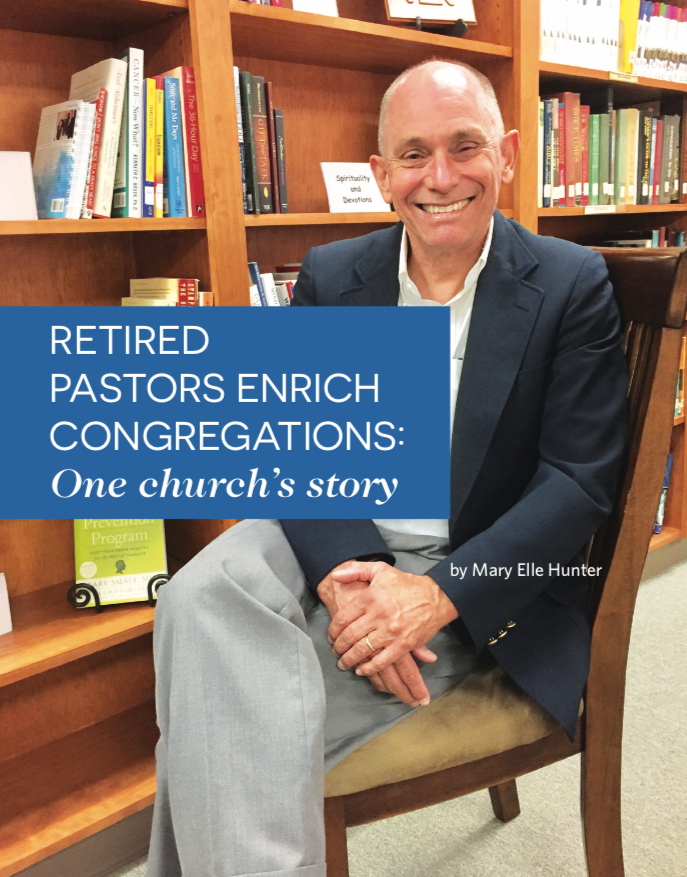
Among its worshippers in recent years have been numerous retired pastors. What value do retired pastors add to the fabric of church life? This congregation has found them to be a valuable resource in worship, mission and congregational vitality.
Enhancing the life of the church
The retired pastors that now call First Presbyterian Church of Sarasota their faith home have previously held a wide variety of roles — and also traditions (Brethren, Mennonite, United Methodist and, of course, Presbyterian). They come from all across the United States, and hold in common an eagerness to share their abilities and skills for the glory of God through the ministries of First Presbyterian Church.
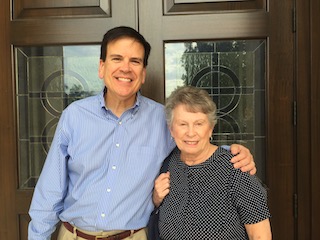
Glen Bell, the congregation’s pastor and head of staff, says: “From the moment I walked in the door at the end of 2012, I have been deeply touched by the encouragement and leadership of the retired pastors and commissioned lay pastors who are a part of our congregation. The late Ray Woody, along with Dwight Ferguson, John Cairns, Jinny Miller, Ron Miller and George Chorba all have made a transformative difference in the life of our church.
“George Chorba excels in supporting our annual stewardship initiatives and our Imagine the Future capital campaign. Jinny and Ron Miller have hosted excellent introductory classes for new members, and lead our Invest in Children program at Brentwood Elementary School. John Cairns developed and directed our Academy of Christian Discipleship of adult Christian education for a decade.”
Bell adds: “Dwight Ferguson was the interim pastor of First Presbyterian at a critical juncture some years ago and since then he has supported the congregation with deep dedication. The late Ray Woody served with great distinction as a former parish associate with his winsome presence and transforming smile — and the best sense of humor.”
Service as parish associates
Some Presbyterian congregations engage parish associates, ministers who serve part-time on an “as needed, as available” basis, often available for leadership at memorial services, in liturgy or in preaching. This is a way for many retired pastors to share their gifts at First Presbyterian. Floyd Churn has been serving in this capacity, and was recently joined by two other retired pastors who are relatively new to the area: Jean Johnston and Doug DeCelle. As parish associates, they are involved in many aspects of the church’s ministry and outreach and continue to find new ways to live out their calling.
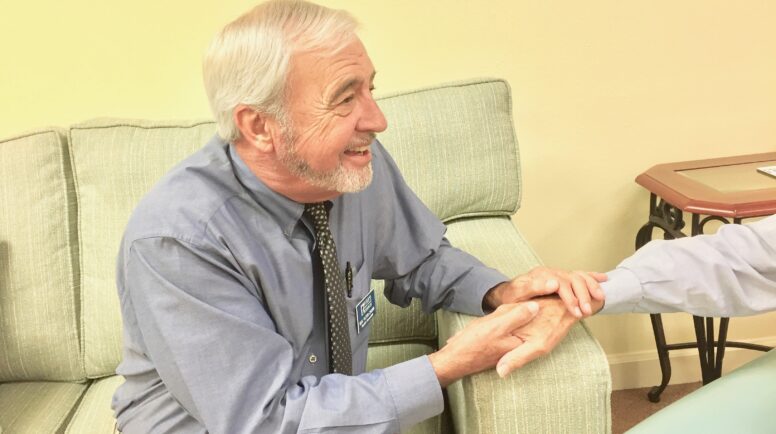
Pastoral care. Churn and DeCelle are involved in pastoral care. Churn calls it a blessing to be able serve individuals and families during a period that is stressful but also spiritually critical, and says this pastoral care program is one of the strongest that he has encountered. DeCelle agrees, “Here it is very well organized, and there is a good team approach enhanced by the inclusion of a registered nurse.” He says he has retained his sense of call and has focused on the homebound and shut-in members of the church through the ministry of the church’s board of deacons.
Education. All three of these retired pastors are experienced teachers. Teaching is an important element in the everyday life of pastors, whether through leading Bible study classes, workshops and small group sessions or by thoughtful sermons given each week for their congregations.
Johnston’s organizational and planning skills contributed to her success in creating a worship and educational series. One workshop dealt with ways church members and leaders can become more attuned to the supportive role they can play in the often undervalued functions of pastors.
Churn has led dual sessions on Presbyterian worship, and last spring, he presented a seven-week series on Franciscan spirituality. His interest in the subject came from reading the works of Richard Rohr, an American author and Franciscan friar. The course shared some of the elements of the Franciscan spiritual life — which is not apart from the world, but deals with worldly precepts.
Churn and Johnston volunteer in a mission project that partners the church with a local public school. Johnston was an elementary school teacher before going into ministry, so she knows how vital it is for a teacher to have backup and the benefit of an adult presence, beside the teacher, in a classroom.
Churn volunteers two or three hours a week at Brentwood Elementary School during the school year. He reflects: “I discovered that helping a second grader increase his or her word recognition and vocabulary or encouraging a hyperactive kindergartner to focus on a science project was a gratifying experience. I have always had great respect for school teachers, and working with them and seeing how much they give of themselves for the children is a real joy.”
Mentoring. One of the church programs that has drawn Johnston’s attention is the Faith Focus Weekend and Pastoral Development Seminar. The residencies bring five or six young pastors from the eastern United States to First Presbyterian allows them to get spiritual feedback from their colleagues and from a congregation that is not theirs.
Johnston’s experience as the first female pastor in several churches came after she attended seminary in her 30s. Prior to that she had been an active member and served as a ruling elder in a multiracial congregation. Before retiring, she was a presbytery executive. During that time, she became increasingly aware that young pastors, particularly women, need a good support system, and don’t always know where to find it.
As part of her presbytery responsibilities, she was called on to address those needs. She helped young pastors by recalling when she was first ordained, and how she became a part of a small support group of women ministers who met over the years to discuss matters they had encountered in their ministry. “We could exchange ideas and consider questions relating to our Presbyterian faith.”
Johnston believes this quote from a personal confession of faith that she wrote a number of years ago is a statement that is relevant today. She sees the church as “the model and agent of healing in our aching world. It is the place where we can freely accept one another because we have been fully accepted through our Lord Jesus Christ. The church becomes the support, renewal and equipping center for our ministries in the world.”
Book group. Another unique program that has gained recognition and interest is the Manasota Interracial Book Club. DeCelle says, “I have had the privilege of being involved with this fascinating project.” Led by two elders, the club was started as a response to a sermon given by Paul Roberts, the president of Johnson C. Smith Theological Seminary, at First Presbyterian on Faith Focus Weekend in 2017.
DeCelle’s participation with the book club is one facet of his desire to advocate for social justice, and he frequently blogs about books being considered or discussed by the club. He observes that book club members are in a learning mode as they study, read and discuss the history of racism in the United States.
Club members recently read “Stamped from the Beginning” by Ibram X. Kendi, and followed that experience by attending a lecture by the author at Eckerd College. In his remarks, Kendi sought to shift the emphasis from how not to be a racist to how to become an antiracist, and also provided direction for those who want more than superficial solutions. DeCelle reports that those who attended the lecture were impressed with the great gift they received from hearing the author elaborate in person on his written word.
Writing about the experience on his blog, DeCelle wrote: “The book is an excellent way of building a historical foundation for further study of race and racial justice. More importantly, it’s a great way to launch one’s adventure in becoming an antiracist.”
His blog (douglasdecelle.net) extends beyond the book group, including reflections on spirituality, theology and discipleship, as well a personal confession of faith, written when he joined the Peace River Presbytery after 40 years of ministry.
Many gifts. Victor Ford, a counselor who has taught classes, also serves as a parish associate. Maurice Luker is also an active participant in the Academy of Christian Discipleship, teaching classes in adult Christian education. Paul Reiter joined the retired pastors in the Sarasota area during the last year and preached in the summer at First Presbyterian. Trained in spiritual direction, he is a member of Spiritual Directors International and acts as a companion and listener on the journey assisting in attending to the presence of God and call in a person’s life.
Retirement as ministry
As Bell and his staff endeavor to meet the needs of a diverse congregation in new and progressive ways, he feels blessed by the fact that he has such a devoted group of retired pastors to call upon. With the Florida weather and abundant sunshine drawing an increasing number of retired pastors to the area, Churn believes he speaks for many, saying: “A good thing about retirement is the ability to stay connected to the ministry without having all of the responsibilities that come from being an active pastor. I can use the gifts that I have in a more relaxed way.”
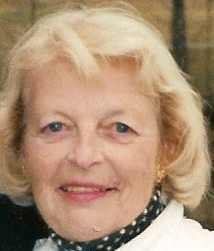 Mary Elle Hunter is a freelance writer and marketing specialist, who has been a Presbyterian since her teens. Currently, she is a member of First Presbyterian Church in Sarasota, Florida.