
Climate change and its impact continue to make headlines. World leaders and ordinary citizens alike are seeking ways to better care for the earth. People of faith have a particular call to be good stewards of God’s creation. Throughout the Presbyterian Church (U.S.A.), individuals, congregations, presbyteries and agencies are joining efforts to respond to this rapidly growing global crisis. Bruce Gillette, vice moderator of Presbyterians for Earth Care, asked a few faith leaders to share their stories of how they are participating in the stewardship of creation.
Seminaries
“The two latest climate reports, Fourth National Climate Assessment and the Intergovernmental Panel on Climate Change’s Special Report on Global Warming of 1.5° C, are the most dire reports yet to be produced by expert scientists. Within the next 10 to 15 years, the human race will largely determine its own survival, and that of countless other species, in our ‘common home.’ We are at a crossroads, and radical changes in current energy policies, capitalist economies and collective and individual lifestyles are required to mitigate and prepare for an ecological collapse never experienced in all of human (and hominid) history.”
— From a joint statement being circulated to seminary faculties by William P. Brown, the William Marcellus McPheeters Professor of Old Testament at Columbia Theological Seminary
“As the director of the Green Seminary Initiative, I walk alongside three Presbyterian seminaries: Austin Presbyterian Theological Seminary, Columbia Theological Seminary and Union Presbyterian Seminary-Charlotte. These schools are equipping students, faculty, staff and administration to respond to the earth and issues of climate change through community, coursework, the use of their buildings and grounds, public leadership and worship. They are creating comprehensive action plans for preparing Presbyterian pastors and community leaders to respond.”
— abby mohaupt, director of the Green Seminary Initiative


Camps and conference centers

“As the stewards of some incredible parts of God’s creation, staffs serving many of our Presbyterian camp and retreat centers are responding to the 2018 Intergovernmental Panel on Climate Change report. At their annual conference in November 2018, members of the Presbyterian Church Camp and Conference Association (PCCCA) worked with the Presbyterian Mission Agency office of Camp and Retreat ministries to develop a statement acknowledging the significance of climate change and committing to reduce their center’s impact on the environment.
The statement includes three specific commitments: serve at least one completely meatless meal during their programs; eliminate the use of Styrofoam and minimize other single-use plastic and disposable items; and educate guests about these issues and commitments. Acknowledging that Presbyterian camp and conference centers vary greatly in terms of resources, the statement also includes more efforts to aspire and work toward: increasing recycling and recycling education; composting and gardening; eco-friendly and fair trade products for consumption and sale; using natural and sustainable materials for programs, such as arts and crafts; energy conservation elements, such as motion-lighting and hybrid/electric vehicles; and divesting endowments and pension plans from coal, gas, and oil production.”
— Brian Frick, PC(USA) mission associate for camp and conference ministries
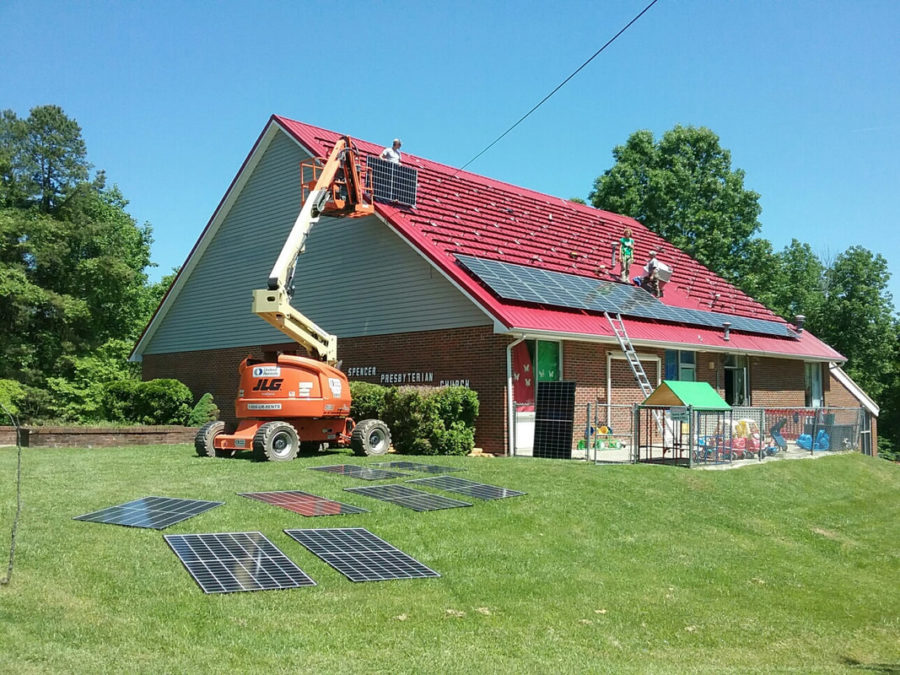
— Brenda T. Wilson, Spencer Presbyterian Church in West Virginia, on the impact small churches can have
Congregations

“Stewardship is about making choices and what we do every day of our lives. It is more than giving money to the church. Therefore, the work we do as individuals and as a church to save God’s creation, our Earth, is stewardship of the environment. Our pastors model and lead our members to take environmental stewardship seriously. They choose hymns and prayers that reflect our need to focus on our responsibility for Earth’s renewal. We use the screen in worship to reduce the number of bulletins, which contributes to efforts to eliminate paper and the copier and reduces use of chemicals. We encourage all members to consider the number of copies needed for meetings and classes and to recycle as much as possible at church and at home.”
— Alison W. Bennett, elder at Saint Mark Presbyterian Church in North Bethesda, Maryland, a seven-time certified Earth Care Congregation
The Restoring Creation loans granted by the Presbyterian Investment Loan Program help churches make buildings more energy efficient. The loans now have current commitments of $11.4 million, which are helping 74 congregations with solar, HVAC upgrades and energy conversation projects.
— James G. Rissler, Presbyterian Investment & Loan president
Bruce Gillette is pastor of the First Presbyterian Union Church in Owego, New York, and vice moderator of Presbyterians for Earth Care.