TUCSON, Arizona – St. Mark’s Presbyterian Church in Tucson can’t fix all that’s wrong with the U.S. immigration system. It can’t end the violence, corruption and despair that drive migrants north to the border.
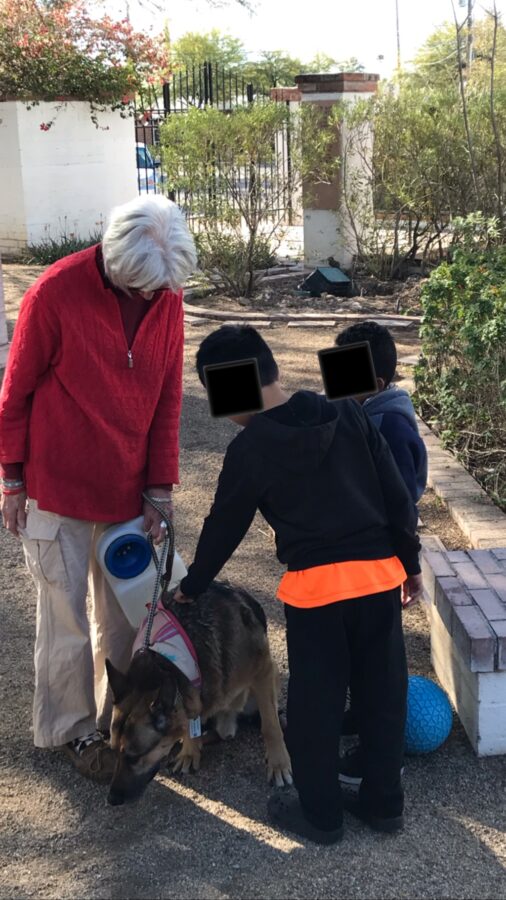
But for one week each month, St. Mark’s can be a place for families seeking asylum to take shelter, to have a meal, to be shown human kindness. Since October, St. Mark’s has become part of a faith-based network of pop-up shelters in Tucson – one of a handful of local congregations working together to assist with the overflow from the city’s two main shelters.
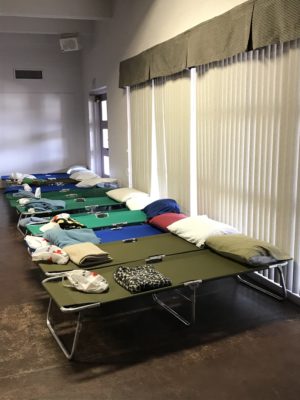
“We have turned two of our fellowship halls into what we call Hotel San Marcos,” said Bart Smith, pastor of St. Mark’s. “We’ve committed to doing this one week a month until we are no longer needed.”
The new arrangement began with urgency last October, when immigration officials dropped off more asylum seekers than usual – pushing the existing shelters past capacity.
Since last summer, Tucson has seen – as have other communities near the U.S.-Mexico border – a steady flow of asylum-seekers being released by immigration authorities, people who need a place to stay as they arrange transportation to travel to their U.S. sponsors, usually family or friends with whom they will stay as their cases progress through the federal immigration system.
Many are families with children. They are in the U.S. legally as their cases proceed. Many speak limited or no English; they have no money or food, arriving with only the clothes on their backs – immigration officials typically take even their belts and shoelaces.
Tucson does have two short-term shelters available for those seeking asylum – Catholic Community Services operates Casa Alitas and United Methodists the Inn Project, both opened several years ago to provide hospitality as unaccompanied minors kept showing up at the border. But last fall, those centers ran out of space – and when an urgent call went out for help, St. Mark’s was one of the congregations that said yes.
“This is in a sense what Tucson does,” Smith said. “We’re the cradle of the sanctuary movement. We have this wonderful heritage in the community of offering hospitality to the stranger. That’s one of the reasons for it. But I honestly think one of the intentions behind dropping people off at the bus stations and trying to overwhelm the humanitarian system back in October was for optic’s sake, that national narrative that we’re under siege. I think the federal government was figuring the humanitarian system couldn’t handle this. But in Tucson, we can. … While the rest of the country is debating this, we’re on the ground doing what we’ve always done.”
Other Presbyterian congregations have also provided financial support for the project – including St. Andrew’s Presbyterian, which is one of the more conservative Presbyterian churches in the area and which contributed $1,000 to help the ministry at St. Mark’s, one of the most liberal.
With all the tumult about immigration policy and disagreement about whether to build a border wall, “there’s this perpetual, slow-burn anxiety” in border communities, Smith said. “I think about what is within my control. And this is within our control” – to offer food and shelter to families in the church fellowship hall. “Meeting Christ in the stranger is what I can do right now.”
So far, the majority of the asylum seekers staying at St. Mark’s have come from Guatemala – typically a parent traveling with one or more children. Sometimes a father is traveling with a teenage son, trying to prevent the boy away from being coerced into gang activity. The migrants tell stories of extortion, rape, police corruption, beatings, death threats – danger that compelled them to leave their homes for the unknown.
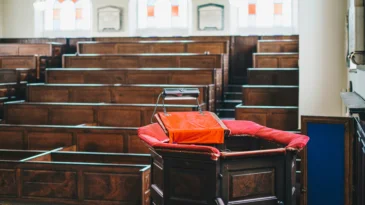
From the pulpit, Smith has preached that “one of the strongest witnesses we can make is to be human together in the midst of these dehumanizing systems.”
Often the national rhetoric involving immigration “basically signals that these folks are problems,” Smith said. “What we are saying is they are not problems; they are honored guests and fellow human beings.”
Caroline Rondeau, an elementary school special education teacher and St. Mark’s member, went with Smith to an emergency meeting last October, after another congregation had started an overflow shelter in the church gym and was housing about 100 asylum-seekers a night – but knew it couldn’t keep doing that long- term. The emerging idea: Find more congregations to help out on a rotating basis, with each taking part of the overflow. The question was asked – how many can your church take?
“Bart and I looked at each other,” Rondeau said. “We both kind of said at the same time – 25.”
Twenty-five asylum seekers – maybe 30 – sleeping in the fellowship hall, on some cots the church already had, and more provided by the Red Cross. The church has a big kitchen, a shower, a washer and dryer. The meeting of “how many can you take?” happened on a Tuesday. By Thursday evening, “we were up and running,” Rondeau said – and she’s now the volunteer coordinator for Hotel San Marcos.
As luck would have it, the schools were out that first week for fall break, so Rondeau didn’t have to go to work. “We went to the grocery store. We bought a bunch of food. … We got a rug and put some toys on it for the kids.” They set up an intake table and found volunteers fluent in Spanish to figure out transportation – to help the asylum seekers contact their sponsors and purchase tickets to their destinations, mostly by bus but sometimes by plane. Volunteers pack snack bags for the asylum-seekers to take with them, because often they’re riding the buses for days, with complicate itineraries – sometimes with five or six bus tickets.
Rondeau visited the Catholic Community Services shelter and spoke to the man coordinating the kitchen there. He explained what the asylum-seekers are accustomed to eating – “they’re going to like chicken, they’re going to like rice, they’re going to like black beans” – and that they prefer corn tortillas to flour. The migrant children were not familiar with some popular U.S. staples, such as goldfish crackers or macaroni and cheese.
He told her that “these people are most likely dehydrated,” so encouraged her to make big pots of chicken soup, “and don’t put too much salt into it.” Rondeau made “a huge pot of chicken soup with rice, because chicken soup fixes everything.”
Along with meeting basic needs, attention is given to fun and comfort too. When the children’s music director brought out marimbas, a marimba jam session broke out. The asylum-seekers watch Spanish-language movies on Netflix, and big bean bag chairs borrowed from the youth group have been a hit, as has been an oversized couch – a welcome place for people to relax after weeks sitting on concrete or in hard plastic chairs.
Volunteers draw on their own skills. One woman offered to give haircuts. Another person brought nail polish for a manicure session. Potential volunteers are told they don’t have to speak Spanish – they can help out if they’re willing to run errands, wash towels, chop celery.
On the weeks Hotel San Marcos is up and running, Rondeau comes after school every day, stays overnight on Fridays and helps out all day on Saturday. As a woman of faith, this seems like the place to be.
“My mother always used to tell me it’s not the fact you went to church on Sunday, it’s what you did with the rest of the week” that mattered, Rondeau said. “That’s always stuck with me. It’s been part of who I am, to want to help people. It’s the right thing to do. What’s happening to these people is so unfair and so scary.”
About a third of the volunteers who help with the St. Mark’s pop- up shelter are not members of the church, but people from the community who want to help.
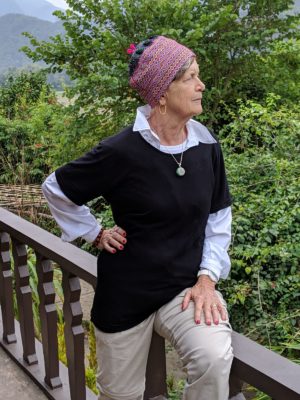
Mary Goethals is one – a retired teacher who keeps her distance from organized religion, but has a passion for border issues. Goethals got involved more than a decade ago with humanitarian efforts to provide water for migrants crossing the unforgiving desert.
Later, she became a volunteer with the Casa Mariposa Detention Visitation Program, visiting immigrant women being held at the Eloy Detention Center, some of whom are detained there for months or even years. She has become friends there with women from Honduras and Guatemala – women who have now been released and are waiting in Ohio, Maryland, New York, New Jersey and Georgia for federal judges to consider their asylum claims.
“You wouldn’t believe the stories” the women tell of violence and suffering, Goethals said. “These horrific stories – they’re true. They’re true.”
She met Margarita, who on her way home from work was attacked and raped by five men, and then left for dead by the side of the road. She found shelter, going to live with an uncle – an alcoholic who sexually abused his own daughter and then turned to Margarita, telling her that “if you go to the police, I’ll kill you.” So she fled north.
Other women tell of gangs who extort families for money, with the cost always increasing. By the time they make it to the U.S., ‘they are really, truly in trauma,” Goethals said.
At St. Mark’s, Goethals coordinates transportation for asylum-seekers for the next step of their journey – contacting their sponsors to help arrange for a bus or plane ticket. The volunteers try to explain the itinerary, which can involve days of bus travel with multiple layovers and transfers, sometimes in the middle of the night.
Volunteers help the asylum-seekers contact the relatives they left at home, most often via WhatsApp, to let them know they’re across the border and have been released from detention. “Everybody left behind somebody,” Goethals said. One young woman, on her way to stay with an aunt in California, arrived with a smile on her face. The next day, she was sobbing, saying over and over, “I miss my mom, I really miss my mom.”
Life goes on for these migrants. One boy celebrated his 14thbirthday during his stay. The St. Mark’s volunteers baked him a cake.
When they walk in the door at St. Mark’s, “we say ‘Welcome, we’re so glad to see you,’” Goethals said. “I think this is a sacred space when they walk in that door.”
The work at the pop-up shelter is “heartbreaking, exhausting, it’s transformative, it’s really hard,” she said. She knows that many of those she helps will lose their asylum cases and be deported back to the violence and corruption they are trying to flee.
“It’s like putting your finger into the dike,” Goethals said. But she won’t quit.
“If I can put my finger in the dike and keep the water out a little bit longer, I’m going to do that. Maybe things are going to change.”