Here is the sad fact: Every time I step into a church, I never expect to be fully welcomed.
As a nonbinary Christian who is attracted to people of all genders, I have been involved in conversations about gender, sexuality and inclusion my entire life. Ever since I can remember, congregations and denominations have been debating what they believe about parts of my identity.
One of the results of these conversations is that churches, across the spectrum, are more upfront about what they believe. Church websites have moved from vague mentions of sexuality to state explicitly what they do or don’t believe to be sin. Some churches have adopted “open and affirming” statements or affiliated with denominational organizations that work for full inclusion of people of all genders and sexualities. All of this work is important and gives those of us looking for a congregation a base from which to discern whether or not a particular church would be a place where we could find a home.
The problem comes when the work stops there.
When I enter a new church, a lot of questions come up: What kind of looks am I going to get from people when they cannot discern my gender? Is all of their programing based on gender (women’s and men’s groups) or is there a place where I will fit? Are gender-neutral restrooms available, and if not, will I be yelled at for being in the “wrong” restroom? What do I do if verses of hymns are assigned to “women” or “men”? Am I going to be included in the liturgy, or is the congregation always going to be addressed by binary language?
The fact is, even after doing my research on churches to ensure that they accept me on paper, I have never been to a church that has been prepared to fully welcome me. The difference has been that some churches are open to change as they seek to live into their beliefs and some are not. The landscape of how we talk about gender and sexuality is changing quickly, and I know the reality is that sometimes it takes a while to catch up. When I approach leaders to let them know that they have inadvertently excluded me and they double down, afraid of admitting ignorance or assumptions, I feel the sting of being unwanted. But when they see these moments as a chance to grow, I feel like a valued member of the Body of Christ.
If there was a statement that would show me that a church was ready to have me in the room, it would look something like this: “We seek to welcome people of all gender identities and sexual orientations. We also know that, despite our best efforts, we will sin and fall short of this calling. With humility, we seek to partner with every person who comes through these doors to make this church a home for all.”
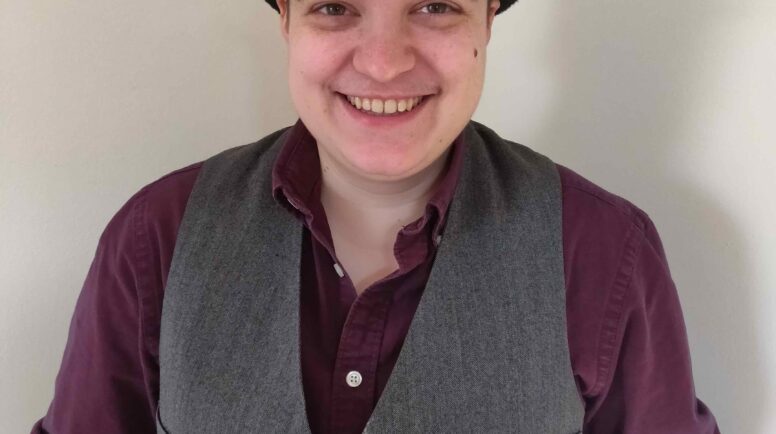
 Slats Toole (they/them/theirs), author of “Queering Lent,” is a writer, musician, preacher and poet living in East Brunswick, New Jersey. They have presented on gender identity and worship at the NEXT Church National Gathering, the Hymn Society annual conference and in local congregations.