 Mental health and mental illness are terms that, unfortunately, can carry shame, guilt, confusion, misunderstanding and stigma. But of all these, stigma causes the greatest problems. Arguably, stigma brings with it not only discomfort, but for some disgrace. And the church is called to promote grace, not disgrace.
Thankfully, we’ve experienced leaders, athletes, singers and other celebrities with high media presence opening up about their own mental illnesses in the last few years. Why does it matter that Prince Harry spoke out about his depression? That the younger royals created Heads Together, an effort to battle the British stiff-upper-lip stereotype and fight stigma? That Lady Gaga, Michael Phelps, NBA player Kevin Love, Beyoncé and so many other celebrities have been open about their mental struggles? It matters because no one should feel disgraced by an illness — any illness.
 It matters for reasons we may never be able to count. We will never know how many people began to talk about their depression thanks to the Royals Heads Together campaign. Did a college student hear Lady Gaga speak about her issues and decide, finally, to seek help? How many athletes – aspiring, current or former – may have been inspired to find help for their pain?
I don’t have a public presence, but I do have depression. Since that dark curtain fell after surviving breast cancer 10 years ago, I’ve chosen to be open about my battle. I made a decision that this illness is not shameful and should never be viewed as shameful. And my efforts have let me know each and every time I speak out that sharing my story matters.
When I read an essay on our local public radio station about my son wanting to kill himself years ago, I heard from other mothers thanking me. In 2016, with a writer friend, Kathy Lanzarotti, I co-edited an anthology called “Done Darkness: A Collection of Poetry, Stories, and Essays about Life Beyond Sadness.” We heard from those who read it and were helped by it and so we know it has been helpful. That’s all we can ask. When my essay “I survived cancer, so why was I so sad?” ran in the Washington Post in 2017, I heard words of thanks from survivors all over the world. Several were going to share the article with a family member who didn’t believe that they were depressed. I am not sad that I haven’t reached thousands or millions, like say, Lady Gaga. I am tossing my pebble in the pool, trusting that the ripples will go where they are meant to go.
Addressing depression in faith communities
I am fortunate to belong to Wauwatosa Presbyterian Church in suburban Milwaukee, Wisconsin. Our co-pastors, Jim Rand and Brett Swanson, have nurtured a supportive community of faith. Our tradition is to have members speak for a few minutes in the weeks before we turn in pledges about why we give. I was asked to share my story one Sunday. After meeting and listening to Anne Lamott who was touring for her book “Almost Everything: Notes on Hope,” I was preparing to share an optimistic, hope-filled testimony. (See the Outlook review of this book.) But that morning I woke to the news of the shootings at the Tree of Life Synagogue in Pittsburgh. Like so many others, I found myself asking: How can this happen again? Why?
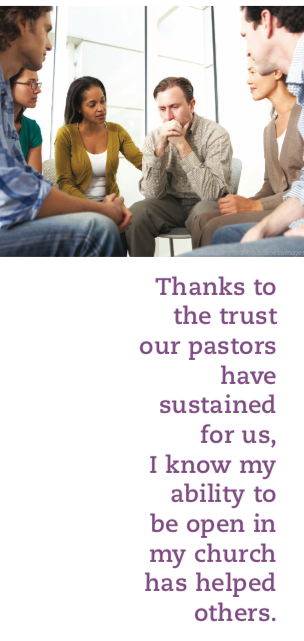
I plunged from the high of Anne Lamott’s hope-filled words to the darkness of violent deaths. I had difficulty praying. An optimistic, hopeful account of why I give to my church was no longer possible. Instead, I shared that sometimes I give for my own hard times – for the awareness that when depression clouds my thinking, I know there are others in my faith community who will be praying for me. I felt safe sharing authentically and sincerely from my heart. Thanks to the trust our pastors have sustained for us, I know my ability to be open in my church has helped others.
Listen and learn
Depression is hard to understand if you have no experience with it yourself. It can manifest in different ways at different times. If you try to speak with someone who does not understand depression, the divide can seem unconquerable. It is not.
My favorite resource to share with people who want to better understand the struggles some face with depression is a podcast created by two sisters, Terry and Bridget: “Giving Voice to Depression.” They offer a comfortable range of topics shared with guests that present a wide spectrum of experiences with depression. As they say on their website:
“We’re not therapists or experts. But we battle depression and have lost family members and friends by suicide. It’s in their honor that we began this project. It is our hope and commitment to increase awareness and reduce the stigma and isolation of depression, one story at a time. These stories could truly save lives.”
Terry and Bridget understand only too well the connection between depression and suicide. Like them, I believe that sharing stories can save lives.
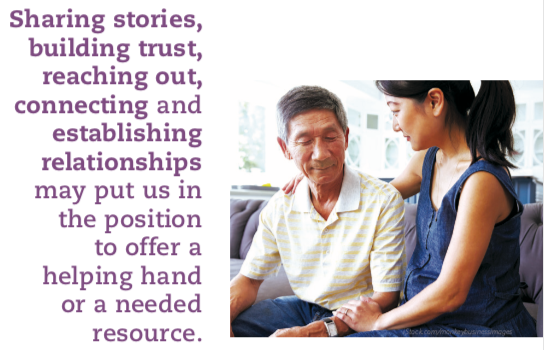
Should you ever find yourself needing to share resources with congregants, friends, or family, take the following list and add your local resources to it. Sharing stories, building trust, reaching out, connecting and establishing relationships may put us in the position to offer a helping hand or a needed resource.
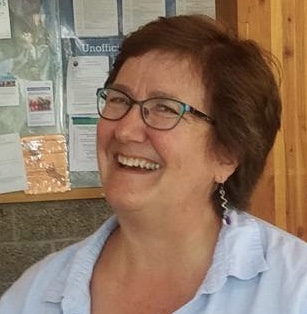 Pam Parker is an active member and occasional lay preacher at Wauwatosa Presbyterian Church in Wisconsin. Visit her at pamwrites.net.
________________
Resources
Download a PDF of these resource lists. You are welcome to reprint, share and post these pages in your church.
In times of crisis:
National Suicide Prevention Line
(800) 273-8255
24/7 free and confidential support for people in distress. They also offer prevention and crisis resources.
Crisis Text Line
741741
A free, 24/7 support for those in crisis. Text 741741 from anywhere in the U.S. to text with a trained crisis counselor.
Denominational resources
Comfort My People
pcusa.org/resource/comfort-my-people-policty-statement-serious-mental
The Presbyterian Church (U.S.A.) published a statement on serious mental illness in 2008, “Comfort My People,” that includes a study guide. The 223rd General Assembly, on the statement’s 10th anniversary, approved an overture designating funds to develop resources to help congregations minister to help people facing mental illness and their families.
Mental Health Ministries
mentalhealthministries.net
This is part of the DisAbility Ministries Committee under the United Methodist General Board of Global Ministries. This interfaith web-based ministry provides user-friendly downloadable print and DVD resources, all working to encourage the development of “Caring Congregations” applying a five-step model of education, commitment, welcome, support and advocacy.
For building awareness, educating, sharing:
American Foundation for Suicide Prevention (AFSP)
afsp.org
AFSP raises awareness, funds scientific research and provides resources and aid to those affected by suicide. AFSP’s chapters across the country help create a culture that’s smart about mental health through education and community programs, research and advocacy, and support for those affected by suicide.
Project Semicolon
Projectsemicolon.com
Project Semicolon is an organization dedicated to the prevention of suicide. Their work is based on the foundation and belief that suicide is preventable and everyone has a role to play in preventing suicide. The idea of the semicolon in a sentence is an opportunity for a pause, not a full stop; after that pause, life continues. Project Semicolon raises public awareness, educates communities and equips people with tools to save lives. Their website offers the opportunity for people to share their own stories.
National Institute of Mental Health
nimh.nih.gov
Visit the NIMH website for the latest research, advice and perspectives on mental health.
National Alliance on Mental Illness
nami.org
NAMI is the nation’s largest grassroots mental health organization dedicated to building better lives for the millions of Americans affected by mental illness.
Resources for active members with medical coverage through The Benefits Plan of the Presbyterian Church (U.S.A.)
The Employee Assistance Program (EAP)
866-640-2772
mycigna.com
The EAP, provided by Cigna Behavioral Health, is available to active members with medical coverage and anyone living in their household. It provides the following resources at no cost to those it serves:
Up to six, free counseling sessions per issue
Sessions may be face-to-face, video-based or by phone. These sessions require use of a network provider and must be authorized by the EAP.
Unlimited telephone consultations with a licensed clinician
Phone consultations offer a convenient, immediate alternative to seeing a practitioner in person. Examples of issues telephone consultations can help with include a friend or family member’s substance use, conflicts with a coworker, marital issues and concerns about a child or elderly parent.
Online resources
Register on mycigna.com (enter PC(USA) for Employee’s Employer ID) to access resources on topics ranging from depression to relationships to time management and more.
Resources for employers
The EAP provides essential support to those who supervise employees enrolled in the Medical Plan. The Employee assistance consultants with backgrounds in theology and experience with the Presbyterian Church EAP can help employers when a crisis strikes, an employee’s work is suffering because of personal issues, or there are concerns about an employee’s welfare.