 Natasha Sistrunk Robinson
IVP Books, 208 pages
Reviewed by Rachel Cheney
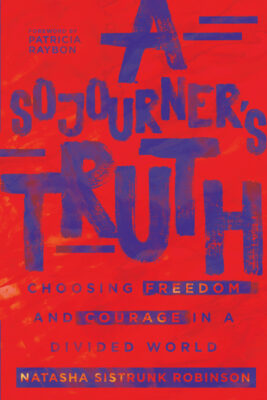
As a former Marine Corps officer, seminary graduate and founder of a nonprofit organization, Natasha Sistrunk Robinson provides a unique perspective on race and faith in “A Sojourner’s Truth.” Her theological background and career as an international speaker equip her to handle the multifaceted problem of racism in the U.S. With clarity and urgency, she weaves together her own lived-out experience as an African American woman in the South with passages from Scripture that speak to today’s racial climate.
Sistrunk Robinson leans primarily on the exodus narrative in the Old Testament. She focuses on the story of ancient Israel’s journey from Egypt, noting how it both highlights God’s power and providence and illuminates a path forward for modern readers. Her story mirrors Moses’ journey of old and speaks to many who are also called to upset the cultural status quo. She challenges readers to raise consciousness in their communities as an act of defiance against the norm. She writes, “Raising one’s consciousness is also a spiritual pursuit that leads us to righteous action.” Simply becoming aware of systemic racial problems is not enough if societal change does not occur.
Churches especially bear the responsibility for promoting cultural awareness because of our commitment to both uphold our traditions and to be a prophetic voice in our communities. We remember our tumultuous histories and envision a better future. As such, we are called to work for the deliverance of all people. This means that we confess our culpability in past and present injustices. She clarifies, “Ignoring the past or only remembering selective parts does not make us a pious nation.” She offers a vivid description of reality, but insists that we hold the power to make effective change within our communities and world.
Throughout the book, Sistrunk Robinson details her personal journey, shares meaningful stories, offers a new perspective on the exodus narrative and ties all of it together with a meaningful call to action for the modern church. Each chapter ends with reflection questions and highlights from the chapter.
Despite the book’s potent message, there are some technical issues that could be improved. At times, Sistrunk Robinson disrupts the flow of the story as she quickly moves from her personal narrative to Scripture passages to social injustice issues. The rapid change of direction and lack of transitions can lose the reader. While her stories are evocative and moving, they do not always naturally progress into her thesis, which gives the book a rushed feel. Many times I wanted her to linger longer with a passage or go into greater detail as she explained how it relates to our modern context.
Even so, the book deserves praise for how she fearlessly handles a difficult topic. It succeeds as a powerful catalyst for positive change. Those within or without the church would benefit from her insight and passion.
Rachel Cheney is a director of youth ministry in North Carolina. She enjoys spending time with her students and reading in coffee shops.