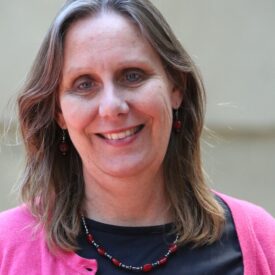
Eileen Lindner wants churches to talk about money. Specifically: about the immense transfer of wealth that’s coming as the Baby Boomer generation passes away, and about the recognition that younger people are developing new patterns of charitable giving.
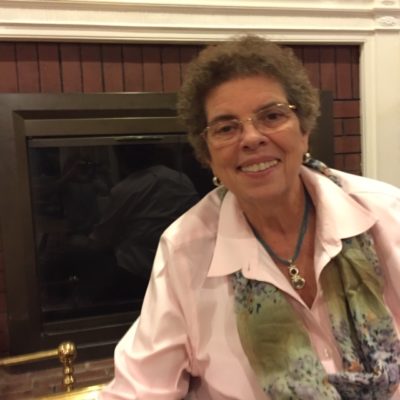
Lindner is a retired Presbyterian Church (U.S.A.) pastor and a sociologist of religion who formerly served on the Way Forward Commission. She now has contracts to do research for the boards of the Presbyterian Foundation and the Presbyterian Mission Agency on generational giving trends.
And what she’s discovered has convinced Lindner of this: Pastors and mid councils need to know more about changes in charitable giving, and need easily accessible tools to give guidance when Presbyterians are ready to donate to the church.
Here’s some of what she would like church leaders to know.
Wealth transfer is impending
The exact amount will depend on a number of factors – including how the stock market performs – but Lindner says the Baby Boomer generation (those born from 1944 to 1964) are expected to transfer somewhere between $34 trillion and $64 trillion in assets over the next 20 years. In that time, more money will change hands than all the private wealth that has changed hands since the founding of the nation, she said.
“Sociologically, American Presbyterians are upper middle class,” Lindner said, “which places them squarely in the river of wealth transfer.”
That transfer also has prompted conversations about wealth inequality, the role that generational wealth pays in that, and racial disparities in wealth accumulation – all important subjects for a church committed to social justice.
Giving patterns
“If I were talking about patterns, I would say what’s changed is everything, and it’s generational and it’s regional,” Lindner said. “For the same reason we don’t have Blockbusters anymore, we’re not going to have the same wealth management industries anymore. Because millennials and Gen Xers – if they can’t do a transfer on a handheld device, they aren’t doing a financial transfer.”
 People who are older – in their 70s or 80s – come from a tradition of quiet giving, meaning they may leave money to their church in their wills, but often don’t talk about it much in advance. Their thinking is, “That’s bragging, it’s not humble,” Lindner said. “Maybe the pastor knows, maybe the pastor doesn’t know that I’ve left half the value of the business I created to the church. … My attorney knows, and it’s in my will,” and that’s enough.
You don’t talk about it publicly, “absolutely you do not,” Lindner said. “And being valued as a donor is something that embarrasses you.”
The culture of many younger donors is more “I want to be valued as a donor” – in part to visibly support valued causes and inspire others to give. Also many younger donors – following the example of Bill and Melinda Gates and others – take the position that “I want to give while living,” Lindner said.
Another reality: While many young adults struggle to pay back school loans and afford high housing costs, others achieve real wealth at a young age, with about 2% of millionaires in the U.S. being under age 30, most of them in tech fields.
“The culture of a younger donor,” Lindner said, “is to be passionate about what you care about, speak of it often and publicly, and use your own gifts as an incentive to others.”
Where to donate?
Increasingly, people of faith give to parachurch organizations and other causes they consider worthy, as well as to their local congregations. Now, “if you’re faith-motivated and you think housing, the first name out of your lips is Habitat for Humanity,” she said. “Bread for the World if you’re talking about hunger.”
Some consider that broader charitable giving – to Doctors Without Borders and the Environmental Defense Fund as well as to the church – as part of their tithe, pushing some pastors and sessions to think about what “stewardship” means in different ways.
Lindner said the research shows regional trends in giving as well. “If you are soliciting funds for a charity and you are in the Northwest, go with environmental issues,” she said. “If you’re in the Southeast, go with the issues of hunger and homelessness.”
Churches need to pay attention to what millennials and Gen Xers assess as they consider where to give their energy, their skills and their dollars.
Linder describes what she calls “the Uber-ization, if you will, of charitable giving” – with the proliferation of crowdsourcing options such as GoFundMe and Kickstarter and microlending ventures such as Kiva. Those peer-to-peer endeavors often encourage creativity and community building, and allow donors to generate support for individuals – you can help one person or a family – as well as for the work of organizations or institutions.
Among the qualities younger donors look for in evaluating where to give: transparency, digital and technical skills and storytelling that demonstrates the results of how the money is used.
“What can the church institutionally learn about giving and providing opportunities for giving from things like GoFundMe and microcredit?” Lindner asks. “If we just say, ‘Go to your attorney and make provisions in your will’ ” for the church, “that’s a little bit like telling people where they can get bridle and carriage repair. We’re not in the horse and buggy age anymore.”
Variety of assets
Some people donate cash or stock. Others, however, may look to give other types of assets – from businesses to property to art – that may be more complicated for churches to deal with but also have considerable value.
 Lindner, for example, says she’s not wealthy, but owns two sets of sterling silver flatware that have been passed down through her family – one of which was previously owned by Clarence Darrow’s mother. “My children no more want sterling silver than they want a spaceship,” Lindner said. “Actually, that was a bad example. They might be interested in the spaceship.”
It would not be unusual, she said, for a Presbyterian to leave antiques or other valuables to the church – particularly if their families didn’t want them. “If four families decided we’re going to give our silver to the church” and each has $5,000 in silver, “that’s $20,000. That’s not a little gift to a church.”
Another likely gift is art. Lindner, for example, has hanging in her home an original piece from the Japanese printmaker Sadao Watanabe – an image of the Last Supper that she bought for $125 in 1971. It took her three years to save up enough money to have the print framed. The print has appreciated in value – in part after the Vatican began collecting some of Watanabe’s religious work – and is now worth about $10,000. Lindner suspects her sons won’t want to keep the print either.
“So what makes sense is for me to talk with them so they understand that I’d like to that to be first of all offered to a religious institution – my college, my seminary. And don’t put restrictions on it. Don’t tell Union Theological Seminary in New York, ‘This is a Watanabe, it’s worth $10,000, my mother wanted you to have it but you’ve got to hang it in the student lounge.’ No. If they want to sell it and it’s worth $20,000 then, God bless them. … And check with the Catholics first. They might really want it.”
All of this poses challenges for Presbyterian congregations and institutions that might welcome a donation – but not know how to deal with a gift, for example, of a classic car or antiques or a business or a condominium. So Lindner is encouraging the Presbyterian Foundation to develop online resources that address these questions – how to donate businesses, art, silver, real property – including a short video a pastor or session leaders could access when the issue pops up, with links to other more in-depth resources.
How the church prepares
A variety ofPC(USA) agencies and organizations work at fundraising – through everything from the Presbyterian Giving Catalog to appeals from particular church agencies. Ministry Relations Officers from the Presbyterian Foundation work with congregations, pastors and mid councils to provide training and resources for stewardship campaigns and planned giving.
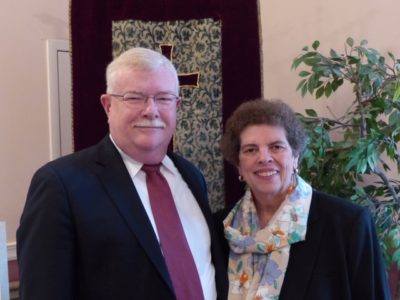
“The up and coming generations, we’re seeing a shift in the way they want to be able to access things digitally,” said Michele Minter, who is vice provost for institutional equity and diversity at Princeton University and serves as chair of the Foundation’s asset gathering committee. “They want the transparency, the flexibility, the ability to engage in very active ways.”
For churches, it’s “an interesting strategic challenge” to both meet the needs of traditional Presbyterians in the pews now, and also the needs of a potentially more diverse population in the years to come, Minter said. “We don’t want to get behind,” but “we don’t want to leave someone behind” either by changing too quickly.
“There is a sense of urgency. This generational change and wealth transfer is happening right now, and if we don’t use the next decade very well, I think we will miss our moment.”
A report Lindner made to the Presbyterian Foundation board can be found here: wealth Transfer Recommendations 2_19