STONY POINT, New York – “We are in the season of storms.”
Kevin Johnson, a Presbyterian Mission Agency Board member and a minister from Detroit, led worship for the board Sept. 27 by asking whether the foundation of the Presbyterian Church (U.S.A.) is solid – or cracked by its connection to racism.
Confronting structural racism – one three focuses of the Matthew 25 vision of the Presbyterian Mission Agency (PMA) – is the theme of the board’s fall meeting, which goes through Sept. 27 at Stony Point Center.
In August 1619, a ship from Africa approached land near Port Comfort, in the English colony of Virginia, where 20-some Africans were taken off in chains and sold into slavery. “This time, the storm raged into this new country called America,” Johnson said. “I submit to you, this storm has been stationary” – hovering over the nation for 400 years and counting.
“Come on! Preach it!” board and PMA staff members responded, as Johnson’s sermon caught fire.
Many of those involved in the slave trade “confessed Jesus as Lord,” Johnson said – willing to manipulate the word of God for manifest destiny and white privilege.
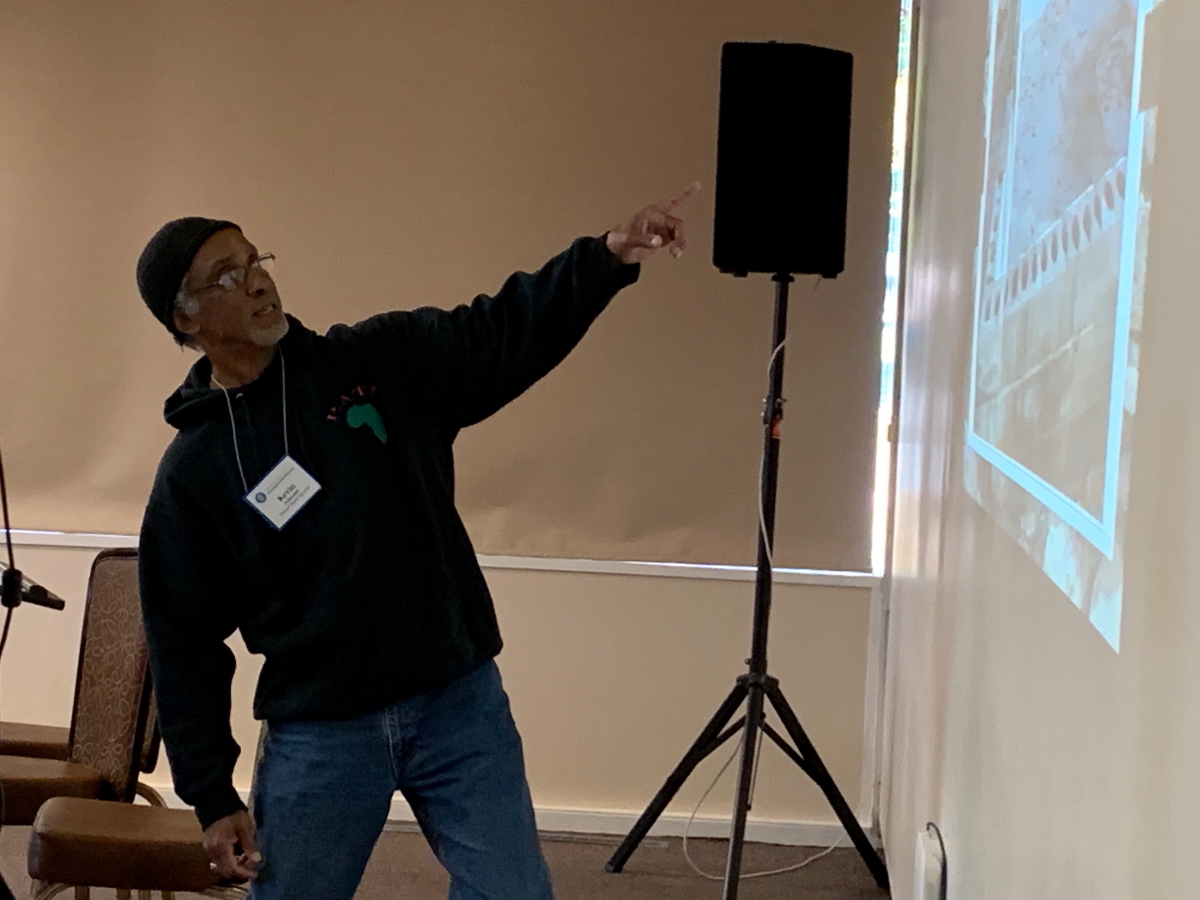
Now, in the PC(USA), “the question we must confront is ‘Are we standing on solid rock, or are we standing on sinking sand?’ In other words, what is the condition of our foundation?”
Recently, the Presbytery of Detroit has been dealing with a situation in which a white male elder of older age spoke to a young black man who is feeling called to ministry, Johnson said. The white man “called from the tombs a word that I buried about 12 years ago,” Johnson said – the N word.
“Is this how we love one another? Storm clouds hover over the Presbytery of Detroit right now,” he said. “Here we all are, called by God to do a structural analysis of the very foundation of the house.”
Worship was followed by two-hour conversation on racism and Matthew 25, led by Denise Anderson, PMA’s coordinator for racial and intercultural justice.
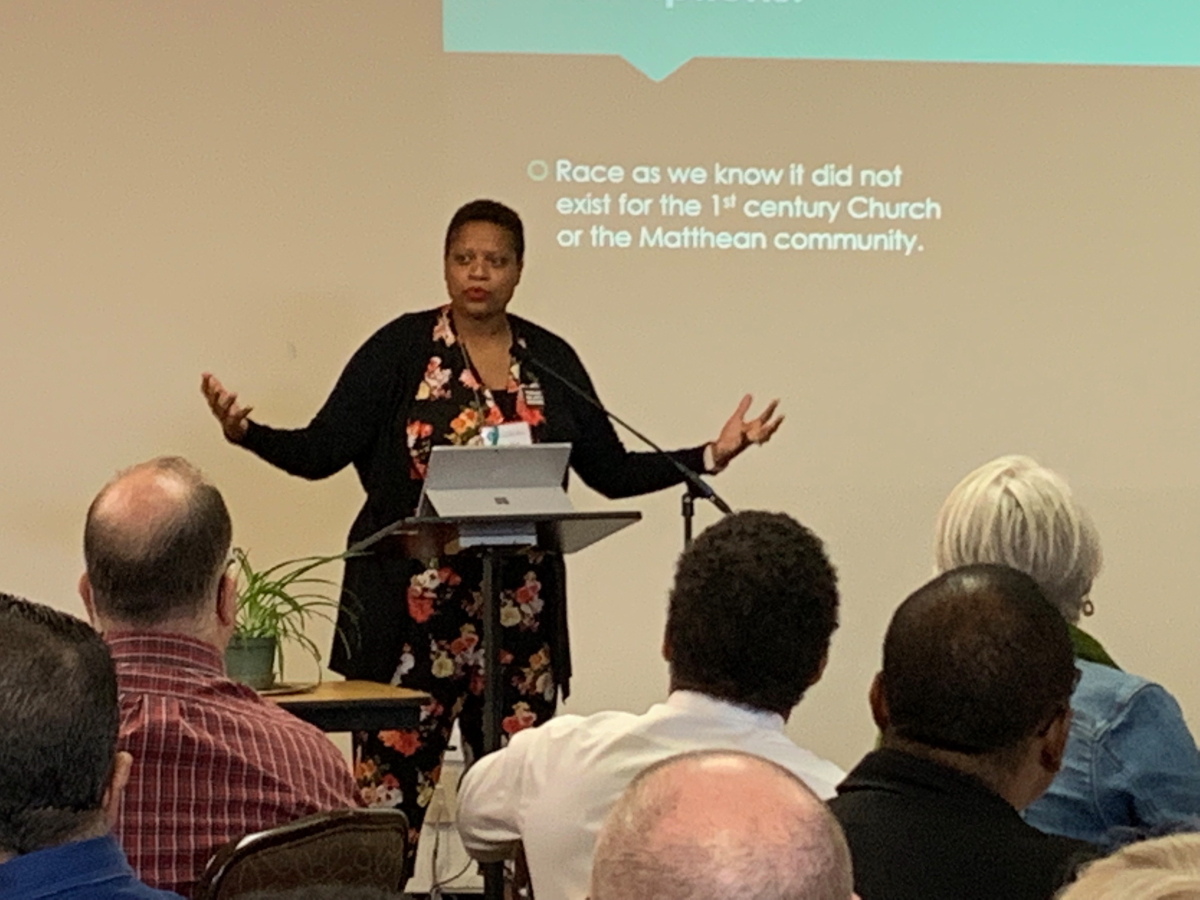
She unpacked the implications of the action the 2016 General Assembly took on “Choosing to be a Church Committed to the Gospel of Matthew 25” –the same assembly that elected Anderson as its co-moderator. And she guided the board and PMA staff members in a discussion of the three parables in Matthew 25 – teasing out the insights and challenges there for Presbyterians concerned about racism. They covered a lot of ground; here’s a bit of it.
Race and poverty. Race is a social construct, about a millennium old. “The Bible doesn’t tell us anything about race as we know it,” Anderson said. “It can’t. It didn’t exist. But the Bible says a lot about poverty,” describing it as “a lack of capital,” of power, money, resources, property, access and influence.
“The lack of capital isn’t necessarily by circumstance,” she said. “It’s often engineered by design,” by those who want to horde the power and resources for themselves. “We understand privilege as capital.”
Matthew 25 as a call to action. The 2016 General Assembly called Presbyterians to step up, saying in part: “This is a moment of great opportunity for our church. Momentum is building within our denomination and throughout our society to courageously confront the challenges of our time. A new civil rights movement, a new peace movement, a new economic justice movement is on the rise and we are in a position to stand in solidarity with the poor in a uniquely powerful way. It is time for us to define who we will be for decades to come. May we choose to be a church committed to the gospel of Matthew 25.”
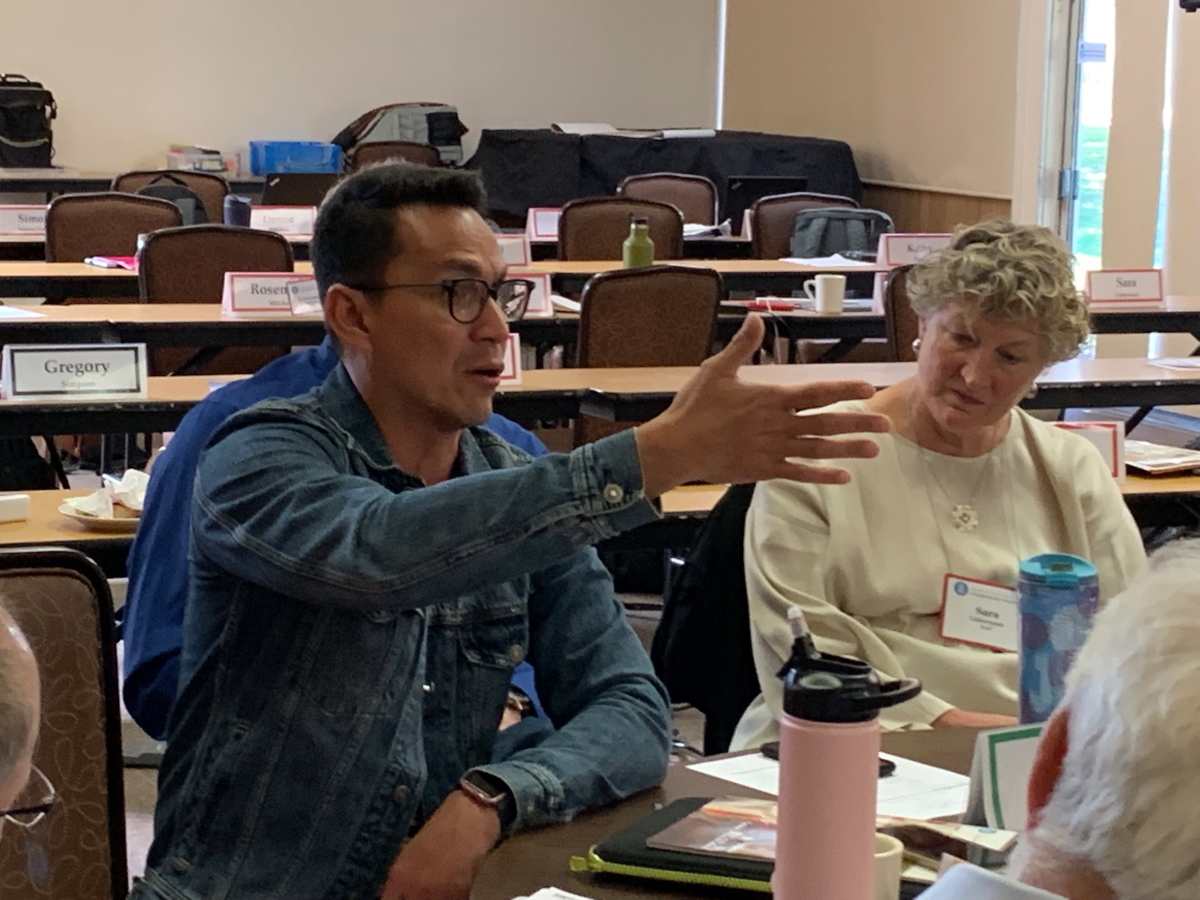
Parable of the talents. This parable, in verses 14-30, deals with the inequitable distribution of resources, with a master who gave those enslaved to him different numbers of talents, and then held them to account for what they did with what they were given. A talent in this context is “an exorbitant amount of money,” Anderson said, asking for small group discussion on who’s the villain in this story?
“This text challenges us because we are part of the system that is exploitive,” said Diane Moffett, PMA’s president and executive director. For some at the table, “this text was reading them. We had a lot of silence. … When you talk about breaking down systems, you talk about taking up your cross.”
Moffett also asked: “How do you challenge the system at the same time we’re part of the system and we’re benefiting from it?”
Board member Flo Watkins said this passage reads differently to those who live in extreme poverty – lacking money or access to power and resources. “I can’t go down to south Georgia and talk about this text in that way with folks who’ve never had, folks who’ve struggled, folks who’ve never had boot nor strap to pull up.”
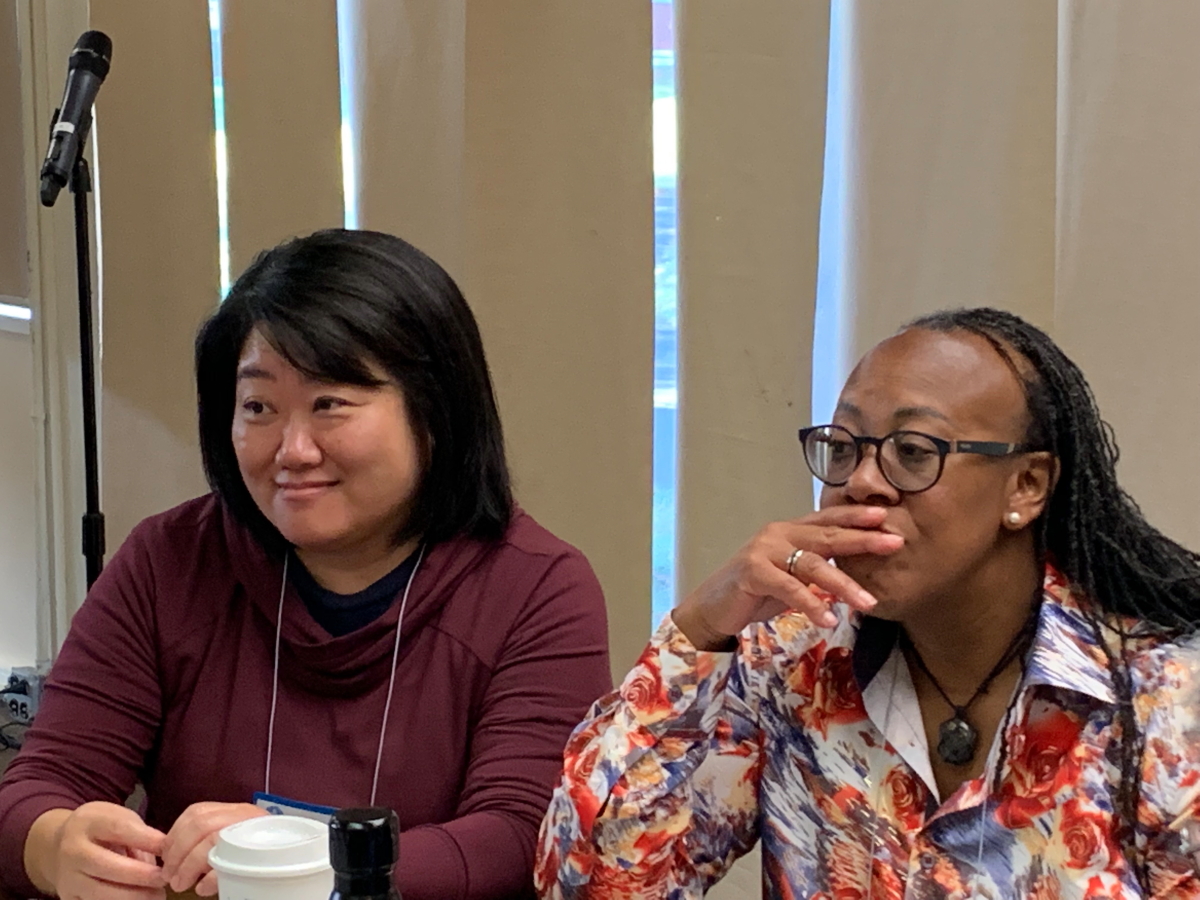
What whites say. Ecumenical advisory representative Yvette Noble-Bloomfield, from the United Church in Jamaica and the Cayman Islands, said she sat during one session at Big Tent in August next to a white pastor who said his congregation is 99% white, so “what is he to do with some of the issues being sorted out in Matthew 25?”
He was essentially saying, “i’s not an issue in the Midwest because we’re all white” where he lives. “I was challenged,” Noble-Bloomfield said, in finding a response.
Board member Kathy Maupin comes from rural Michigan, where confronting racism is difficult because “we’ve got a lot of, no offense, old white guys who are not going to let it be changed” – they don’t see that the idea of reparations, for example, has anything to do with them.
Anderson pushed back – saying that white congregations get involved all the time in things that don’t affect them directly, such as supporting mission work halfway around the world. “But what is on our own back yards, we won’t touch with a 10-foot pole.”
And theologically, she doesn’t believe that old white men can’t change. “Because we believe that God is sovereign and God is in control.”
It’s not enough to wait for them to die off, either, she said, because while we wait “our young people are being indoctrinated.” Many of the white nationalists who took to the streets in Charlottesville were young white men, “pimples on their faces, voices probably hadn’t changed yet. They’re being taught somewhere. If they are not being given a counter-narrative in the church, God will not hold us harmless.”
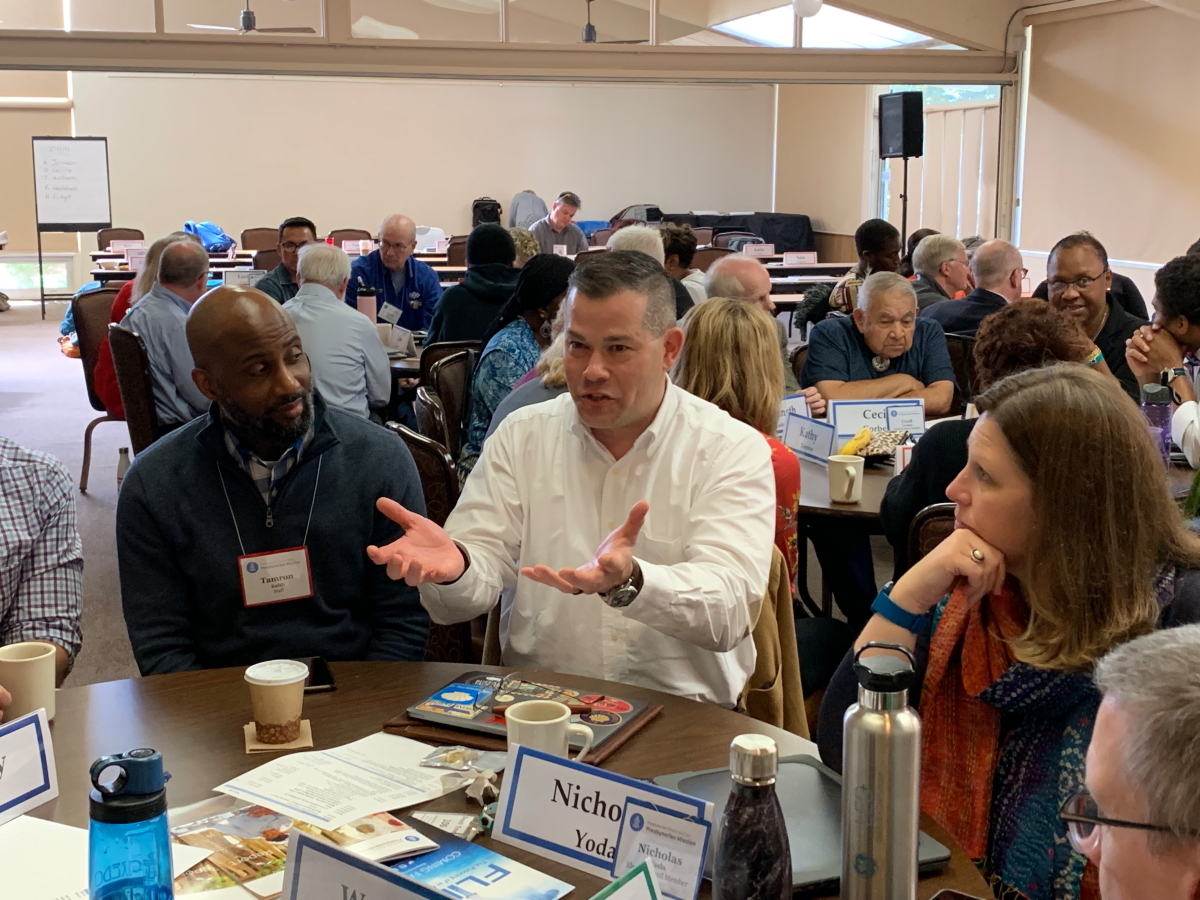
Susan Jackson Dowd, executive director of Presbyterian Women, said that sometimes “the word that gets in the way is privilege” – for example, when talking to whites in the Rust Belt who’ve lost their jobs. “You’re blocked immediately by that word,” she said. “They don’t feel privileged. I’m stumbling when I try to talk to folks,” using that word.
People in those circumstances “get what it means not to have privilege,” Anderson said. So ask them to imagine what it’s like for someone who encounters “the same crap they’re going through just because of the color of their skin.”
The common enemy is greed, the concentration of capital, she said.
When confronting privilege, “we really need to find effective ways to get people to understand that racism is about who has and who does not have,” Anderson said. “And God cares about that, deeply.”