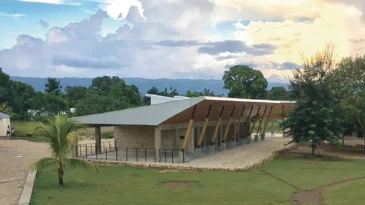
STONY POINT, New York – The big issue up for consideration as the Presbyterian Mission Agency Board meets this week is a vote on the future of Stony Point Center. Essentially, it’s the question of whether the board will support an enhanced Presbyterian commitment to this conference center north of New York City, and will provide $75,000 to explore the feasibility of launching a $10.3 million fundraising campaign for major capital improvements there.
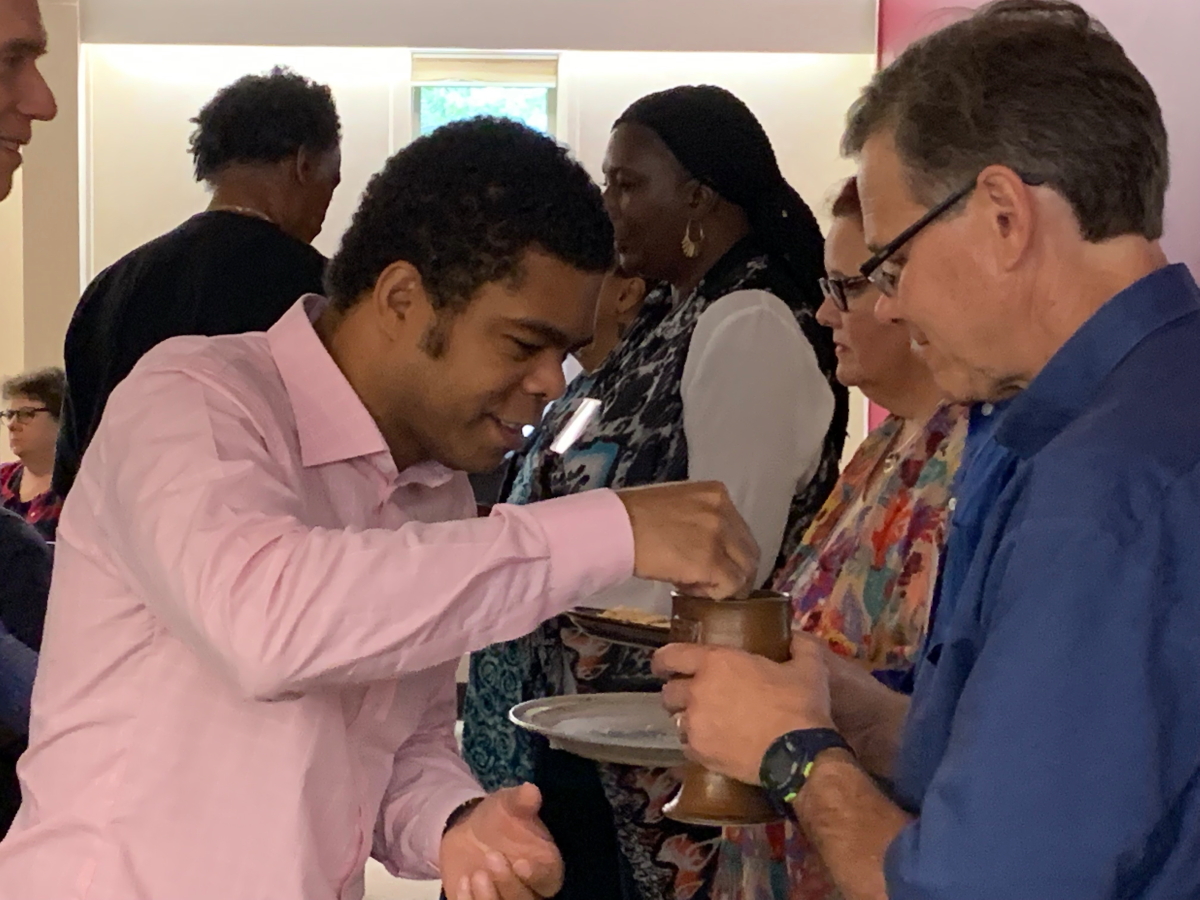
The board – meeting in person at Stony Point – is expected to vote on that Thursday (Sept. 27).
The board began its meeting on Sept. 26 with worship, led in part by Rick Ufford-Chase, who is co-director of Stony Point Center along with his wife, Kitty.
Ufford-Chase traced the history of Stony Point, located near where the Hudson River narrows before it widens – a natural trading and meeting place for the Native Americans who lived in the region. The focus and fortunes of Stony Point have shifted over the decades, he said – it’s served at times as an ecumenical training center and an international faith-based center for peace and justice. It’s now home to the multi-faith Community of Living Traditions.
It’s nearly always been a boundary-breaking, frontier-exploring space, Ufford-Chase said.
For example, Hudson River Presbytery recently decided to give the property of the former Stony Point Church, a congregation in the town of Stony Point that was dissolved and held its final worship service in 2018, to support the Sweetwater Cultural Center, a project being developed by the Ramapough Lunape Nation. That includes “a native people’s mission to the United Nations,” being organized at “a spot two blocks from here,” Ufford-Chase said. That’s an example, he said, of the kind of innovation Stony Point Center wants to pursue as well, and to partner with others in doing.
“This is indeed hallowed ground,” Ufford-Chase told the board members. “Welcome to Stony Point.”
Later in the day, during a conversation with representatives of the Special Committee on Per Capita Based Funding and National Church Financial Sustainability, the question came up of what is the philosophy behind the proposal. Scott Lumsden, co-executive of Seattle Presbytery, asked the question – saying Stony Point is far away and expensive to travel to for Presbyterians on the West Coast.
Diane Moffett, president and executive director of the Presbyterian Mission Agency (PMA), said she believes Stony Point can be both “a place of ministry and a place of business” – that it can break even (it’s in line to be $140,000 in the black this year) and “it can be a place where transformative ministry can happen.”
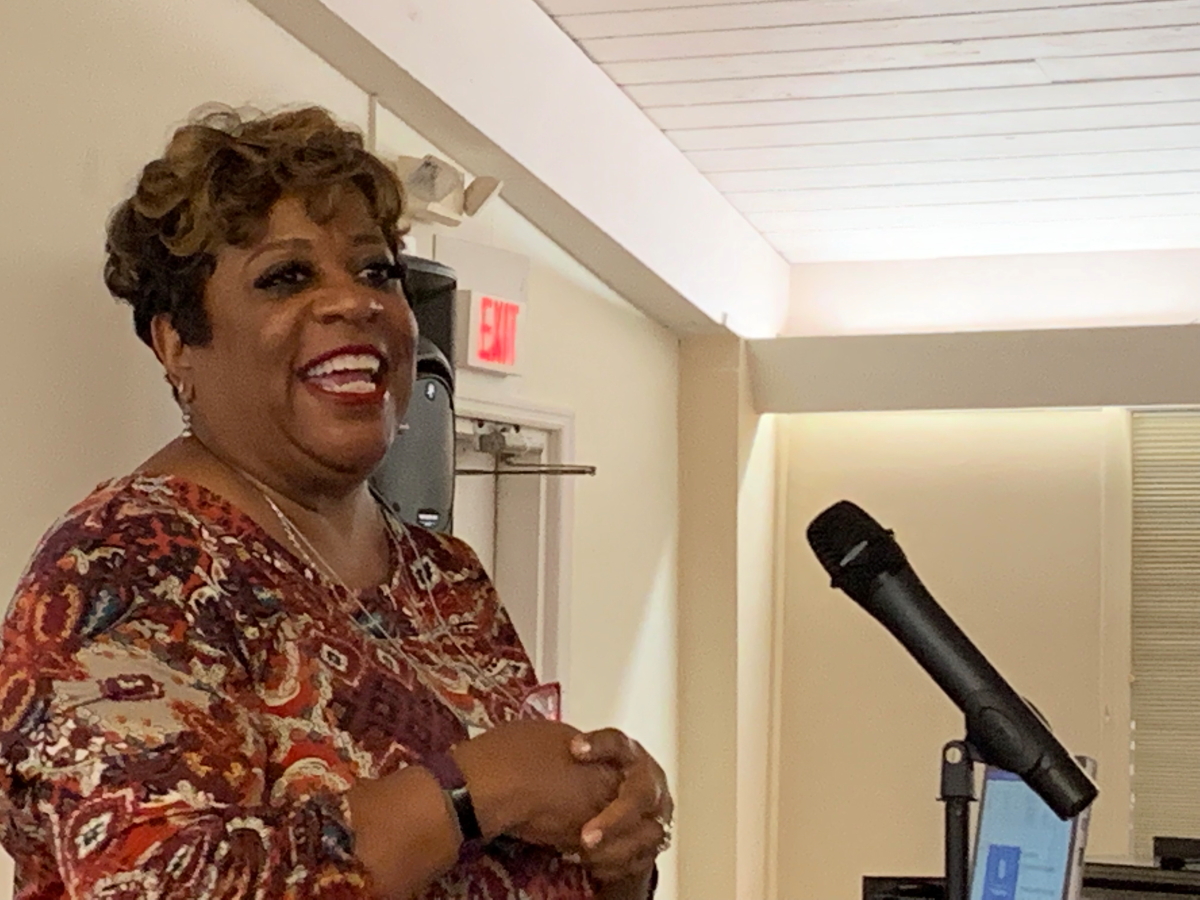
She described Stony Point as “just a treasure.”
Ray Jones, director of Theology, Formation and Evangelism for PMA, led a work team that drafted the Stony Point proposal. The hope is that “what we experience here at Stony Point will at some point be portable,” with elements that can be used with mid councils and at other conference centers, he said.
Presbyterians need “to combine head knowledge and an experience that’s transformative,” Jones said.
He said later: “Hearts have to change. Another program is not going to do it for our church. We have to be in places where we are going to be transformed. … It’ll happen here. But we hope it will happen across the denomination.”
Financial sustainability. The board met for about an hour (via video link) with representatives of the Financial Sustainability and Per Capita special committee – with Laura Cheifetz, the committee’s co-moderator (along with Valerie Young) and with Lumsden, who serves on the committee’s financial sustainability work team.
That work team met in September – and in that meeting in a very preliminary way floated the idea of initiating discussion about a possible restructuring of the top levels of the PC(USA). The thinking: there’s enough money to go around in the denomination, but not a good structure and enough collaboration across agencies to make sure the money is actually spent on the denomination’s most important priorities.
This conversation with the PMA board was one of a series that committee representatives have been having in recent months with representatives of denominational agencies – including with the boards of the PC(USA), A Corporation and with the Committee on the Office of the General Assembly.
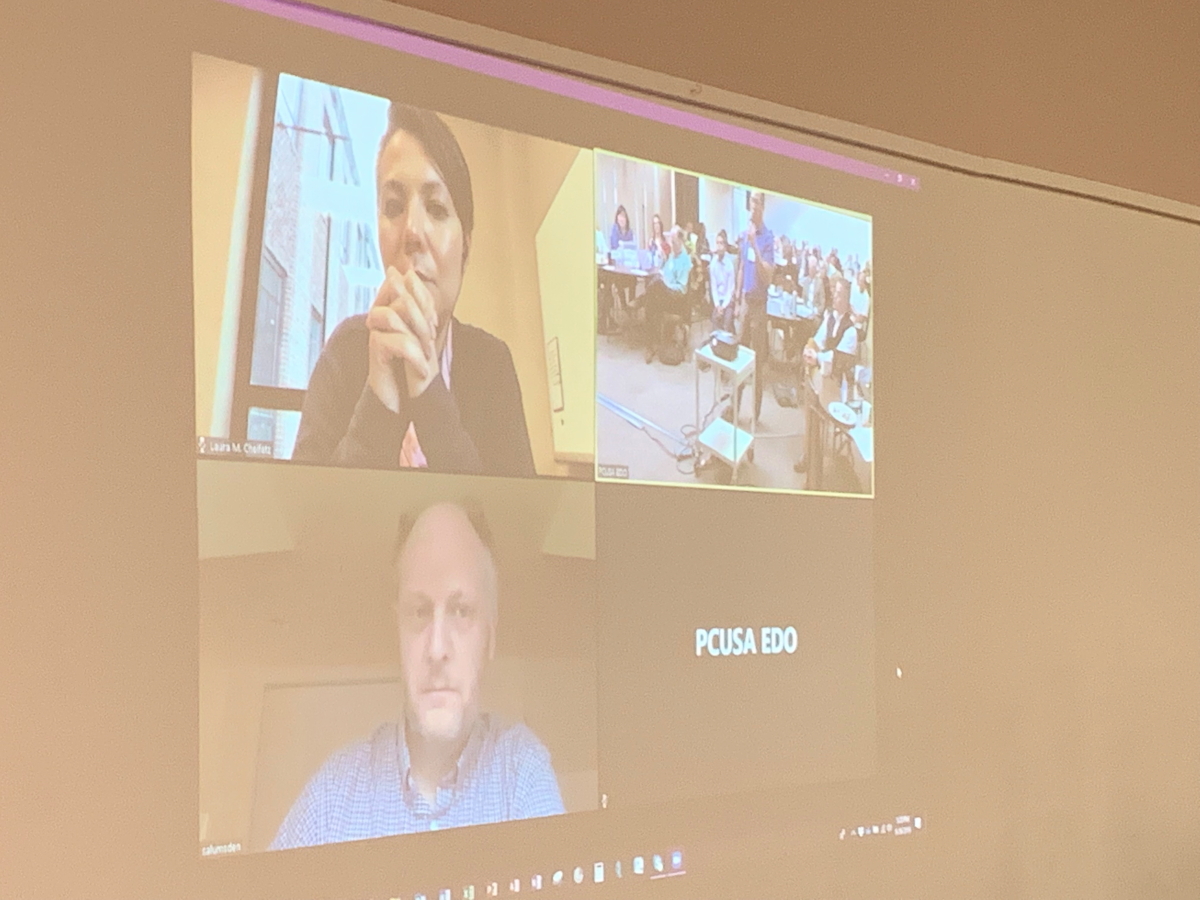
Cheifetz asked questions about what role the board plays in setting the PMA budget; who sets the priorities and makes decisions when there’s not enough money available to do all the work that PMA leaders want to do and what the General Assembly has required; and “what do you all do when you need more money?”
Responses included: “We pray.” Fundraising. Sometimes there have been downsizings and early retirement offers. “We have been forced to live within our means,” said pastor and former board chair Ken Godshall.
Cheifetz also asked whether the PMA board has conversation with other PC(USA) agencies when setting mission priorities and goals, or “does each agency do its own thing?” The response, from PMA board chair Joe Morrow: Mostly, “they do their own respective discernment work.”
Does the structure allow for collaboration, Cheifetz asked? “Or is that collaboration dependent on people getting along with each other?”
Shannan Vance-Ocampo, a mid council executive, said n her experience with PMA and the Office of the General Assembly, “the two don’t necessarily easily talk to each other. Sometimes I hear chatter that’s about personalities and territorialism. Sometimes I think people just don’t know what’s going on in a particular office.”
As an example, Vance-Ocampo told of difficulty she’d had searching for a Book of Order translated into a language used by one of her congregations. Eventually she found it existed, but she couldn’t track it down working with just one agency. “The left hand didn’t know what the right hand was doing. … I’m a fan of greater collaboration. I think that makes ministry stronger.”
Work in progress. The board also heard reports from a series of denominational leaders. They offered updates on some of their work in progress, including these:
Matthew 25 vision. So far, 204 congregations and groups have committed to support the Matthew 25 vision that PMA announced last April, as have 20 mid councils representing more than 2,000 congregations.
Coming soon, Moffett said, are more resources to support that vision. That includes a Facebook group for those who’ve signed on; a Bible study series on Matthew 25; and videos and worship resources.
Presbyterian Publishing Corporation. David Dobson, who started work in July as the Publishing Corporation’s new president, described some of what his staff has in the works.
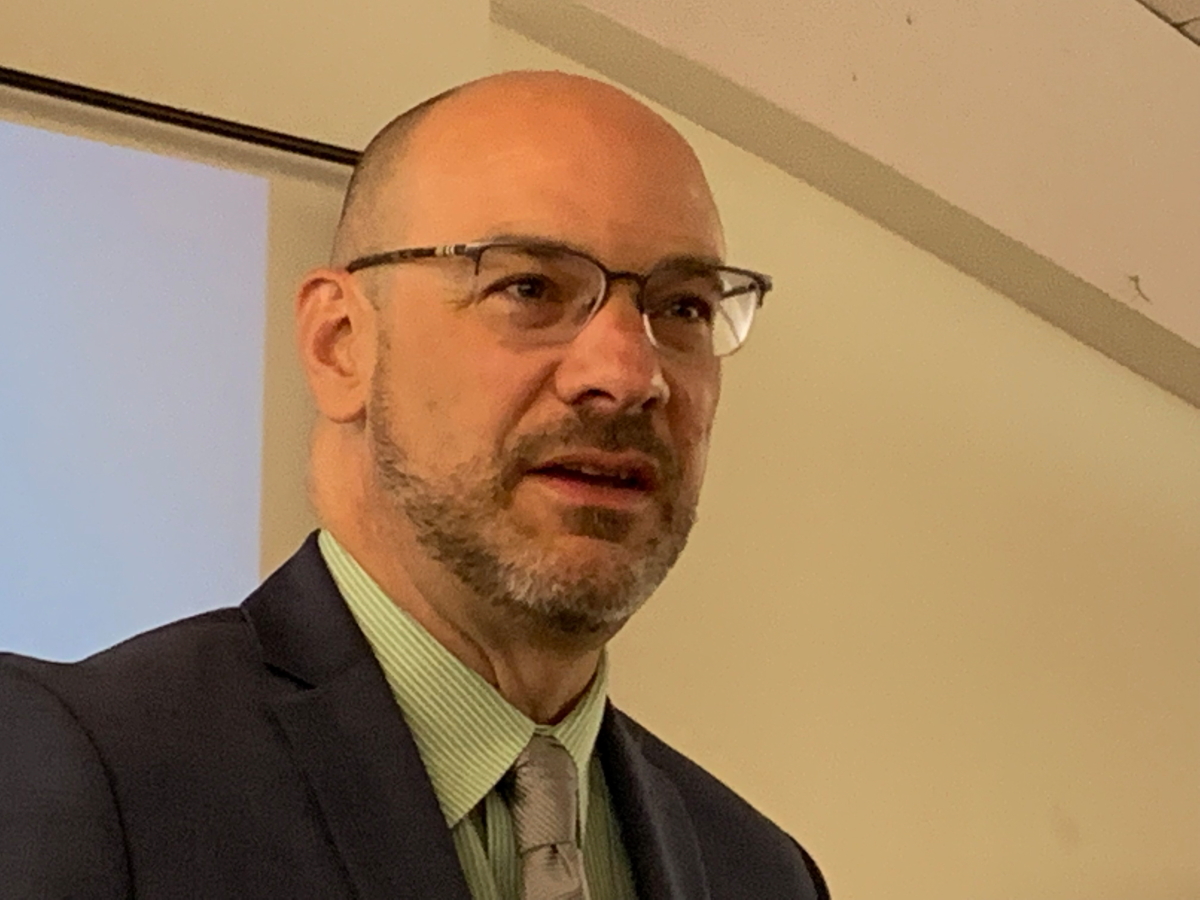
They’re developing a new Bible-based children’s curriculum that will debut at the Association of Presbyterian Church Educators gathering in Little Rock Jan. 29-Feb. 1, and will be available to congregations next fall.
They’re working on a new, multi-age denominational curriculum to replace Growing in Grace and Gratitude, and a new preaching resource to follow the lectionary commentary series Feasting on the Word.
The children’s book line Flyaway Books continues to grow, with Barbara Brown Taylor’s Christmas book for children, “Home by Another Way,” released last year and with a new Christmas book by Katherine Paterson, “The Night of His Birth” – the story of Jesus birth told through his mother Mary’s eyes – being released this year.