A proposal for major improvements at Stony Point Center will go to the Presbyterian Mission Agency Board for its consideration on Sept. 27 with one key adjustment: The board will be asked to “affirm the basic direction” of a vision plan for Stony Point, but not approve the entire plan formally.
The board will be asked to vote approval of the baseline phase of the proposal now – with three additional phases to come later. The baseline phase includes spending $220,000 for three additional staff positions at Stony Point in 2020, and $75,000 for a feasibility study to assess how much money could likely be raised in a capital campaign.
Diane Moffett, president and executive director of the Presbyterian Mission Agency (PMA), told the board’s Coordinating Committee during a Sept. 19 conference call that she wants board members to “be prayerful and discerning” about this decision – and to be advocates for the vision plan if they vote to affirm it.
If the board chooses not support the vision plan, Moffett said, the question later will become: “How do we divest ourselves” of Stony Point, if it can’t be self-sustaining?
The Coordinating Committee discussed the proposal but did not vote on it – so it’s going straight to the full board for its consideration. The board’s Sept. 26-28 meeting is being held at Stony Point – giving board members a chance to see for themselves what the facility is like.
Stony Point Center is a Presbyterian Church (U.S.A.) conference center located about an hour north of New York City. The 75-page vision plan the board will be asked to affirm – a report that’s the work of the Run River Enterprises consulting firm and a PMA staff roundtable – calls for making at least $10.3 million in capital improvements at Stony Point over the next decade.
Ray Jones, director of Theology, Formation and Evangelism for PMA, leads the Stony Point Round Table. He told the coordinating committee that the recommendation was changed to say “affirming” the vision overall and approving the financial implications of the baseline phase because “I was fearful that we didn’t have all the data yet that we need” to do more.
Regarding the baseline, “we’re confident about being able to do this” – take the first step, Jones said – but not about having sufficient measurements to say “take on the whole thing. We love this plan,” but want the board to consider it incrementally, one phase at a time.
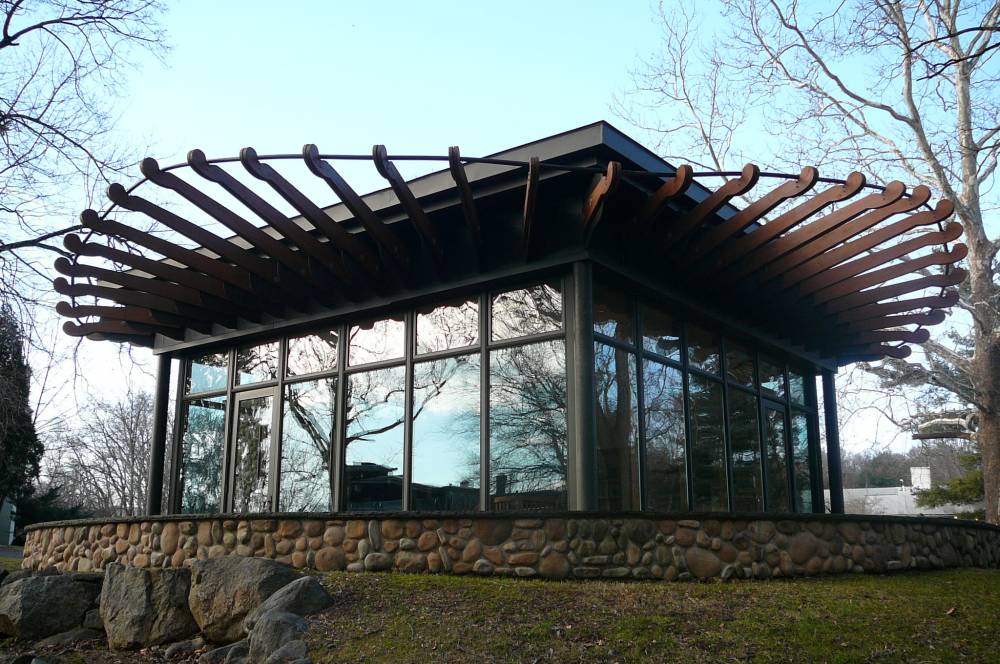
Phase 1 would include about $1 million in renovations to the Beech, Hickory and Walnut lodges, so they would have private rooms and baths. Also in that phase: about $500,000 to add solar panels to those facilities. Later phases would include design and construction of a new building called Caincroft, a “state of the art” facility for dining, meeting and administration.
Warren Lesane, vice chair of the board, asked: What happens if the board says no? “My question is not to throw cold water on it,” he said, but “the possibility is out there.”
Moffett responded that Stony Point is doing well financially this year – running a surplus of about $140,000 above projections as of the end of August, with the help and coaching of the Run River consultants and the round table.
If the board isn’t willing to invest in capital improvements, “you might very well limit your capacity” to market Stony Point to a broader audience, Moffett said. In recent years, the board has convened a series of task forces to study what to do at Stony Point, and has subsidized both operating shortfalls and urgent capital expenses – last spring, the board approved spending up to $630,750 for “critical expenditures” for deferred maintenance at Stony Point.
Now, the question is what to do next.
“This is your responsibility,” Moffett told the board members. “We will have to decide what to do with Stony Point. We cannot continue to do what we have done. There has been a lot of neglect” of needed capital improvements.

The question now is: “What do we do with this treasure in our hands? You all know I am all in. I do want board members to be prayerful and discerning. Because we’re not going to play the blame game” down the road. If the board votes to affirm the vision plan, “we all need to be advocates for it.”
Moffett acknowledged that “certainly the board has the right to say no.” If that happens, the question becomes: “How do we divest ourselves” of Stony Point? “That will be another conversation. I think we can do this. It’s going to take our very best work.”
While the coordinating committee did not vote on the proposal, there did seem to be some support for the Stony Point vision. “There is a cost to saying no as well as a cost to saying yes,” said board chair Joe Morrow of Chicago. “There is good ministry that is happening. There is financial well-being that is emerging.”
Shannan Vance-Ocampo, a board member and mid council executive, called in to this meeting from another gathering at Stony Point. “The progress over the summer has been incredible” on improvements to the facility, Vance-Ocampo said.
“If we’ve done this well in one year, with all of the staff working in a unified way around Stony Point, what can we do in Year 2 and Year 3?” she asked. “I think that’s good news for our future.”
The proposal the board will be voting on can be found here: P.106 Stony Point Center Run River Consultation Report.