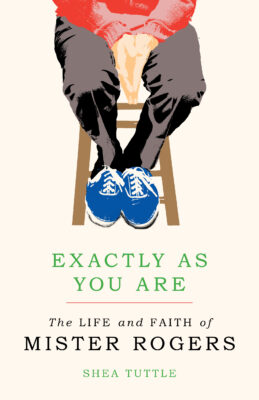
 Shea Tuttle
Eerdmans, 184 pages
Reviewed by Jo Forrest
The teachings of Fred Rogers continue to enliven people through the numerous biographies, essay collections and stories published since his death in 2003. The fall release of “A Beautiful Day in the Neighborhood,” starring Tom Hanks, will bring smiles to those who were raised in the neighborly ideals conveyed in “Mister Rogers’ Neighborhood.” From 1968 to 2001, this children’s television show was hosted by the on-air character, Mister Rogers, who welcomed children into a neighborhood demonstrating the joy of accepting others as they were and learning to love one’s self.
Shea Tuttle begins “Exactly as You Are” with the first-person voice, confiding her motive to discover the man behind Mister Rogers. Reared on daily doses of “Neighborhood,” Tuttle felt “completely seen, completely loved” when watching this show; he “was part of my becoming.” In subsequent chapters, Tuttle’s personal voice fades as she presents research from published articles, interviews with those who knew Rogers, various television episodes and Rogers’ own writings. Inclusion of these other sources gives depth and nuance to this portrait. Extensive endnotes provide a rich array of resources if any aspect of Rogers’ life piques a reader’s curiosity.
What distinguishes Tuttle’s biography is her keen focus on the people and events that influenced Rogers’ life, shaping his faith and call to ministry. The idea of a “neighborhood” and the behaviors of being a “neighbor,” communicated on the show through puppetry, story and song, are born from his formative years of being teased as “Fat Freddy” and the enduring friendships that restored his sense of confidence. “Neighboring” became Rogers most consistent parable.
This is an intellectual history and traces Rogers’ seminary education and the transformational teachers whose ideas inspired the messages consistently delivered by Mister Rogers. While at Western Theological Seminary (later Pittsburgh Theological Seminary), Rogers studied under theologian William Orr and they developed a life-long friendship. After Orr’s death, Rogers remembered his teaching: “Jesus would want us to see the best of who we are, so we would have that behind our eyes as we look at our neighbor and see the best in him or her. … That statement undergirds all of what I do through the ‘Neighborhood’ and everything I try to do in living.”
Rogers’ fascination with nascent television technology and his horror at the demeaning ways children were entertained ignited a passion to turn this media into a platform to teach and preach acceptance and love. Tuttle explores the pioneering –
yet subtle – ways Rogers crossed presumed boundaries of gender, ethnicity and economic status on screen and in his off-screen relationships.
In the final chapters, Tuttle returns to the first-person perspective and offers her interpretation of Rogers’ life based upon interviews she conducted with his close associates. To contrast Fred Rogers with Mister Rogers, she asked, “It’s easy to make Fred into an otherworldy saint, but what did you experience in him that showed you his humanness?” This book is personal for Tuttle and may be for any reader interested in how Fred Rogers created a platform to nurture children’s faith and expand their understanding of neighbor.
Jo Forrest is a teaching elder in PC(USA) and serves as senior associate at Kenilworth Union Church on the Northshore of Chicago.