BALTIMORE – Equity and inclusion: How well is the Presbyterian Church (U.S.A.) doing? That question was like a bright thread running through the discussions as the Presbyterian Mission Agency Board met Feb. 12-14 in Baltimore. Some of it came directly, in presentations on assessments underway. And sometimes it surfaced in questions about how the PC(USA) deals with issues involving immigrants and people of color.

Migration. Board member Michelle Hwang outlined recommendations that the Racial Equity Advocacy Committee(REAC) will be bringing to the General Assembly in June – saying the theme of REAC’s efforts this year will be migration, forced or voluntary.
REAC held its meeting in January in El Paso, and also traveled across the border to Ciudad Juarez to meet with asylum seekers who are being forced by the policy of the Trump administration to wait in Mexico as their asylum claims proceed. Those conversations were powerful, Hwang said – and REAC wants to work to strengthen PC(USA) presence in the area by seeking the appointment of a mission co-worker in El Salvador, where unrest is leading some of the migrants to head north, and another co-worker in Texas, along the Mexican border.
“What we recognized is there are holes in our mission network,” Hwang said. REAC also wants to work to establish a network of pro bono lawyers willing to help asylum seekers with their legal cases, because many of the lawyers to whom the courts refer the immigrants “all have a full case load, so of course they get rejected. So it’s a cycle of no progress.”
Another REAC recommendation: Give the leaders of immigrant fellowships full voice and vote in councils at all levels of the PC(USA). Currently those fellowships don’t have voice or vote because they’re not formally chartered as congregations.
Board member Shannan Vance-Ocampo, general presbyter of the Presbytery of Southern New England, said the arrangement now is “part of the internal racism” in the denomination, “where they’ve been given a different status. They truly do not have a voice and vote at meetings.”
A Brazilian fellowship in her presbytery has existed for 20 years, but never had representation, Vance-Ocampo said. “Many immigrant fellowships have been in limbo for decades.”
Sara Lisherness, interim director of World Mission, said the position for a mission co-worker in El Salvador has been posted and candidates interviewed, but so far the right person hasn’t been found. In the meantime, mission co-worker Dori Hjalmarson will come temporarily from Honduras to work in collaboration with the Calvinist Reformed Church in El Salvador, the PC(USA)’s partner there.

Native American properties. The board also approved the Native American Church Property Report (F.103 Native American Church Property Response to 2018 Referral Item 10-01 Rec 2) – the response to a referral sent by the 2018 General Assembly, directing the Presbyterian Mission Agency to do an inventory of Native American church properties and their infrastructure needs.
Over the past year, Steve Hirsh, the PC(USA)’s coordinator of Native American church property, has inventoried 89 of 92 properties, located in 16 presbyteries – with the biggest numbers in the Presbytery of Grand Canyon (which brought the overture in 2018 seeking repairs of critical infrastructure needs) and Dakota Presbytery.
The 92 Native American congregations are spread across the nation – “from Shinnecock on Long Island, New York, to Neah Bay, Washington, on the Makah tribal lands, and from the Alabama-Coushatta lands in Livingston, Texas, to the territory of the Inupiaq at Point Barrow, Alaska,” the report states. “There are two urban congregations: Anchor Presbyterian Church, Anchorage, Alaska, in Yukon Presbytery, and Central Presbyterian Church in Phoenix, Arizona, in Grand Canyon Presbytery.”
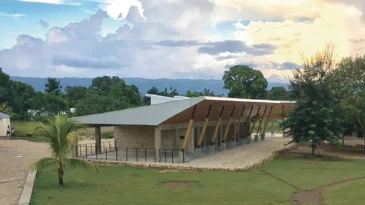
Some of the 92 churches and chapels are not being used and “many are in need of repair,” the report states – everything from roof repair to improvements needed in the heating and cooling systems. Many of the structures are on tribal lands.
The report estimates that close to $9 million in work is needed – nearly $5 million in repairs requiring a general contractor are needed, and another $3.7 million in work could be done by volunteers or other contractors,

The board voted to recommend that the assembly:
- Call on presbyteries and synods with Native American churches and chapels as in their bounds, as well as churches that partner with Native American congregations, to review the report and develop a process for repair and improvement of the properties.
- Call on mid councils with funds they hold to improve Native American churches and chapels to engage in funds development for the repairs, and to encourage support for a fund established at the Presbyterian Foundation established in 2019.
Board member Cecil Corbett introduced another recommendation – which the board passed – asking the president and executive director of the Presbyterian Mission Agency to consider hiring a national staff person who is familiar with modern construction methods and new housing products, and to report back to the board at its April meeting.
“There needs to be some person responsible,” Corbett said – and there are new construction materials available that are more energy and cost efficient. Also many Native American tribes have programs for training young people in construction – and if this work is being done, those projects could provide job training opportunities for young Native people, Corbett said.
One question: How much will all this cost? And where will the money come from?
That’s up to the General Assembly to decide, said Rhashell Hunter, director of Racial Equity and Women’s Intercultural Ministries.
Vance-Ocampo said she wants to find “the most expedient way to move forward. This is an area of great reparations for the church.”
Equity and inclusion audit. The board heard an update of the work from the Washington Consulting Group, which is conducting an equity and inclusion audit of Presbyterian agencies and entities individually, and for the denomination as a whole.
Using focus groups, surveys and other tools, the consultant is measuring employees’ views of issues of diversity, equity inclusion and discrimination in the workplace – with a final report expected later this ear.
The goal is to create “a welcoming space” for everyone, regardless of race or difference, said Chad Kee, the project director. Preliminary results did indicate mixed perceptions of how well or poorly the agencies are doing, said Kevin Hylton, the research and evaluation lead. The consulting group began working with the church last August; the report on the PC(USA) as a whole will go to the General Assembly in June (although agency-specific reports may take longer).
“Based on what you found out, would you want to be part of this organization?” asked board member Bong Bringas?
“As researchers, we remain constantly neutral,” Hylton said with a smile. “We are just messengers.”
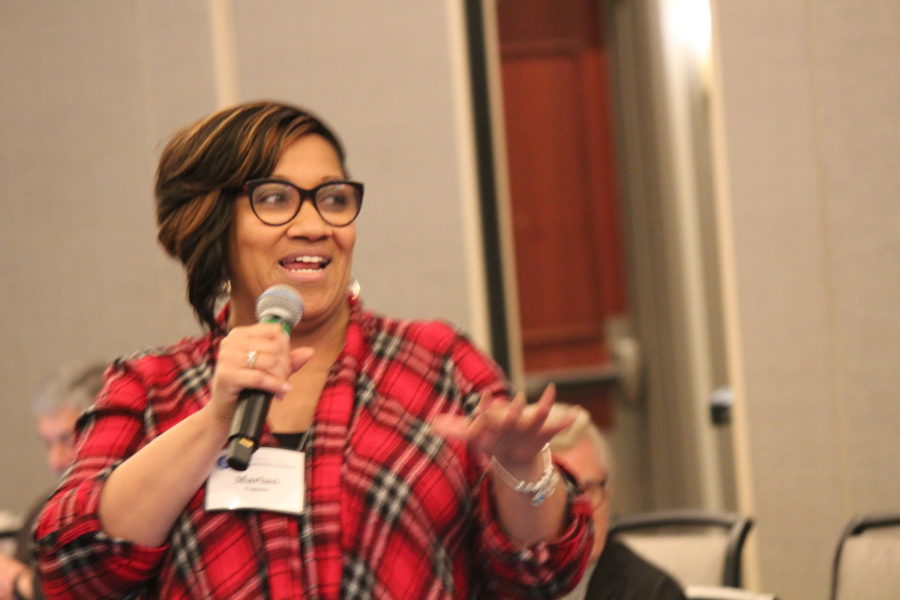
Observations of the board. Near the end of its deliberations, the board heard from Marian Vasser, a consultant from the University of Louisville who’s been sitting in on the board’s recent meetings, to provide feedback on power and privilege issues in the way the board itself operates.
“You do a good job with diversity,” Vasser told the board. “It looks like inclusion is going to be a challenge.”
Among her observations:
- The staff often isn’t included in discussions, except to make presentations. “I don’t think anybody gave me a good reason why the staff has to sit back here,” and can’t engage in the discussions. She also encouraged those in supervisory roles not to refer to others as “my staff,” but to call them a “colleague” or “team member,” or to refer to them by name.
- When issues of social justice or racism came up, “body language is so interesting.” Some white people crossed their arms or turned their attention away, looking at their phones or even leaving the room. People of color notice that – “they see it and they feel it,” she said.
- Those who hog the microphone “tend to be men.”
- And “when we’re talking about white supremacy, we need our white siblings to lead that conversation.”