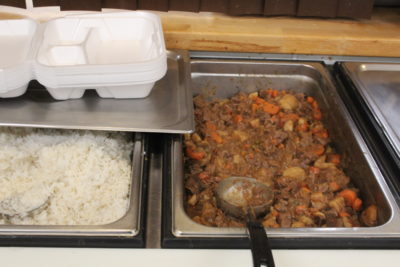
SYLVA, North Carolina – The Community Table in Sylva, North Carolina, serves a hot meal four nights a week. When people show up, they sit at a table with a centerpiece. They mark off on a menu what they’d like to drink and a few preferences from what’s being served – this night, beef stew over rice, bread and fruit cups. A volunteer brings their meals, served with silverware and on real plates, not paper ones.
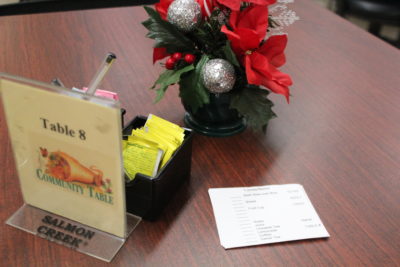
In a world in which the poor and struggling are often invisible, as much as anything the people around these tables are hungry for community, for a place to belong. Many value the company as much as the food.
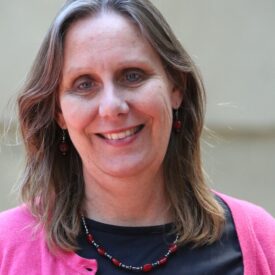
Some sit at the same table, with the same people, night after night. One older woman who lives alone comes early and stays for the duration, visiting over a cup of coffee through the ebbs and flows. “It’s their safe place,” said The Community Table’s executive director, Paige Christie. “It’s their warm place. It’s a place where they know they’re going to be treated with dignity and get a healthy meal that’s been fixed from scratch.”
Who sits at these tables? “It’s an endless list of misconceptions,” Christie said. “That they’re milking the system. That they don’t have a job. That they are all addicts and they are all homeless. And they are all lazy.”
Not in that equation: expensive housing costs. In this area, a studio apartment can rent for $1,200. Also factor in the impact of teen pregnancy, generational unemployment, relatively low rates of education, a tourist-based economy with seasonal unemployment.
Consider that probably 100 students from the local colleges don’t know where their next meal will come from.
Or that even with a roof over their heads, some people have only a microwave – it’s a challenge to cook.
“People take for granted that you have a refrigerator,” Christie said. “People take for granted that you have electricity. People take for granted that you have a stove. Some of our people don’t have that.”
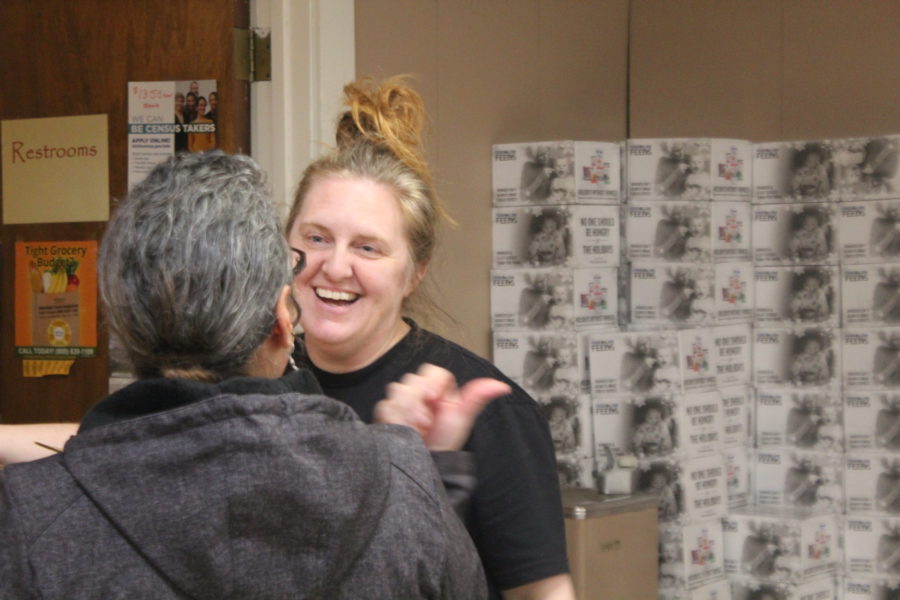
Some in fact may be homeless, or struggling with drugs or alcohol or mental illness. Christie feeds them because they’re hungry too. She also sees the elderly, veterans, families with children – people who are scared and embarrassed, some of whom walk in “with folders of documents,” trying to prove to a stranger they’re doing their best to make ends meet. Food boxes do require documentation at The Community Table; getting a hot meal does not.
“If you walk in and tell me you’re hungry, I’m going to believe you,” Christie said. “If you have found that place where you are either strong enough or desperate enough to walk in that door, we’re going to feed you. … Nobody wants to walk through our doors,” she said. “Except maybe the elderly who don’t see anybody else all day long. We’re The Community Table. For us, the community part is almost more important than the food part.”
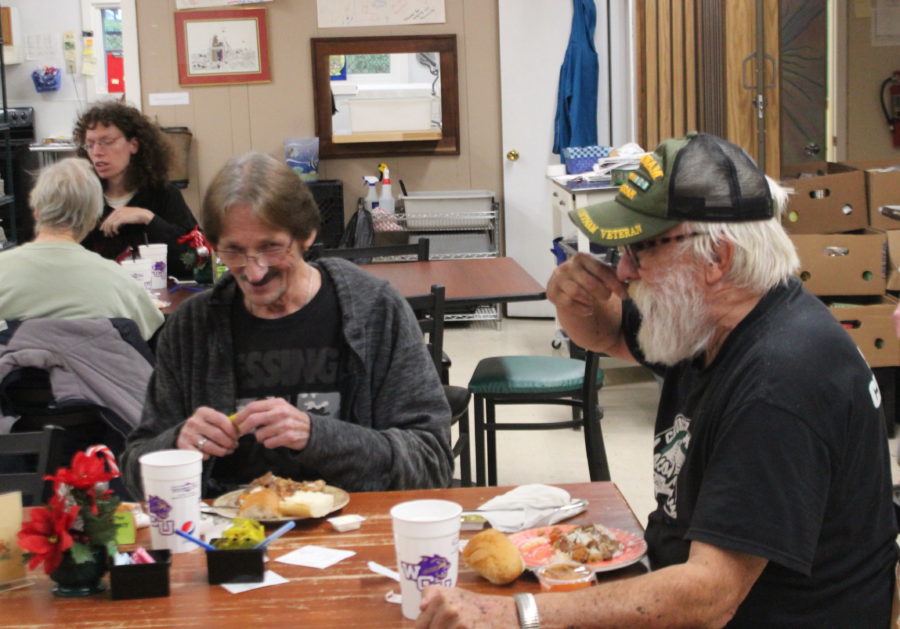
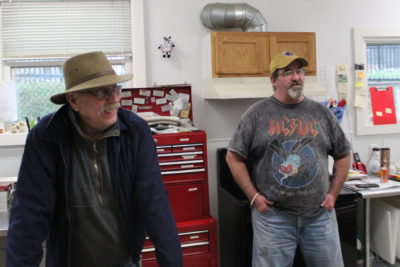
Two of the regulars are Rodney Buchanan, a Vietnam War veteran who retired from the Army, and Ken Tallent, who sit together at the same table most days with a group of guys. “It’s like a second home here,” said Tallent, who lives alone and says without The Community Table he would struggle to have enough food to eat. “It’s my favorite place to sit.”
In Jackson County, more than 1 in 5 residents (21.6%) live below the poverty level, according to the U.S. Census Bureau, and 14.7% of the population – or 6,150 people – were food insecure in 2017, according to Feeding America, which tracks hunger across the country.
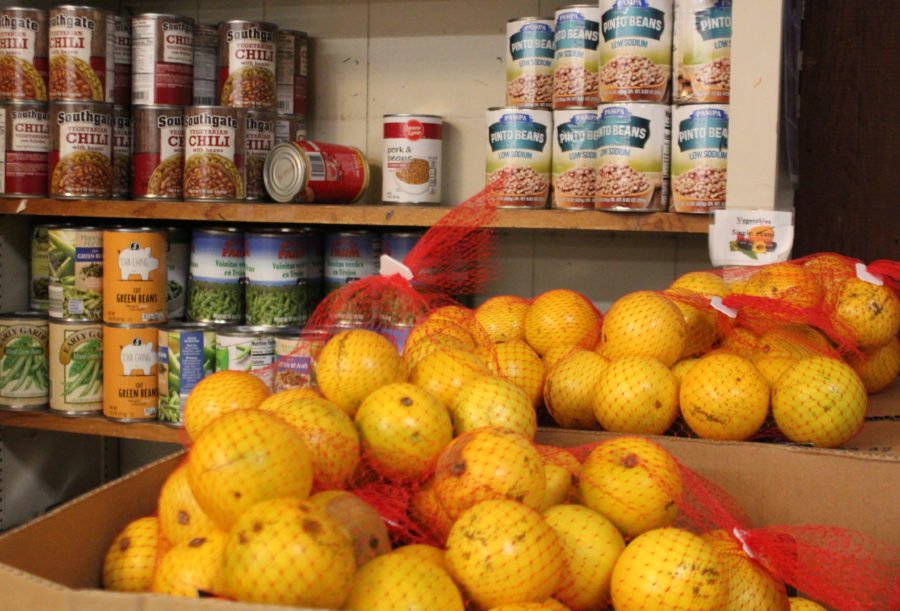
Recognizing the need in Sylva, community leaders and local churches joined together to create The Community Table 20 years ago. This nonprofit agency is now in its fourth location, serving more than 27,000 meals a year – about 140 meals a day, four times a week. “We rely on a lot of community love,” Christie said, plus food provided by the MANNA FoodBank, which serves 16 counties in western North Carolina.
The Community Table also gives out more than 8,000 boxes of food a year to Jackson County residents through the U.S. Department of Agriculture Emergency Food Assistance Program (known as TEFAP), and also distributes thousands of pounds of excess food, laid out on tables and free for the taking, everything from bread to fresh produce – this day, an abundance of kale.
“There’s a misconception there isn’t enough food in the world,” Christie said. “It’s an economic problem. … The problem is not a lack of food. It’s a lack of affordability for healthy food, and a lack of access to the food that is there.”
People living in poverty may have no car. If the grocery store is five miles away, “the food is there, but they can’t get to it,” she said. “There’s no public transportation. They’re on a fixed income, and they have to choose between rent, medicine and food.”
Collecting a box from the food pantry, a man who declined to give his name said he picks up a box every two weeks, and “it’s a big help to me.” Otherwise, “it’s hard to eat.”
His children are grown; two years ago, he graduated from college. Now he has $70,000 in student loans to pay back and can’t find a good job, partly because he’s 64, lives in a small town and “I also have a record.” With food from the pantry and what work he can find, he manages, just barely, the man said. “I’m not ashamed.”
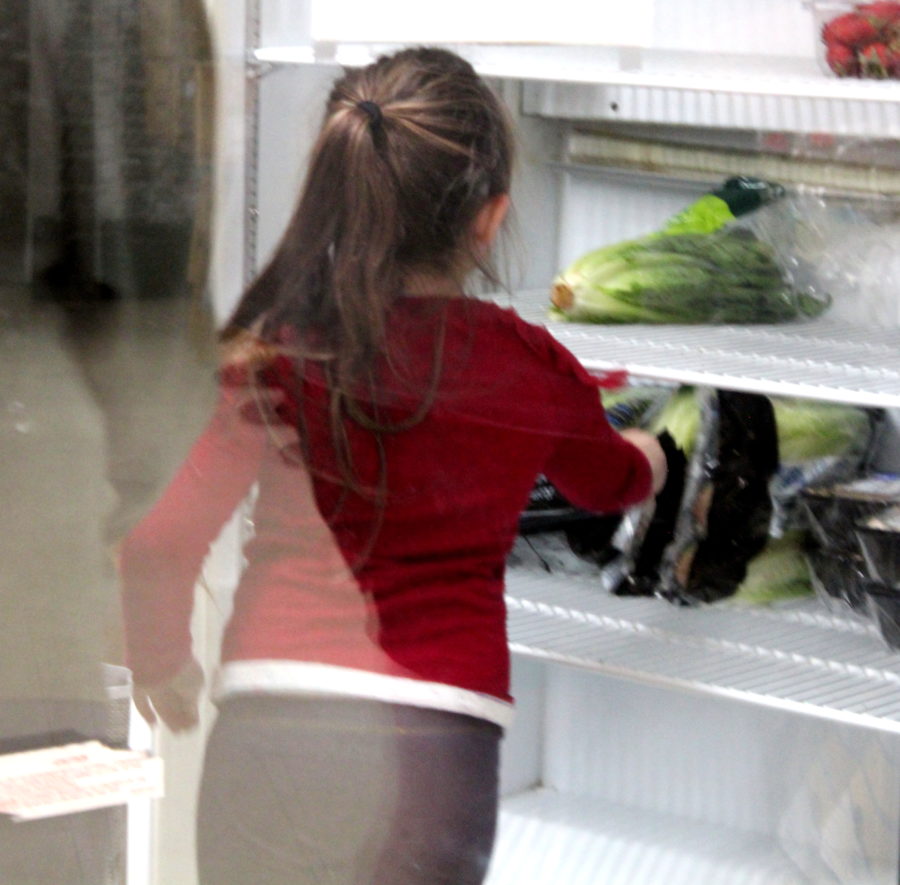
Patricia Talley loaded her bags with bagels, lettuce and vegetables from the free table – food she needs to feed the grandchild who lives with her and two other grandchildren she watches most days. “I feed them three meals a days sometimes,” Talley said. “I don’t know how I’m standing upright some days. … I live on disability. You’ve got $900 a month to live on and buy your food. You can’t do it. I want to feed them good food.”
Talley said she “never, NE-VER” thought she’d be depending on a food pantry to survive. Her health problems are complex – rheumatoid arthritis, fibromyalgia, cancer, two recent surgeries. “I went from a job where I made $45,000 a year to not being able to do anything,” she said. “It was one of the hardest things I’ve ever done. … It has been a bitch of a year, girl. You do the best you can, and get on with it.”
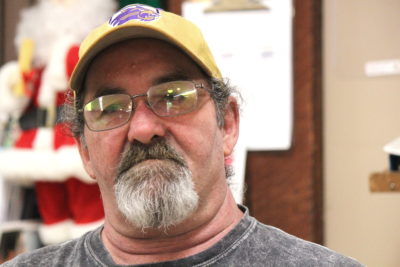
Gary Wood is The Community Table’s kitchen manager – the man responsible for churning out close to 150 meals a day.
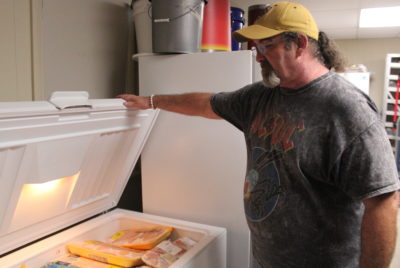
With the help of a retired military logistics officer, Wood organizes the 12,000 pounds of food that MANNA delivers – two 30-foot box trucks every two weeks, with the meat stacked into freezers and labeled until he turns it into mostly stews, casseroles and pasta dishes, as a way of stretching it out. That’s supplemented with donations from local grocery stores, food drives and some food the program buys to fill in what it needs.
“Gary’s job is to make chicken salad out of chicken trash – the best, most nutritious meal possible out of whatever we have, and he’s really good at it,” Christie said.
“It’s all a big chemistry experiment every day,” Wood said with a smile.
He first visited The Community Table when his oldest daughter began volunteering there. Now 56, Wood was then managing a local restaurant, and began helping with the cooking at The Community Table on his days off. The organization has about 50 regular volunteers, and hundreds more rotate through – church groups, Boy Scouts and Girl Scouts, volunteers from local businesses and students from Western Carolina University and Southwestern Community College.
When the kitchen manager’s job came open, Wood jumped at it – seeing it as a place where he could live out his faith.
“God puts you where he needs you,” he says. “I’m double-blessed to be here. I wake up every morning thinking, ‘I get to do this.’… I hope it’s the last job I ever need.”
He grew up in the area; he knows many of the guests he serves by name. He also feels grateful to help a community that, over the years, has helped him.
Growing up, “Mom and Dad had their demons,” he said. “There were times we didn’t have. We always had a roof over our heads, but sometimes we were hungry.”
So Wood knows what it feels like to ask for help. “We’re all proud people,” he said. “People have to give up a lot of that dignity to come here. If you’re hungry, we’ll try to fix it. … These people are from all walks of life. They’re mothers, brothers, grandparents, criminals, addicts, students. … They are our friends and our neighbors. Everybody needs to eat.”
Joe, a local carpenter, is one of the people who works but doesn’t quite earn enough.
“Food insecurity is huge here in western North Carolina – in Appalachia in general,” he said. “Jobs here are basically service industry,” many dependent on tourism. “People are busy chasing their next meal, paycheck to paycheck. … I build houses for people from Florida,” expensive vacation houses too pricey for many of the locals.
Downtown Sylva is lined with restaurants, brewpubs, small shops selling chocolates and outdoor gear, clothing and jewelry. There’s wealth in the region, but “it doesn’t trickle down very much,” Joe said. “The people who work in the stores, they couldn’t afford to shop in the stores. The gaps are getting bigger and bigger and bigger.”
Those disparities, and the invisible nature of hunger, “allows people to dismiss” those who struggle, he said. People think: “In some ways they must deserve what they are getting. If they were good people and worked hard and followed the rules, they wouldn’t be here,” needing a meal.
It’s more comfortable to think that, he said, than “those people are exactly the same as we are. They work every day. They’re in really bad spots. That could be us. That makes us really uncomfortable. … Our security goes away.”
The friend with whom Joe was eating, who declined to give her name, is a college graduate. She lost a stable, good-paying job when her employer lost a contract. Now she fears she’s about to lose the lesser job that came next. “This week, I’m not working at all,” she said. “And even though I have a college degree, there’s nothing out there. It’s all fast food and retail, which you can’t live on.”
She supports her disabled son, so she pays the rent to give him shelter before she buys food.
“It’s really way too easy to judge,” Joe said.
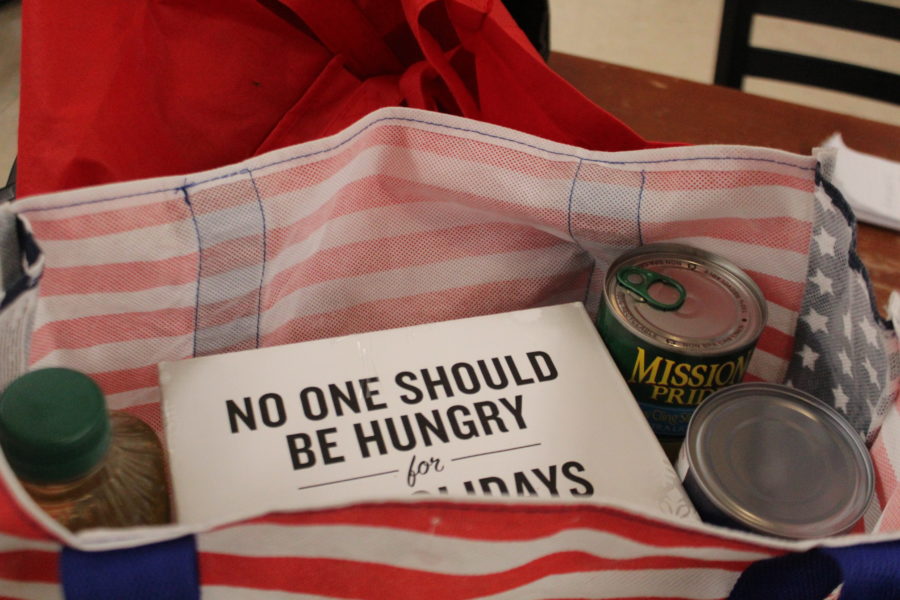
Carrie McBane stops by The Community Table from time to time, for dinners and occasionally to collect a food box – this day, she walked out with her arms full of kale, which Christie had a mountain of and was encouraging everyone to take. “They’re kind and generous here,” McBane said. But the first time, “it was really hard to walk in, because there are so many stigmas attached. You feel like you’re being judged for it,” even though food insecurity “can affect anybody. … We’re taught to not expose our vulnerabilities, to not discuss them. But people are struggling.”
McBane is recently separated and says eating healthily is vital, because she has Type 2 diabetes. She lived for seven years in the “Medicaid gap,” with no health insurance, and “I still have to stretch to pay my bills.”
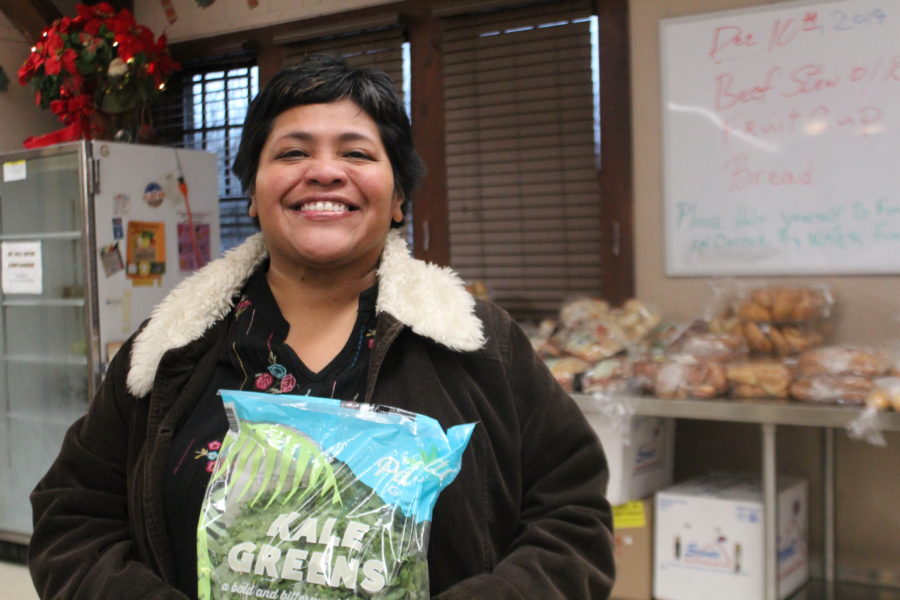
But she’s found work as a community organizer – finally earning a living wage. She recently ran for office, for a spot on the civil town council – and nearly was elected. The election ended with a tie vote, and she lost the coin toss. If she’d have won, “I’d been the first woman of color on the council.”
If she had won, her focus would have been on changing public policy on issues that affect those living on the edge, including strengthening the local transit system and providing access to health care and food to people who need it.
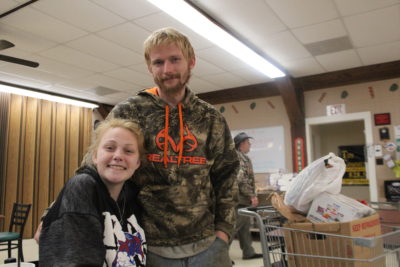
That would include Sheyenne McClellan and Kevin Queen, who walked through The Community Table’s door this winter’s night for the first time, grateful for a hot meal. They’d been homeless for six months, but “we just got a place,” McClellan said. “We’re getting our power turned on tomorrow.”
It was 5:45 p.m., almost closing time, but Wood knew the rush was likely. He calls them “the gamblers” – the people who come at the last minute, knowing The Community Table drops its two-meals-per-person rule at the end of the night, and they can take more to-go boxes, usually for neighbors and family, until the food runs out.
Sure enough, at the last minute two young women came in, collecting an armful of boxes. The man after them said he’d take what they could spare, but not all the food – he wanted to leave some for others who might need it more.
The final tally for the night: 144 meals served; 144 hungry people a little less desperate in the dark.