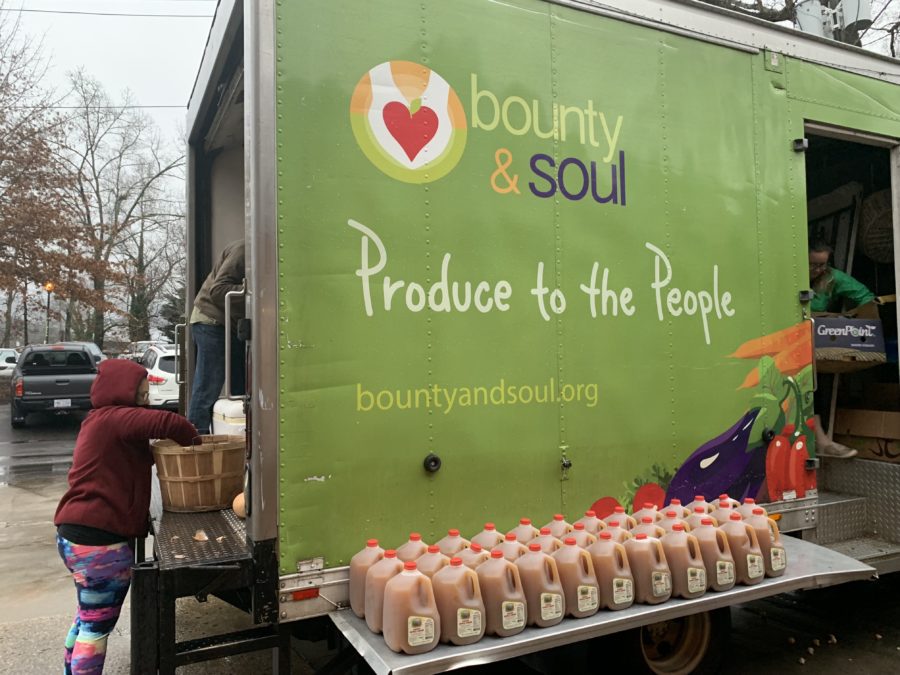
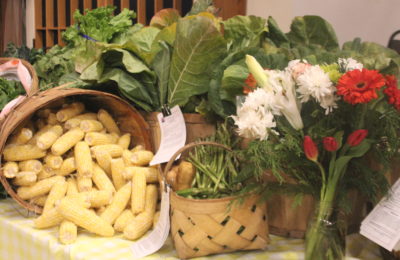
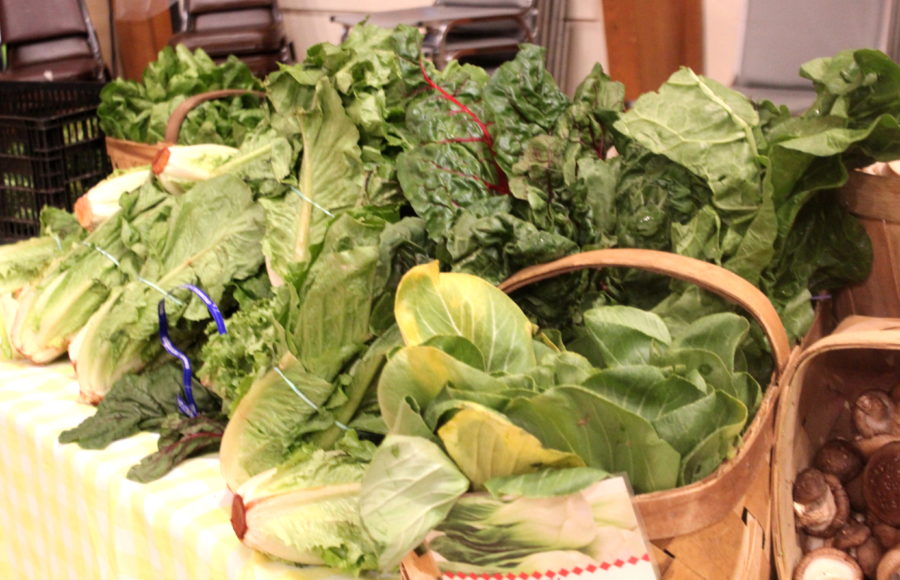
BLACK MOUNTAIN, North Carolina – The tables at this Bounty and Soul community market seem to define abundance – spilling over with piles of beautiful fruit and vegetables, fresh, healthy, free for the taking, with all the produce rescued from being thrown away and going instead to feed food-insecure families.
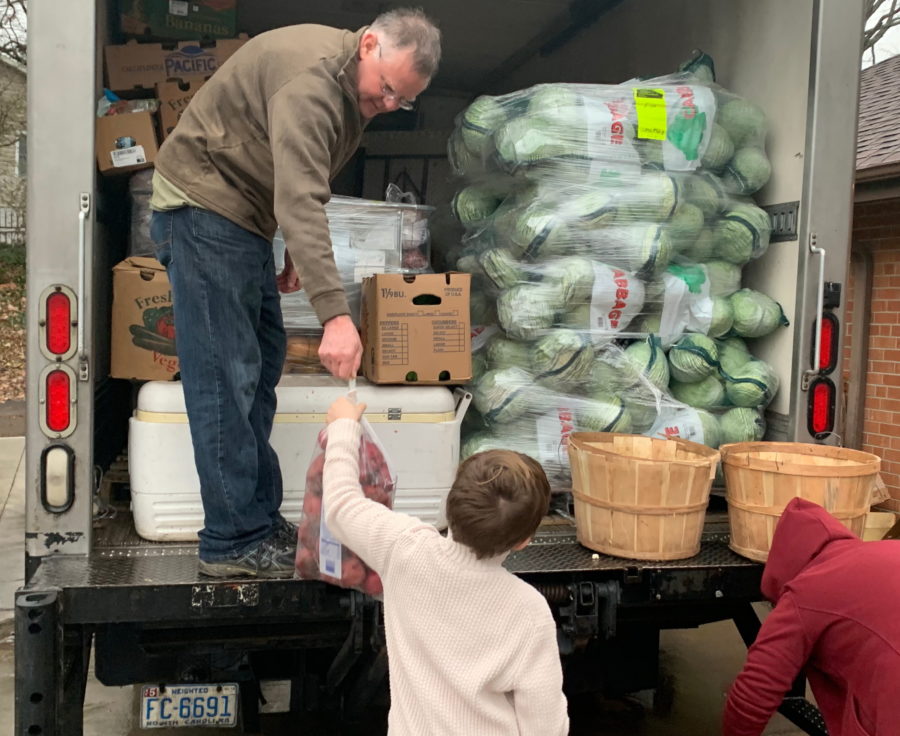
Staff and volunteers carried box after box this Friday afternoon into the fellowship hall of Black Mountain Presbyterian Church – their arms filled with strawberries, apples, carrots, kale, greens, peppers, tomatoes, Brussels sprouts, bouquets of flowers, loaves of crusty bread. This is the kind of plenty you find at upscale farmers markets, or Whole Foods or Trader Joe’s. Some of it is from Whole Foods and Trader Joe’s.
This holy space sends a message to those on the margins: that you can be poor, but still deserving of sustenance, of something fresh and delicious and beautiful. There is room for you. You are welcome.
This is a place that also recognizes the bounty of the earth: that there is enough for all, that no one need be hungry, that so much food in this country goes to waste – and it doesn’t have to be that way.
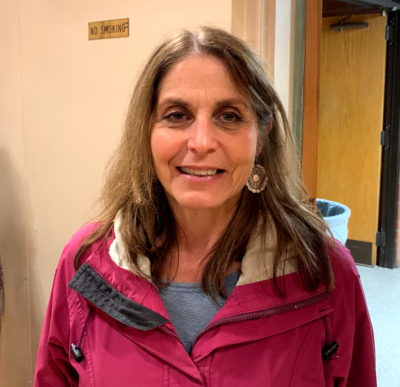
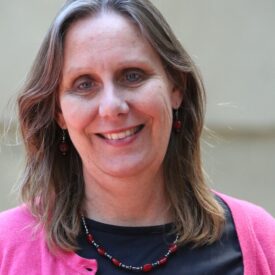
Ali Casparian, executive director of Bounty and Soul, is passionate about this: that just because people struggle financially, they still deserve and need to eat food that is fresh and healthy – and that’s what many of them long for and what their bodies need. Through its “Produce to the People” program, Bounty and Soul distributes more than 12,000 pounds of produce at five community markets every week, serving roughly 800 people in Black Mountain and Swannanoa, just east of Asheville – everyone from people who are homeless to the working poor to college students.
Austin Brown, an elder at Black Mountain Presbyterian, has been a Bounty and Soul market volunteer for several years. “It’s my favorite thing to do in the entire week,” he said. “You can feel love bounce off the walls.”
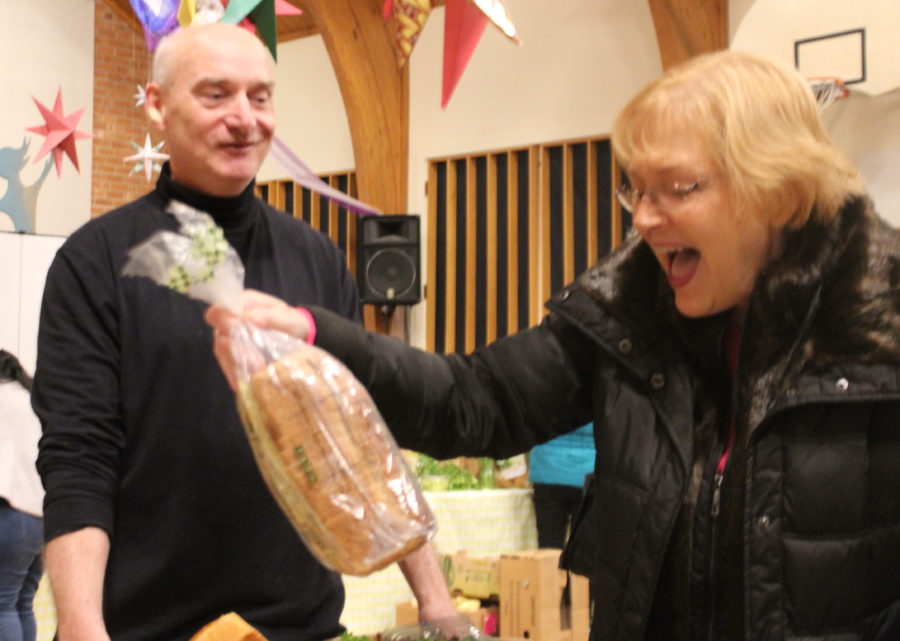
The market brings people to the church “from the outside that we wouldn’t normally see, and it’s fun,” Brown said. “Our only treasures in life are relationships. This place just bounces with love.”
At each market, health professionals present information about aspects of wellness, nutrition and exercise – everything from stress reduction techniques to using diet and exercise to help control blood pressure, with the sessions also interpreted into Spanish. “We focus on whole-person health,” Casparian said. “It’s not just what we eat. It’s our emotional, mental and spiritual well-being,”
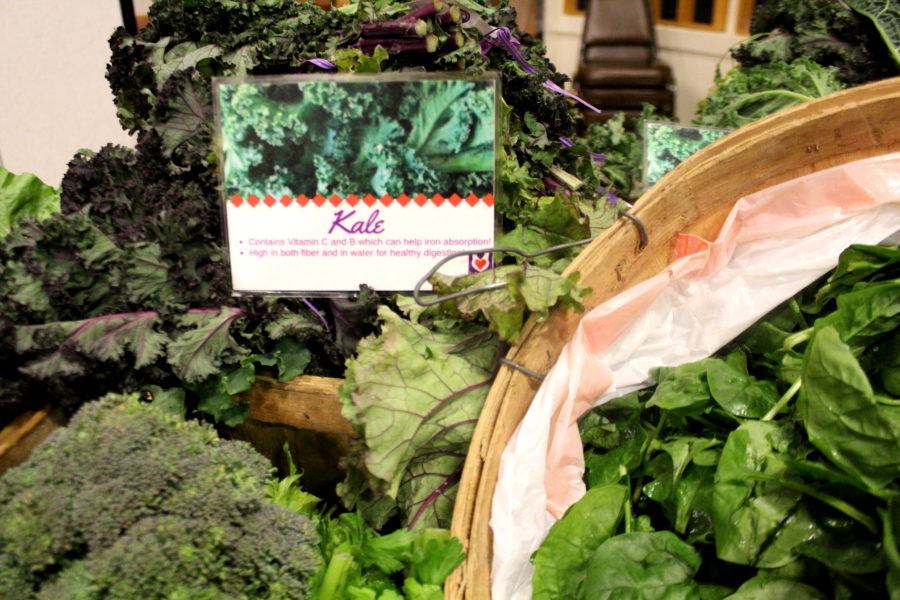
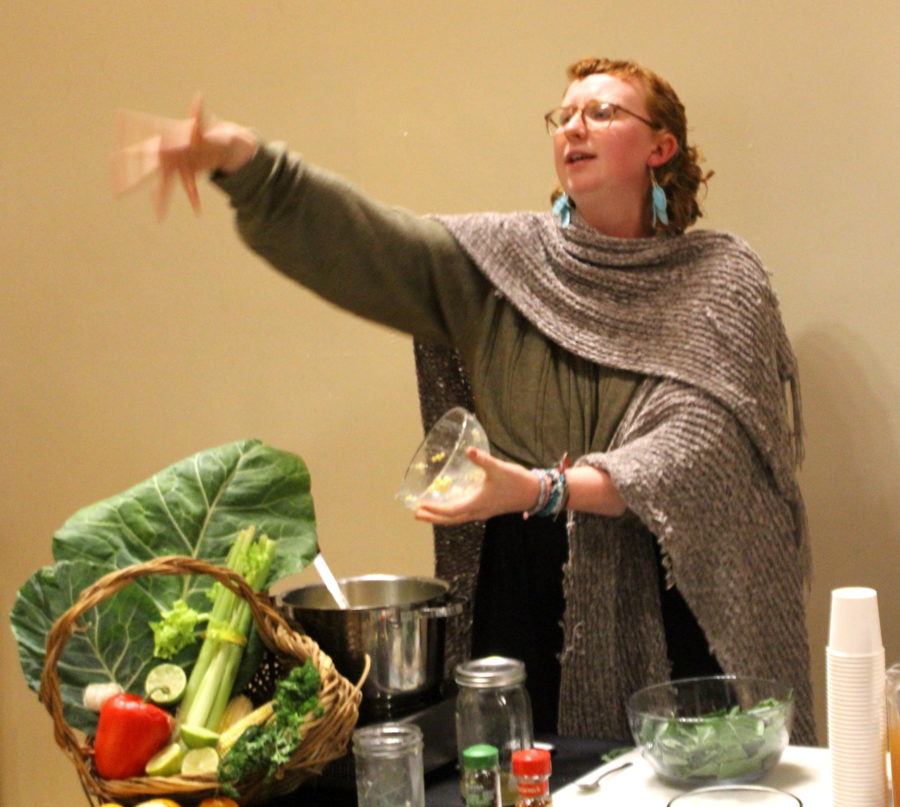
Volunteers and staff also provide recipes and plant-based cooking demonstrations – showing what’s possible to cook with kale, for example.
“I learn something new every time I come here,” said Jeanette Watson, standing in line to pick up produce. Not so long ago, Watson said, she was essentially a shut in. “I didn’t go anywhere. I didn’t have anywhere to go.”
Then she came to a Bounty and Soul market and took home a bag of fresh produce. “I started eating better and I started feeling better,” Watson said. When she eats more fruits and vegetables, her osteoarthritis doesn’t flare up as much – there’s less inflammation. Before, “I didn’t know what to cook.”
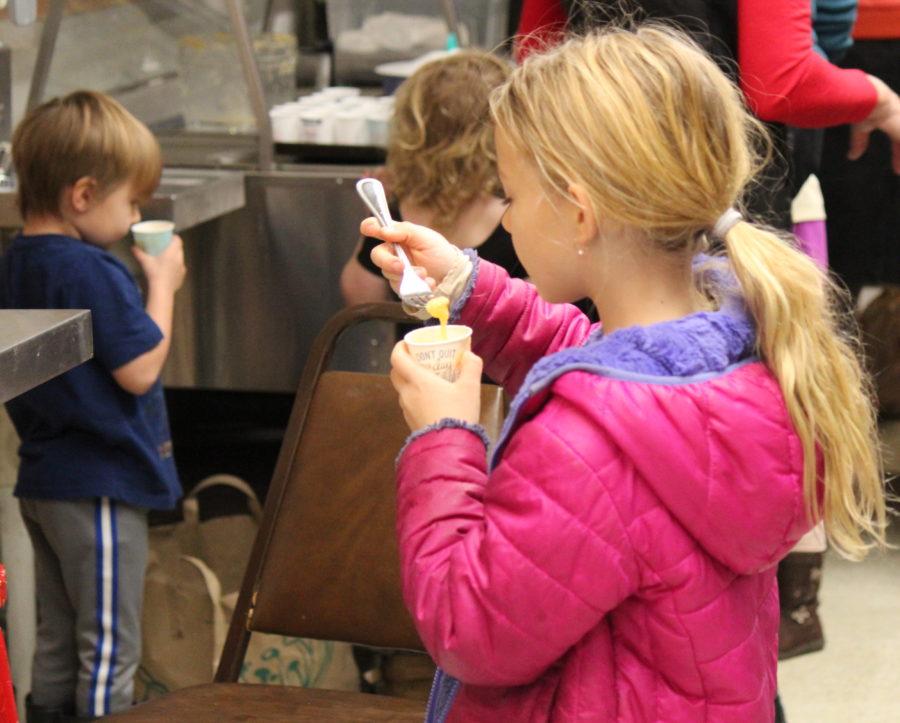
There’s also the power of choice. A woman in line waiting to select produce, who preferred not to give her name, said that when she went to a more traditional food pantry, “they just hand you a box. You don’t get to pick what you want. It had Froot Loops, Rice Krispie treats – stuff we don’t eat at home, that I don’t want my kids to have” because it contains so much sugar.
Without Bounty and Soul, “we wouldn’t have as much fresh stuff to eat,” she said. “It’s so expensive. Even with my husband working now, it’s so expensive – with medical bills, car stuff. They do a good job here. They don’t discriminate about why you are here.”
Also, “they do the cooking thing (demonstration), so you can try things you never would have thought about putting together. I never had rutabaga until I came here. I thought, ‘what’s that?’ ” – and Bounty and Soul gave answers.
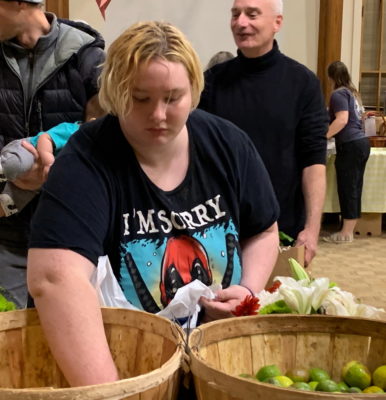
Amanda Massey, 18, was looking for “something we can eat without cooking” – probably salads and fruit. Or bread. “We can put peanut butter and jelly on it.”
For a few months now, Massey has been living in her car. Before that, she stayed with some relatives in a house with no electricity and no water, cooking outside on a grill. They lost that house when they couldn’t afford the rent.
“This area is exploding,” Casparian said. “People are moving to the mountains,” often retirees who are financially set or wealthy people with vacation homes. “It’s creating more service jobs that are not living wage jobs. And the price of housing is going out the roof. … Because it’s become so expensive to live here, we see the face of food insecurity changing. It’s teachers. It’s two-parent households where each parent is working three jobs and they have three kids. Their rent has gone up, and they can’t keep up. You have to pay your rent. You have to pay your medical. You have to put gas in your car to get to work. The last thing to keep up is food.”
The aha! moment
Casparian knows that kind of economic pressure all too well.
“The issue of food insecurity is a personal one, because I experienced it when I first moved here about eight years ago,” she said. She had been living in New York. But following what she describes as a “near-death experience,” she moved to Raleigh, North Carolina, to be near her sister.
When she visited Asheville, “I just really fell in love with it. I really didn’t know anybody here or what I was going to do. But I felt a strong calling to make a pilgrimage here,” so she moved to Asheville – thinking that, with 25 years corporate experience in the food industry, she’d be able to find a job.
That didn’t happen. “It was very, very difficult here to find a job to pay rent and kind of start over,” Casparian said. “Within months, I was slipping into poverty, food insecurity. I was cleaning houses and cooking for people and I could barely make my rent, let alone buy food.” She was doing physical work and had always valued healthy eating, but couldn’t afford fruits and vegetables – only the cheapest food available, which she knew wasn’t giving her body enough energy.
 Once a week, she went for a hot meal at Downtown Welcome Table, a program offered by the Haywood Street Congregation where lunch is served to anyone who needs it, with flowers on the tables and cloth napkins. There, Casparian began to meet people, as “conversations started around those tables, around the challenges we were all facing with the daily struggles. … We couldn’t afford the food we wanted to eat.”
In time, Casparian began volunteering at the lunch program, and one day went with its executive director to visit an area food bank. They walked into a room filled with fresh produce – stacks of strawberries and apples, peppers and squash, some of it still good and some starting to spoil. When Casparian saw some of the produce being loaded on pallets and carried out the door, she asked where it was going. The answer: to pig farmers, to feed their animals – given away as excess. “Nobody wants to eat this food,” Casparian said she was told. “They want to eat other food” – canned, boxed, processed.
“That was my ‘aha! moment,’” she said.
She arranged to rescue some of that produce and offer it for free at the weekly lunch, set out on a table with a cloth and fresh flowers, “because this is beautiful food. This is the food that gives us life and energy. This is what people want to eat.”
The first day, maybe 10 people took produce home – but week after week it grew. Casparian gathered together volunteers and began doing cooking demonstrations on a camp stove, showing people “this is a healthy way to make produce.”
Eventually, she set up her own nonprofit and joined forces with “an exceptional grant writer” who was just getting started and offered to work for free for a while. “God’s hands were in it,” Casparian said. Whenever things got difficult, “at just the right moment, the right person would come in.”
Plenty for all
Bounty and Soul now has five community markets every week – rotating each week through five locations. In 2018, the program distributed more than a million pounds of food. About 30% of those who participate are native Spanish speakers, Casparian said.
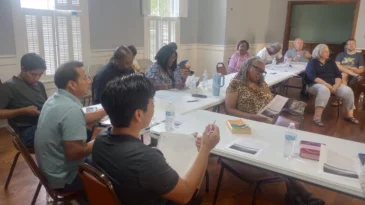
“What we are founded on is providing equitable access to healthy food, education and the opportunity to connect with one another, which is a huge part of what goes on at these markets,” Casparian said. “People don’t just come for food, they come for the social connection, the fellowship. Community is formed around the food. … We come because this is family. We come because this is church for us.”
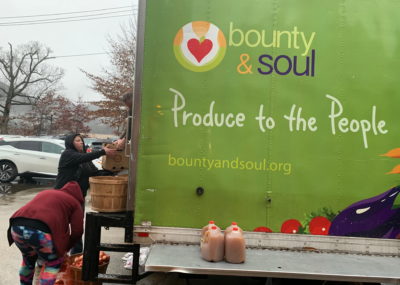 Bounty and Soul also has formed partnerships to rescue food that otherwise might be discarded – from grocery stores, from farm fields, from the MANNA FoodBank, where Casparian said she’s helped to change the thinking about what people want to eat.
Grocery stores are “throwing away food that is beautiful,” Casparian said. “They have to by regulation take food off shelves by a certain time before expiration. And we come and rescue that” – including cut fruit and organic produce, or vegetables that may be imperfect, and which farmers don’t feel they can sell at the upscale farmers markets.
“It’s still viable,” Casparian said. “It’s still safe to cook. It just doesn’t look pretty.” So Bounty and Soul culls through what’s available – setting out in its free markets what can still be used, and sending the rest off to be composted – full cycle, back to the earth from which it came.
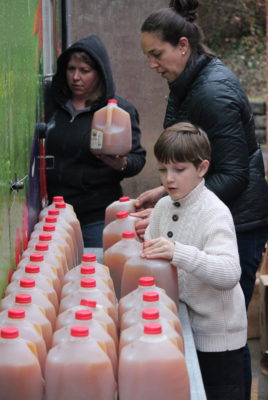
Adam Kelly is Bounty and Soul’s food sourcing and volunteer coordinator, which means he develops relationships with farmers and grocery stores, including a recent partnership with No Evil Foods, which donates coolers full of plant-based proteins – this day, a form of vegan chorizo. Another score for Kelly at this market: dozens of gallons of apple cider, which a store was planning to throw out and which he rescued to hand out to local families (and all of which were taken).
“I live and breathe food sourcing,” Kelly said. His reasons: “Using food as a vessel for bringing community together” and knowing that “I’m part of the change,” to counteract the reality that “we’ve normalized food waste on a grand scale” in this country.
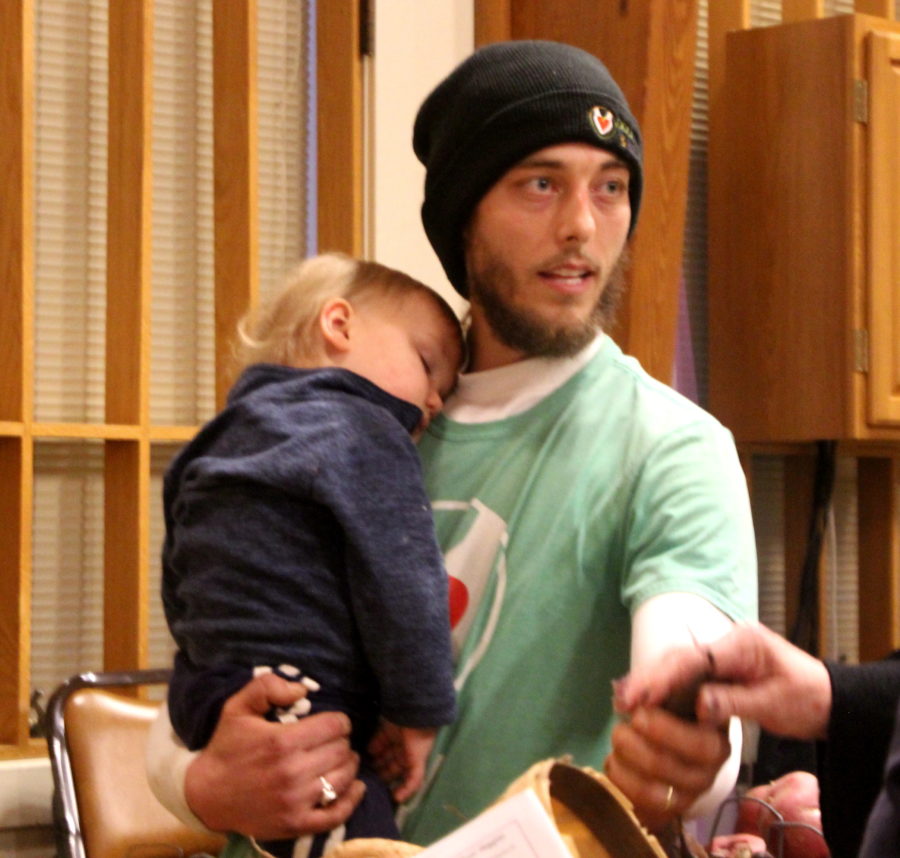
His exuberance is catching – with one of his three children in his arms, Kelly urges those in the line to experiment with cooking, take it all home, taste everything. “My passion for food is life-giving. This is the sun, the rain, the energy that went into growing it.”
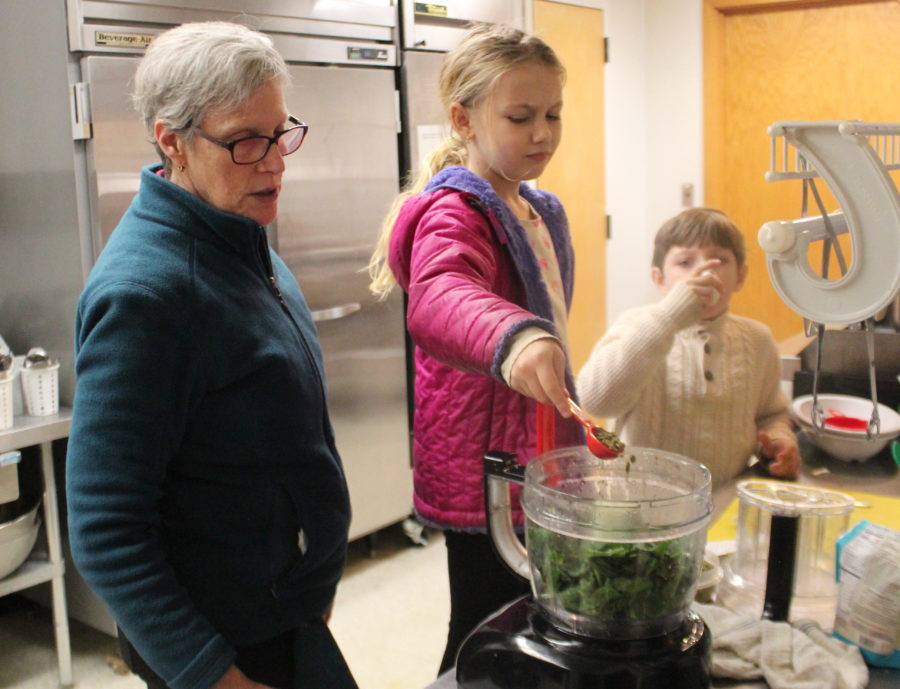
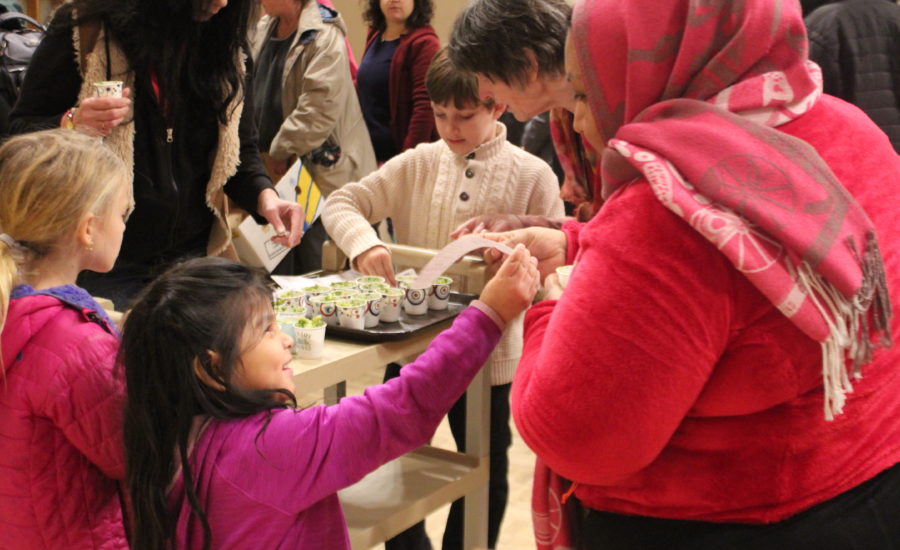
These markets also are an acknowledgment of an unspoken reality: that in any community, the haves and have-nots live together, part of the same ecosystem.
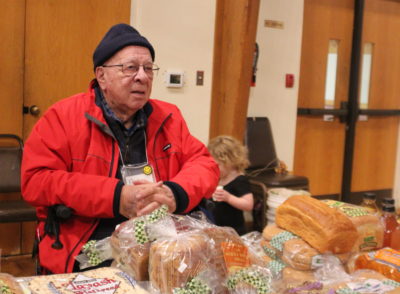
“I’m proud of my church for doing this,” said Art DeJong, a Bounty and Soul volunteer and member of Black Mountain Presbyterian. “It’s rather biblical, you know. … When I read the New Testament, lady, there was the feeding of the 5,000. Then Jesus said – he didn’t say it this way, but ‘there’s enough.’ He asked the relational question, how many baskets are left over? There’s plenty of food, if we share.”
When people don’t have enough money for food, “they go out to the Dollar Store, and buy whatever is cheap, whatever is going to fill us up,” Casparian said. “What that perpetuates is poor health and kids doing poorly in school. Let’s break the cycle,” by sharing the wealth and providing fresh, affordable food for all.
She remembers in her bones “a very shameful experience when I was struggling.” She went for medical care, and “I felt like I had to sit out on the pavement for three hours and wait to see a doctor. I was treated like I wasn’t human. I said, ‘I don’t want anybody ever to feel that way.’ Our markets – they’re beautiful. It’s like you’re at a farmers market, with a tablecloth and baskets. The food is gorgeous. That’s showing dignity” to all, volunteers and shoppers alike, who walk through the doors.