CINCINNATI — How is the Spirit at work in Cincinnati? How are people of faith responding to God’s call and serving others? These are questions NEXT Church asked local leaders, as part of NEXT’s national gathering in the Queen City March 2-4.
The national gathering set aside time to hear from those doing the nitty-gritty local work at the conference’s location – a way of casting a vision of what might be possible in other places as well. Those providing these “testimonies” shared the stories of their ministries, telling where they have seen God at work and describing the stones (drawing on the conference theme from the 4th chapter of Joshua) that serve as reminders of where they’ve been and what their future hope looks like.
Community economic development
In Scripture, the exile was described to the people as 400 years when they would be in a land not their own.
And now, 401 years after slavery started in the United States, African Americans have endured not only slavery, but segregation, redlining and educational disparity as well.
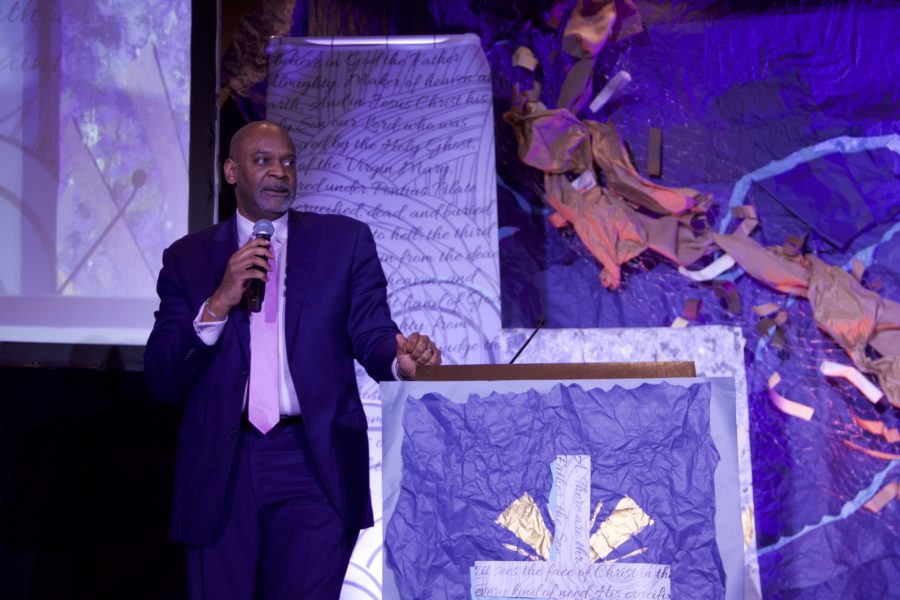
400 years. With this timeline comparison, Damon Lynch III, pastor of New Prospect Baptist Church in Cincinnati, shared what motivates him to serve the people of God in his city: “What God did before, we believe he can do again,” he said. “I always wanted to be the Moses. I always wanted to be the deliverer of my people.”
But then, he confessed, he read the Book of Joshua in Scripture: “Moses my servant is dead.” He was struck that there was no euphemism, just that truth. “Moses is dead.” The deliverer is gone. And today, Martin Luther King Jr., Fannie Lou Hamer, Medgar Evers, Sojourner Truth – African American leaders and deliverers – are all dead, meaning it’s time. Lynch said, to move into the time of the new Joshuas, discovering whom God will use next.
In Cincinnati, “We ask ‘How do we build wealth in the African American community?’ ” Lynch said. How do we possess the promises God has given?
Cincinnati’s Over-the-Rhine community was an area of “tremendous poverty” and “every social service agency known to human kind,” Lynch said. But “servicing people does not make them whole.” Suburban churches would send volunteers in to paint a wall or pick up trash, eat some pizza and then go back to the suburbs, Lynch remembers. Today, Over-the-Rhine is filled with sushi bars and microbreweries – there’s been a total transformation. “Guess who’s no longer there? The indigenous residents and social service providers.”
Churches need to learn: “We cannot service people to make them whole.” What’s needed is change that comes from the strength of the people themselves.
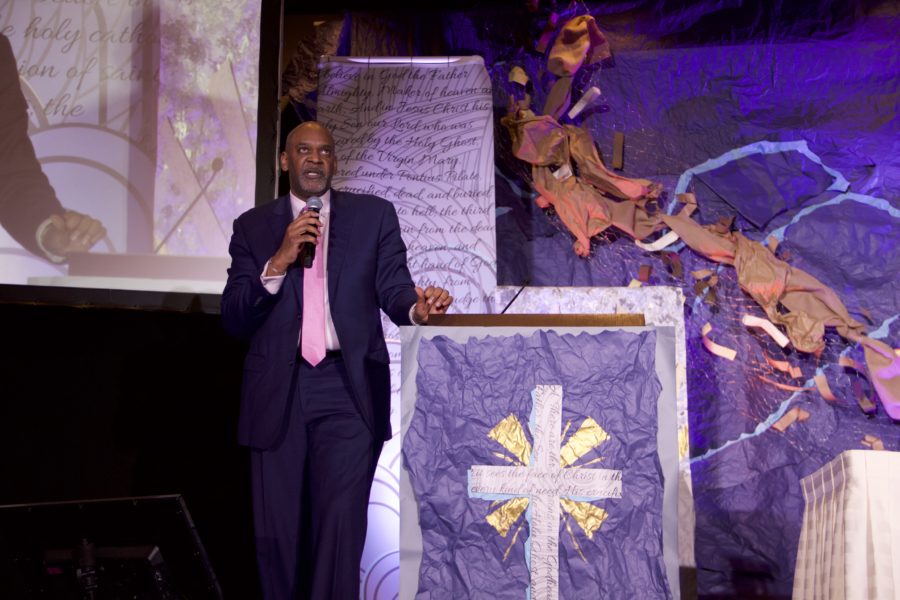
Cincinnati has created an office of “community and economic development.” But Lynch wants to remove the word “and” from that title. Community means you get more services. “It creates a safety net, but it doesn’t build wealth.” But “community economic development” brings more power, gives voice to those who live in the community, has the opportunity to change lives and cities.
“Moses is dead,” Lynch said. “It’s now time for the Joshuas to lead us across the river … to possess the promises.”
The temple that sold its building
Miriam Terlinchamp was introduced with the story of her surprising reaction to a job offer. When invited to serve as rabbi at Temple Sholom in Cincinnati, her reaction was basically this: “Yes, I will come if you promise to sell your building” – one where raccoons were coming in through the roof. The congregation committed to do that, and she committed to be their rabbi. That led to a journey both for the congregation and for her.
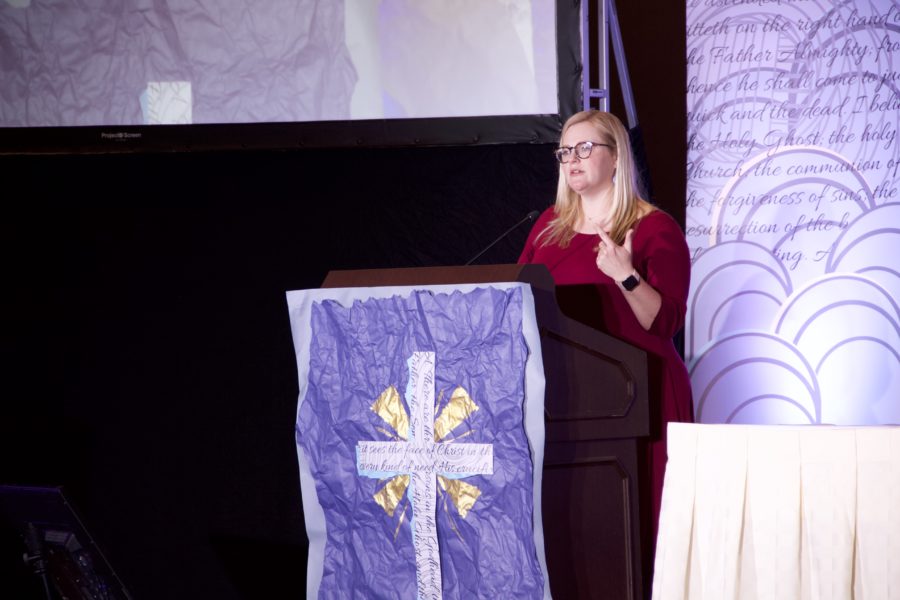
Institutional survival is different than legacy, she said. “It’s hard for me to imagine Jewish community without persecution. … We can’t imagine a world without our version of faith. … Legacy is always upholding what was.”
She said people in her community sees themselves in the stories of the Hebrew Scripture. They talk about Joshua and Moses, but also about Miriam who danced and found water for her people. They find their calling as hospice workers for what was, and midwives for what will be.
Reading these stories, they might fall into the myth that “we’re part of an unbroken chain of tradition,” Terlinchmp said. In truth, she countered, they are weaving together bits that are sacred and infallible, but also broken and imperfect. Each person is one of the bits, equally equipped to handle the journey of the next breaking.
The Israelites in Joshua crossed the river to dry land; at first they rejoiced, but by the next time they crossed the river, they had forgotten. The Jewish people sometimes translate dry land as “desolation” or “trauma,” she said. “In every journey, there’s a walking through” these hard times; cycles of change have pain and desolation.
Yes, her congregation sold the building – not for the sake of selling, but to invest in a vision. Now, just as a river keeps changing, the vision changes too. What remains constant is a dream of community.
Terlinchamp said that Temple Sholom only lost 2% of its members when it sold the building. But the congregation took risks, and when it “got political,” the membership dropped by 22%. That change brought losses and gains. “We became young and gay, which was really fun,” she said.
But it wasn’t all fun – or clear exactly what this new land was. People kept thinking: “Oh finally, a Promised Land! Oh wait, it’s wilderness still.” Terlinchamp said leading in the midst of change and struggle was harder than she anticipated. “I can’t tell you how many times I was crying and drinking in the shower over those years. Let’s be real. There’s a cupholder in my shower” now.
But together, the people of Temple Sholom learned, relearned, became more broken and found places that needed to change. They took the words from Joshua to heart – “be strong and courageous” – and added: “Be bold.” They asked: What does it mean to take only some of the stones and not all of them?
Terlinchamp said, “If you have a building to break or a chain to unlock” you need to ask: where is the ego? Where is the vulnerability? And be bold enough to believe that God will use the community’s gifts once they reach the other side.
Connecting at The Hive
Troy Bronsink told his story of call – and an ongoing search for community and belonging. He’s stated supply minister at Bond Hill Presbyterian Church and founder and director of The Hive: A Center for Contemplation, Art and Action, both in Cincinnati.
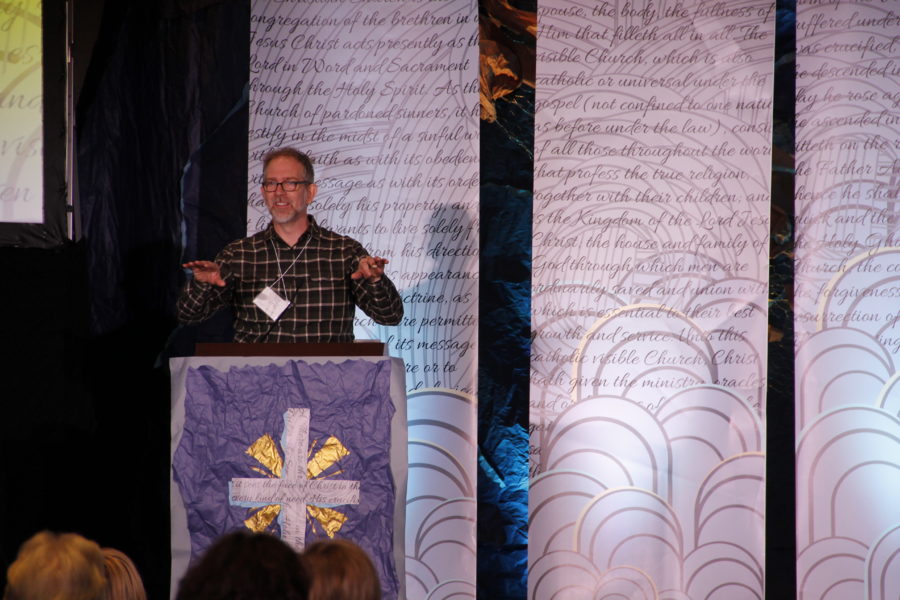
His path has had some pain – including time as a community organizer in Atlanta that brought both growth and some disaster. For example, his family bought a house in 2007 for $180,000 – just before the mortgage crisis hit. When It was reassessed in 2011, it was valued for less than $40,000. As months went on, houses around them were getting boarded up.
The losses were too much. So Bronsink “pulled out the lamest white flag I could” and moved with his family to Cincinnati. As he got to know his new city, he learned that “there’s more entrepreneurs per capita in the Cincinnati region” than anywhere else in the country aside from New York and the Bay area.
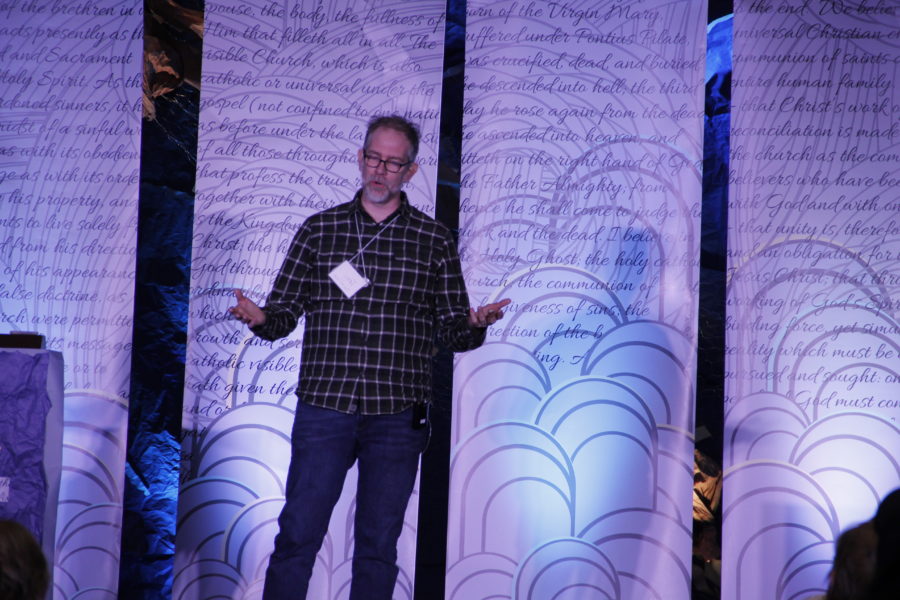
Bronsink soon got into the entrepreneurial game, launching The Hive — so named because “there are a lot of things moving in and out of that space.”
In the beginning, people were invited in to gather around classes about nonviolence. Soon, a community was formed within The Hive – a “low-threshold” kind of belonging where people come for where they find meaning and growth. Today, half of the Hive’s funding comes from classes (on topics such as healing trauma, mindfulness and yoga) and memberships, and the other half from grants and other external sources.
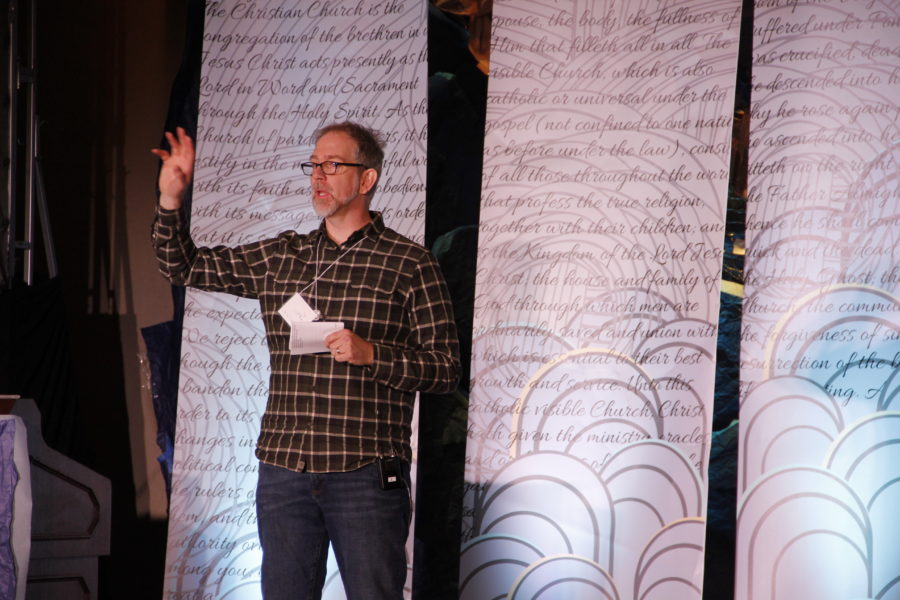
Through classes and groups on contemplative practices, art and community action, the hope is that “belonging” to The Hive will cultivate citizens who are mindfully engaged in Cincinnati, Bronsink said. And from there?
Bronsink spoke about belonging– believing that the capacity for what needs to happen is not off in the future or somewhere else, but within, right here. “The great mistake is to think you’re alone in this work,” he said. But ‘”if you belong right here, then you can just get to work. The mystery of Christ revealed is your very life.”